BREAKING; Presidency finally reacts to claims of forgery in new Tax Reform Laws passed by NASS

BREAKING; Presidency finally reacts to claims of forgery in new Tax Reform Laws passed by NASS
The Presidency has dismissed claims that inconsistencies exist in the newly enacted tax reform laws slated to commence on January 1, 2026, saying the reports making the rounds are rooted in misinformation.
The clarification comes amid mounting pressure from prominent political figures, including former Vice President Atiku Abubakar and Labour Party’s 2023 presidential candidate, Peter Obi, as well as some lawmakers and civil society organisations, who have urged the Federal Government to halt the rollout of the reforms.
The debate was sparked by allegations from a member of the House of Representatives, Hon. Abdulsamad Dasuki, who claimed that the versions of the tax laws published by the government were not the same as those debated and passed by the National Assembly.
He warned that any such variation would amount to an infringement on the constitutional role of lawmakers.
Responding to the claims during an appearance on Channels Television’s breakfast programme, The Morning Brief, on Monday, the Chairman of the Presidential Fiscal Policy and Tax Reforms Committee, Taiwo Oyedele, rejected the allegations, insisting there was no basis for comparing documents that are not publicly available.
“Before you can say there is a difference between what was gazetted and what was passed, we have what has not been gazetted. We don’t have what was passed,” Oyedele explained.
He stressed that the harmonised bills transmitted to the President were certified by the Clerk of the National Assembly and are not in the possession of his committee.
“The official harmonised bills certified by the clerk, which the National Assembly sent to the President, we don’t have a copy to compare. Only the lawmakers can say authoritatively what we sent.”
Oyedele added that neither he nor his team had access to the certified versions of the bills, noting that only the legislature could confirm their final content.
He also addressed concerns over a controversial clause under Section 41(8), said to compel taxpayers to deposit 20 per cent of disputed sums before proceeding with certain appeals.
According to him, discussions with the House Committee on Finance suggested the issue may have been misunderstood.
“I know that particular provision is not in the final gazette, but it was in the draft gazette. Some people decided to write the report of the committee before the committee had met, and it circulated everywhere,” he said.
“What is out there in the media did not come from the committee set up by the House of Representatives. I think we should allow them to do the investigation.
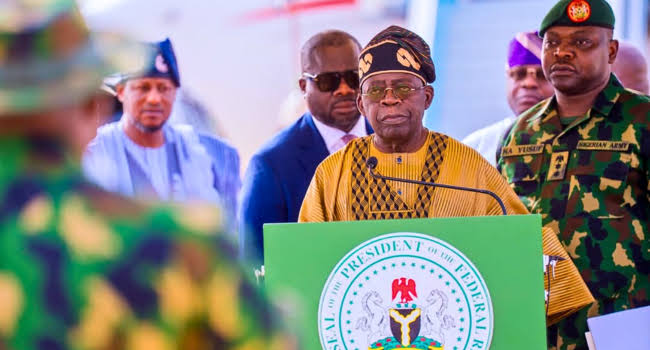
President Bola Tinubu recently signed four landmark tax reform bills into law the Nigeria Tax Act, Nigeria Tax Administration Act, Nigeria Revenue Service (Establishment) Act and the Joint Revenue Board (Establishment) Act which will be implemented under a unified structure known as the Nigeria Revenue Service.
The Federal Government has described the reforms as the most far-reaching restructuring of Nigeria’s tax framework in decades, aimed at easing compliance, broadening the tax net, removing multiple taxation and modernising revenue generation across federal, state and local governments.