
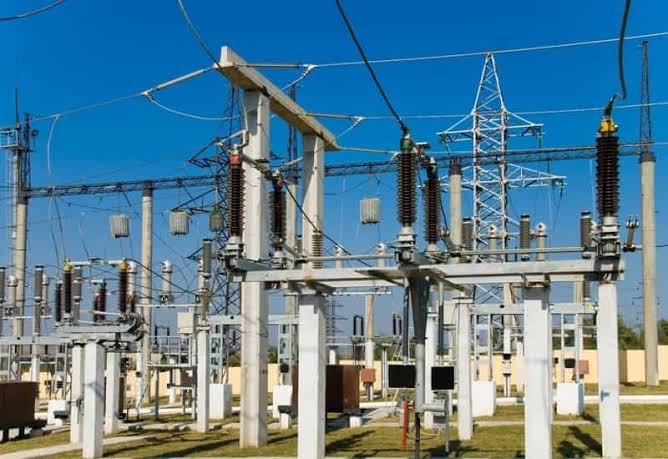
BREAKING; Federal Govt provides fresh update on Port Harcourt Refinery

BREAKING; Federal Govt provides fresh update on Port Harcourt Refinery
The Port Harcourt refinery has resumed full operations after a brief ”scaling down”, Mr Ibrahim Onoja, the company’s Managing Director has said.
Addressing newsmen after a facility tour of the refinery on Sunday night, Onoja said the facility had resued distribution of products, including Premium Motor Spirit, kerosene, and diesel.
”The refining plant has undergone extensive upgrades to enhance efficiency and reliability which had also impacted on production capacity.
”We replaced most of the equipment including pumps installation and cables.
“The plant is running and we are trucking out our products,” he said.
Also speaking, Mr Moyi Maidunama, the Director of Operations of the Nigeria Pipeline Storage Company(NPSC) Ltd acknowledged that there was a temporary reduction in production.
He, however, explained that the reduction was to help address some technical issues aimed at improving the delivery capacity of the facility.
”We are managing the process with the number of trucks available today, using three loading arms for evacuation, this would be resolved soon.
”Our operations were not totally halted but reduced due to some of the improvements that we needed to make in terms of getting more loading arms operational.
”We have been evacuating refined petroleum products from the refinery since yesterday and its obviously going to be a continuous process,” he said.
Mr Worlu Joel, the terminal manager, also confirmed the efficiency of the refinery, adding that it had began loading of Premium Motor Spirit, kerosene and diesel.
According to him, the deport which has eleven functional loading bays currently uses only three due to its high efficiency.
He said that each of the bay evacuates as much as three trucks in 15 minutes.
He however, expressed worries over slow turn out of tanker drivers
”We have suplus product. Let us sayd we have up to 100 trucks today, we will evacuate them in a five hours, Its no longer our problem, its the tanker drivers,”he said.
The News Agency of Nigeria (NAN) reports that on Nov. 26, the Nigerian National Petroleum Company Limited (NNPC Ltd) said the Port Harcourt refinery had began production after a long period of rehabilitation.
It said the refinery began truck loading of petroleum products.
The Port Harcourt Refineries comprise two units, with the old plant having a refining capacity of 60,000 barrels per day (bpd) and the new plant 150,000 bpd, both summing up to 210,000 bpd.
The refinery has not operated maximally for over two decades.
It was shut down in March 2019 for the first phase of repair works after the government secured the service of Italy’s Maire Tecnimont to handle the review of the refinery complex, with oil major Eni appointed technical adviser.
In 2021, NNPC Ltd said repairs had started at the refinery after the Federal Executive Council (FEC) approved 1.5 billion dollars for the project.
On Dec. 21, 2023, the Nigerian government announced the mechanical completion and the flare start-off of the refinery. (NAN)

News
Get rid of Terrorists within 90 days or resign from office – Adeboye tells Service Chiefs
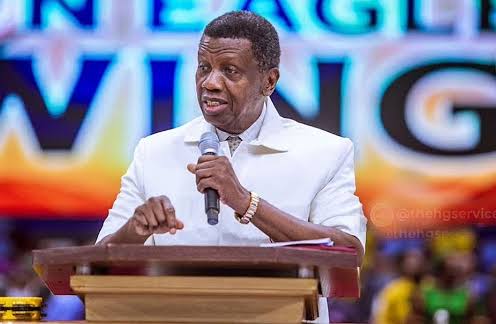
Get rid of Terrorists within 90 days or resign from office – Adeboye tells Service Chiefs
The General Overseer of the Redeemed Christian Church of God (RCCG), Enoch Adejare Adeboye, has called on Nigeria’s security chiefs to eliminate terrorists within 90 days or resign from office, amid growing concerns over insecurity across the country.
In a video shared on the church’s official X handle on Tuesday, Adeboye urged the Federal Government to take decisive and urgent steps to confront escalating attacks, kidnappings and killings in several parts of the country.
“If I were asked to make suggestions, I would say quietly to our government, move fast. And tell our security chiefs, get rid of these terrorists within 90 days, or resign,” Adeboye said.
The cleric noted that while religious leaders can only offer counsel to those in authority, the responsibility for national security ultimately rests with the Commander-in-Chief.
Adeboye referenced past efforts under former President Muhammadu Buhari, recalling that similar directives were issued to security chiefs to combat insurgency and banditry, though he said the targets were not fully achieved within the set timeframe.
In 2021, Buhari had instructed then-service chiefs to “take out” bandits, kidnappers and their sponsors, urging the military to adopt a more proactive approach in tackling insecurity.
Commenting on that period, Adeboye said the directive was not effectively implemented to completion.
“He ran with that advice, but he didn’t follow it through. Because he gave the order as the commander-in-chief of the armed forces. The three months went, and the work was not done,” he said.
The RCCG leader added that he later engaged the former president on the issue but declined to disclose details of their conversation.
He further urged the current administration to ensure that any renewed directive to security agencies should not only focus on neutralising armed groups but also on those financing and supporting them.
“When giving orders to the service chiefs this time around, we should make it clear to them that they are not only to eliminate the terrorists, they should eliminate their sponsors, no matter how influential they may be,” Adeboye added.
His remarks come amid renewed public concern over insecurity in parts of the country, following a series of recent abductions and attacks on schools and communities.
On May 15, gunmen reportedly attacked two schools in Ogbomoso, Oyo State, abducting several pupils and teachers, with one teacher later killed in captivity, according to reports circulating online.
Following the incident, President Bola Ahmed Tinubu ordered the deployment of 1000 Forest Guards and a specialised security unit with advanced rescue capabilities to intensify efforts to secure the release of the victims.
News
Five police officers remanded in Prison over alleged murder
Five police officers remanded in Prison over alleged murder
Five police officers accused of involvement in the alleged killing of 28-year-old Delta State musician and delivery worker, Oghenemine Million Ogidi, popularly known as OG Millan, have been arraigned before a High Court in Asaba and remanded in custody pending further proceedings.
The officers were brought before High Court 5 sitting in Asaba in a case that has drawn public attention and renewed calls for accountability. Proceedings were held before Justice Marshal Onome Umukoro under Suit No. THC/ASB/CR/M/66C/2026.
The defendants include ASP Usman Nuhu (42), ASP Onoloko Dauroupamo (47), ASP Okoh Kelechi (46), Inspector Goodluck Kingsley (42), and Inspector Omonigho Ahweyevu (41).
The court ordered that the accused officers be remanded at the Ogwashi-Uku Correctional Centre pending further legal steps in the matter. Journalists were also reportedly barred from covering the proceedings.
The case was adjourned to June 15, 2026, for arraignment, following a request for legal advice from the Directorate of Public Prosecutions (DPP).
OG Millan was reportedly killed on April 26, 2026, after he was allegedly intercepted in Effurun, Delta State, while delivering a package said to contain a firearm and ammunition.
Following the court proceedings, the deceased’s elder brother, Victory Ogidi, expressed concern over what he described as poor communication between authorities and the family regarding the progress of the case.
He said the family had been left to depend on social media reports and unofficial sources for updates on both the investigation and court proceedings.
“We lost our brother, and we should not be relying on social media to know what is happening in a case that concerns us directly,” he said.
Victory called on the Delta State Attorney-General, the Ministry of Justice, and the Nigeria Police Force to ensure transparency and provide regular updates to the family, stressing that their demand was for information, not preferential treatment.
Human rights activist Harrison Gwamnishu described the arraignment as a step forward in the pursuit of justice and accountability in the case.
He said the court ordered that the suspects remain in custody while the DPP reviews the file and provides legal advice.
“Today, they finally produced the officers in court, including the principal suspect and others. The judge ordered that they remain in custody while the DPP reviews the case,” Gwamnishu stated.
He expressed hope that the legal process would be accelerated to ensure a full and transparent trial.
However, the activist raised concerns over allegations from the family that they had not been properly briefed on key developments in the investigation, including access to the autopsy report.
He also noted claims that there were attempts to restrict media coverage of the proceedings, including limitations placed on journalists seeking to observe the court session.
News
30 days after opposition summit in Ibadan, plan to choose single presidential candidate collapses
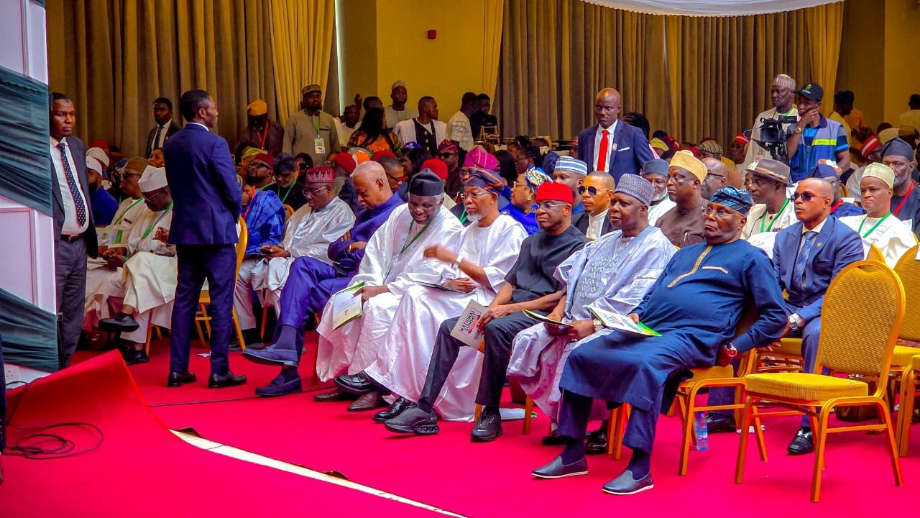
30 days after opposition summit in Ibadan, plan to choose single presidential candidate collapses
Opposition political parties converged in Ibadan on April 25, and unveiled what was widely described as their most ambitious political strategy ahead of the 2027 general election: a commitment to rally behind a single presidential candidate to challenge President Bola Ahmed Tinubu of the ruling All Progressives Congress (APC).
The meeting, which drew major political actors across party lines, was intended to reshape Nigeria’s electoral dynamics and prevent the fragmentation of opposition votes that has historically weakened their chances at the polls.
At the time, the coalition argued that failing to present a united front would only reinforce the dominance of the ruling party, and they pledged to avoid internal divisions that had previously cost them electoral victories.
However, barely five weeks after the Ibadan accord, the unity project has effectively collapsed.
Instead of consolidating around one candidate, the opposition has fractured into multiple camps, each backing its own presidential flagbearer ahead of the 2027 contest.
The African Democratic Congress (ADC) reportedly settled for former Vice President Atiku Abubakar, while the Allied Peoples Movement (AMP) nominated Oyo State Governor Seyi Makinde.
The Labour Party is said to have selected governance and policy expert Chibuzo Okereke, while the Nigeria Democratic Congress (NDC) reportedly backed former Anambra State Governor Peter Obi. Meanwhile, the Peoples Democratic Party (PDP), led by Kabiru Turaki, is said to have chosen former President Goodluck Jonathan.
What was initially presented as a broad opposition coalition aimed at resisting what leaders described as “machinations by the All Progressives Congress (APC) to foist a one-party state on Nigeria” has now devolved into competing political interests marked by mistrust and rivalry.
Political analysts say the breakdown of the single-candidate arrangement reflects deeper structural weaknesses within the opposition, particularly the inability of key stakeholders to prioritise collective strategy over personal ambition.
The Ibadan agreement was largely informed by the lessons of the 2023 presidential election, where a divided opposition vote between Atiku, Obi and Rabiu Kwankwaso enabled Tinubu to secure victory with a plurality of votes.
Opposition strategists had argued that a unified front would be the most viable path to challenging the APC in 2027, forming the basis of the now-fractured agreement.
However, entrenched political interests soon resurfaced, undermining efforts at consensus-building.
Atiku is believed to remain confident in his national political reach and experience, while Obi continues to enjoy strong support among young voters who see him as a key opposition figure.
These competing ambitions ultimately made consensus difficult to achieve.
For months, opposition leaders had warned of an alleged APC strategy aimed at turning Nigeria into a one-party state. Ironically, analysts now argue that the most significant threat to opposition unity has emerged from within the coalition itself.
With multiple candidates now in the field, the ruling APC is expected to face a divided opposition rather than a single coordinated challenger in the 2027 presidential election.
-
6 years ago
Our situation in Kano terrible – Gov Ganduje cries out
-

 News1 year ago
FG pledges commitment to enhance Police officers Welfare, implement Tinubu’s 8-point agenda for NPF
-
 News1 year ago
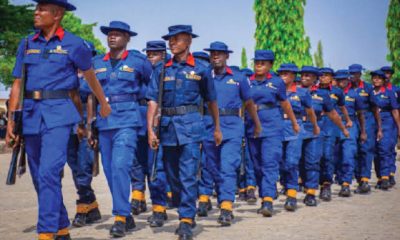
BREAKING; NSCDC gets approval to commence 2025 recruitment exercise
-
 News1 year ago
Alleged cocaine deal: Court issues orders in suspended DCP Abba Kyari’s case
-
 News1 year ago
DPO under investigation for allegedly taking teenage girl to his home while in police custody
-

 News1 year ago
JUST IN; Commissioner of Police bows out of Service
-

 News1 year ago
JUST IN; Police Inspector dies watching Arsenal match
-

 News1 year ago
BREAKING; NLC declare nationwide protest