30 days after opposition summit in Ibadan, plan to choose single presidential candidate collapses

30 days after opposition summit in Ibadan, plan to choose single presidential candidate collapses
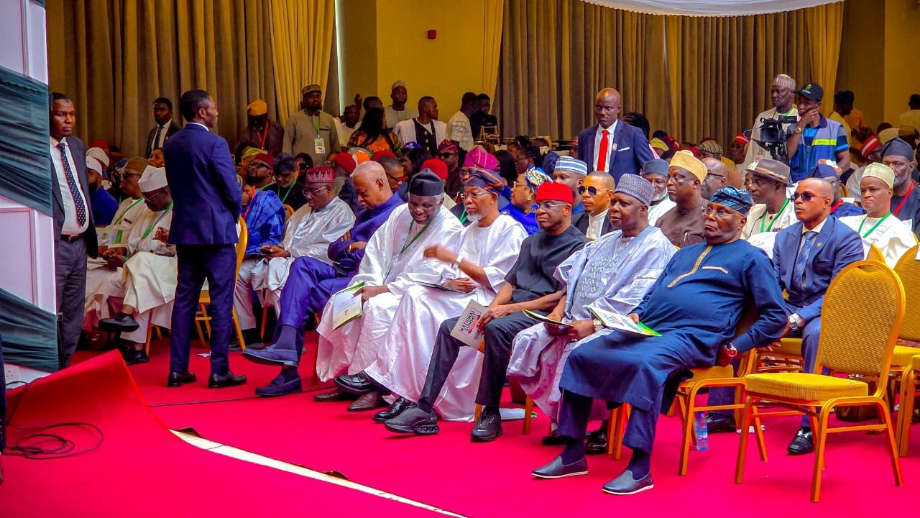
Opposition political parties converged in Ibadan on April 25, and unveiled what was widely described as their most ambitious political strategy ahead of the 2027 general election: a commitment to rally behind a single presidential candidate to challenge President Bola Ahmed Tinubu of the ruling All Progressives Congress (APC).
The meeting, which drew major political actors across party lines, was intended to reshape Nigeria’s electoral dynamics and prevent the fragmentation of opposition votes that has historically weakened their chances at the polls.
At the time, the coalition argued that failing to present a united front would only reinforce the dominance of the ruling party, and they pledged to avoid internal divisions that had previously cost them electoral victories.
However, barely five weeks after the Ibadan accord, the unity project has effectively collapsed.
Instead of consolidating around one candidate, the opposition has fractured into multiple camps, each backing its own presidential flagbearer ahead of the 2027 contest.
The African Democratic Congress (ADC) reportedly settled for former Vice President Atiku Abubakar, while the Allied Peoples Movement (AMP) nominated Oyo State Governor Seyi Makinde.
The Labour Party is said to have selected governance and policy expert Chibuzo Okereke, while the Nigeria Democratic Congress (NDC) reportedly backed former Anambra State Governor Peter Obi. Meanwhile, the Peoples Democratic Party (PDP), led by Kabiru Turaki, is said to have chosen former President Goodluck Jonathan.
What was initially presented as a broad opposition coalition aimed at resisting what leaders described as “machinations by the All Progressives Congress (APC) to foist a one-party state on Nigeria” has now devolved into competing political interests marked by mistrust and rivalry.
Political analysts say the breakdown of the single-candidate arrangement reflects deeper structural weaknesses within the opposition, particularly the inability of key stakeholders to prioritise collective strategy over personal ambition.
The Ibadan agreement was largely informed by the lessons of the 2023 presidential election, where a divided opposition vote between Atiku, Obi and Rabiu Kwankwaso enabled Tinubu to secure victory with a plurality of votes.
Opposition strategists had argued that a unified front would be the most viable path to challenging the APC in 2027, forming the basis of the now-fractured agreement.
However, entrenched political interests soon resurfaced, undermining efforts at consensus-building.
Atiku is believed to remain confident in his national political reach and experience, while Obi continues to enjoy strong support among young voters who see him as a key opposition figure.
These competing ambitions ultimately made consensus difficult to achieve.
For months, opposition leaders had warned of an alleged APC strategy aimed at turning Nigeria into a one-party state. Ironically, analysts now argue that the most significant threat to opposition unity has emerged from within the coalition itself.
With multiple candidates now in the field, the ruling APC is expected to face a divided opposition rather than a single coordinated challenger in the 2027 presidential election.