Again tension escalates in Middle-East as Iran accuses US of violating ceasefire agreement
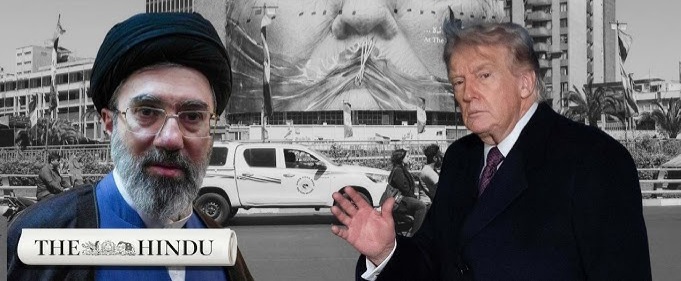

Again Tension escalates in middle east as Iran accuses US of violating ceasefire agreement
Tensions in the Middle East escalated on Friday after Iran accused the United States of violating the ceasefire agreement that ended weeks of hostilities, following American strikes on Iranian military installations.
The latest developments came as Israel and Lebanon signed a U.S.-brokered framework agreement aimed at advancing peace along their shared border.
The U.S. military said its forces targeted Iranian missile and drone storage facilities, as well as coastal radar and surveillance installations, in response to what it described as an Iranian attack on a commercial cargo vessel transiting the Strait of Hormuz earlier in the week.
According to the U.S. Central Command (CENTCOM), the operation was directed at facilities linked to “unwarranted aggression against commercial shipping by Iranian forces” that “clearly violated the ceasefire.”
Iran, however, rejected the U.S. justification, insisting Washington was responsible for the first breach of the memorandum of understanding that halted the conflict.
“These brutal attacks, which targeted Iranian coastal surveillance facilities, are a blatant violation” of the memorandum of understanding that ended the war, the Iranian Foreign Ministry said in a statement.
The Islamic Revolutionary Guard Corps (IRGC) later announced retaliatory strikes on U.S. military positions in the Gulf, saying the attacks were carried out “in retaliation.”
The Guards warned that “if the aggression is repeated, our response will be broader than this,” according to a statement broadcast by Iranian state television on Telegram.
The confrontation also spread to Bahrain, where authorities said several Iranian drones targeted the country.
Bahrain condemned the incident, accusing Tehran of “sabotaging peace efforts” aimed at restoring stability following the recent ceasefire.
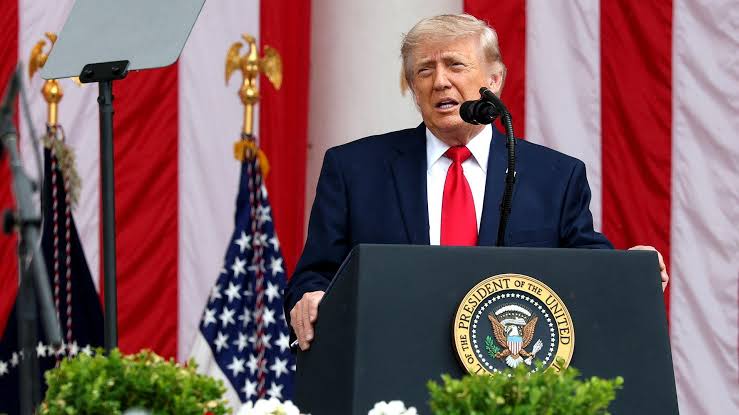
U.S. President Donald Trump earlier accused Iran of attacking a commercial vessel in the Strait of Hormuz, describing the alleged action as a breach of the truce.
“This is a foolish violation of our ceasefire agreement,” Trump said.
Vice President JD Vance also cautioned Tehran against further military action, warning on X that “violence will be met with violence” if Iran launches additional attacks.
Despite the renewed exchanges, commercial shipping through the Strait of Hormuz has continued, although Iran has warned vessels not to enter or leave the Gulf without its approval.
Some ships have reportedly continued using alternative routes outside those authorised by Tehran.
Oil markets remained largely stable, with prices easing amid expectations that the vital shipping lane, which carries about one-fifth of global oil and gas exports, would remain operational despite the heightened tensions.
Meanwhile, diplomatic efforts recorded a breakthrough as Israel and Lebanon signed a U.S.-brokered framework agreement following five rounds of negotiations in Washington.
The agreement provides for Lebanese troops to gradually assume control of two areas currently occupied by Israeli forces and outlines a process aimed at disarming Hezbollah.
Speaking during the signing ceremony, U.S. Secretary of State Marco Rubio said the agreement “begins to put in place a framework for lasting peace and security.”
Israeli Prime Minister Benjamin Netanyahu welcomed the deal, describing it as a strategic victory over Iran.
He said Lebanese forces would deploy to two pilot areas in southern Lebanon, while Israeli troops would remain in a designated security zone until Hezbollah is disarmed.
He added that displaced residents would not immediately be allowed to return.
Lebanese President Joseph Aoun described the agreement as a “first step” toward allowing displaced citizens to return home “under the sovereignty of the Lebanese state.”
However, supporters of the Iran-backed Hezbollah movement staged protests in Beirut on Friday night, arguing that the agreement undermined broader regional peace efforts linked to ongoing negotiations between the United States and Iran.