
Nigeria Police poorly paid any meaningful reform must start from salary increase

Nigeria Police poorly paid any meaningful reform must start from salary increase
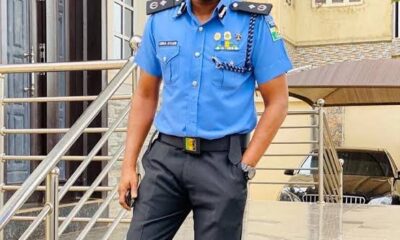
Akintunde Akintayo, a Nigerian-born officer serving with the Metropolitan Police Department in Washington, DC, has urged Nigeria to overhaul its policing system, warning that poor welfare, inadequate training, and cultural prejudice continue to weaken the Nigerian Police Force and hinder the country’s fight against insecurity.
In an interview with Arise News, Akintayo compared his experiences in the United States with what he observed in Nigeria.
With over a decade in one of America’s most prominent police departments, he stressed that genuine reform must begin with changing how officers are treated and how communities view law enforcement.
He said the long-standing perception of police as adversaries can only change through proper welfare, stronger community relationships, and respect for human dignity.
“Nigerian police welfare is very poor, I will be honest,” he said.
“Providing them a good welfare would be helpful in terms of security. Because me, as a police officer in the US, I’m like a guardian. I’m the face of the people.”
He explained that officers cannot fulfil their duties if they themselves lack support.
“I’m the first person the people see when they have a problem. I’m the first person they call… And I can’t do that if I don’t have good relationship with the community.”
According to him, officers need reassurance that the system will protect them and their families.
“If I actually put my life on the line, what is going to happen to my own family, what is going to happen to me, even when I’m gone?”
Akintayo recounted being profiled and harassed during a 2019 trip to Nigeria because of his hairstyle—a moment that exposed entrenched bias.
“Yes, I was referring to 2019, where I experienced that kind of a bad situation, I don’t think your look should be your identity.”
He argued that deeper cultural attitudes, not just police behaviour, must change.
“I think the problem is our culture. It’s not even the police alone. It’s just the culture of Nigeria and how you see people.”
Despite holding advanced degrees and serving in a respected US agency, he said he was judged only by appearance.
“I have a bachelor’s, I have a master’s degree. I have a good professional job in the US, but that doesn’t make me a bad person because I’m making my hair.”
Central to his recommendations is a complete overhaul of police training in Nigeria.
“We already know what the problem is for Metropolitan Police Department. Once we know what the problem is, then we change our policy. And by changing our policy, that means we are giving training.”
He explained that US police training goes far beyond weapons and arrest protocols, covering communication, de-escalation, and even unarmed patrols.
“We are trained to actually talk to the community without even having a weapon on. That’s always our last resort.”
He contrasted this with Nigeria, where firearms often become the first response.
“Police are not supposed to be a war front. We are seen as a guardian. We should be a guardian to our community.”
He acknowledged that significant change will take time.
“This is not a rocket science, and it’s not going to happen in a day. It’s going to take time. But we have to start by training our officers in how to deal with the community.”
Addressing the conflict in Nigeria’s Northeast, Akintayo emphasised that intelligence-gathering should begin with the police. “Police is the first intel personnel you can use,” he said. But for police to play this role, they must be equipped and properly cared for. “They need to be well taken care of. They need good welfare package.”
Relying on the military without utilising police intelligence, he argued, weakens long-term solutions.
“The police are the first line… Before you now go to using military, the police force is still the first in line that can help provide good intel.”
He opposed negotiating with extremist groups.
“I won’t advise for federal government to be negotiating with terrorists… They just come back and demand for more.”
He highlighted that police officers in Washington, DC start at $70,000 per year, with regular pay increases to reflect inflation.
“Since 2020, we’ve had pay increases about three times…”
He questioned whether Nigerian officers have similar advocacy systems.
“I don’t think Nigeria police are union members that just represent them and go to the government and ask for demand.”
On whether citizens should be allowed to bear arms, he warned against it.
“I don’t think we should make that legal… And if the government decides to allow everyone, we need to do a thorough background check.”
He added, “Do we have a system in Nigeria that actually does a background check on everyone?”
Akintayo recalled migrating to the US through a visa lottery and starting his career as a correctional officer.
“I started as a correctional officer… I told my colleagues that I would be a police officer… I applied. I was hired. I’ve been there for 10 years now.”
He said young Nigerians must pursue their goals intentionally.
“There’s always an opportunity for young people, but do you know what you actually want to do?”
Beyond patrol duty, he serves on specialised units including the crisis intervention team, honour guard, and family support.
“We are just 12 in the whole department. We visit every officer that got injured or maybe lose their life.”
He said he chooses to focus on solutions. “I don’t want to be part of the problem but the solution.”
When asked for his top recommendations to the Nigerian government, he began with a plea: “Please and please provide more welfare packages to these officers because they are the front line.”
He stressed that support should also come from outside government, noting how NGOs in the US provide assistance to families of fallen officers.
“Even when you have a loan, they clear the loan, they take care of your kids.”
Finally, he appealed directly to Nigerians.
“Once the police force sees that the community cares about them, then I think it will help. We will actually care more about the community as well.”

News
Eight persons killed, others injured in another fatal road accident

Eight persons killed, others injured in another fatal road accident
Eight persons died while three others were injured in a road traffic crash along the Potiskum–Dogon Kuka carriageway in Yobe.
The Yobe Sector Commander of the Federal Road Safety Corps (FRSC), Mr Andrew Longkam, confirmed the incident on Thursday.
He said the crash occurred around Gaggaba on the Potiskum–Dogon Kuka axis at about 12:40 hours.
“Preliminary reports from Dogon Kuka Unit Command show the incident was promptly reported to the corps,” Longkam said.
FRSC operatives arrived within five minutes, enabling swift rescue, evacuation of victims, traffic control, road clearance and prevention of secondary crashes.
The crash involved a white Howo trailer, registration DAL 963YY, and a white Mitsubishi Canter, registration NNR 437XA.
“Twelve adult males were involved, with eight fatalities and four rescued, including three injured and one unhurt,” he said.
The injured and deceased were taken to Government General Hospital, Dogon Kuka, where the injured received prompt medical attention.
Longkam said the FRSC tow truck cleared the obstruction, restored traffic flow and notified the Police Motor Traffic Division in Dogon Kuka.
“Preliminary findings indicate the Mitsubishi Canter, suspected to excessive speeding, committed a route violation and crashed into the trailer,” he said.
He said excessive speed and route violation were suspected causes, adding that investigations were ongoing to determine the exact circumstances.
The sector commander urged motorists to avoid speeding, route violations and unsafe practices, assuring continued enforcement, emergency response and public education across the state. (NAN)
News
Reaction as Atiku’s Son defects to APC, backs President Tinubu’s reelection in 2027
Reaction as Atiku’s Son defects to APC, backs President Tinubu’s reelection in 2027
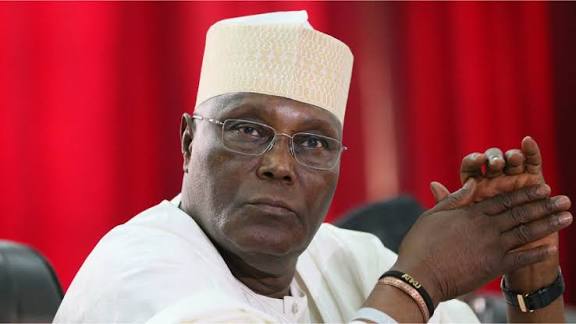
Former Vice President and Peoples Democratic Party (PDP) presidential candidate, Atiku Abubakar, has addressed his son Abba Abubakar’s decision to join the All Progressives Congress (APC), describing it as a personal choice.
In a statement posted on his X handle, Atiku said, “The decision of my son, Abba Abubakar, to join the APC is entirely personal. In a democracy, such choices are neither unusual nor alarming, even when family and politics intersect.”
He added, “As a democrat, I do not coerce my own children in matters of conscience, and I certainly will not coerce Nigerians.”
The former vice president also highlighted his concerns about the ruling party, saying, “What truly concerns me is the poor governance of the APC and the severe economic and social hardships it has imposed on our people.”
“ I remain resolute in working with like-minded patriots to restore good governance and offer Nigerians a credible alternative that brings relief, hope, and progress.”
News
JUST IN; Oyo Governor, Makinde names Olubadan as Chairman Oyo Council of Obas
JUST IN; Oyo Governor, Makinde names Olubadan as Chairman Oyo Council of Obas
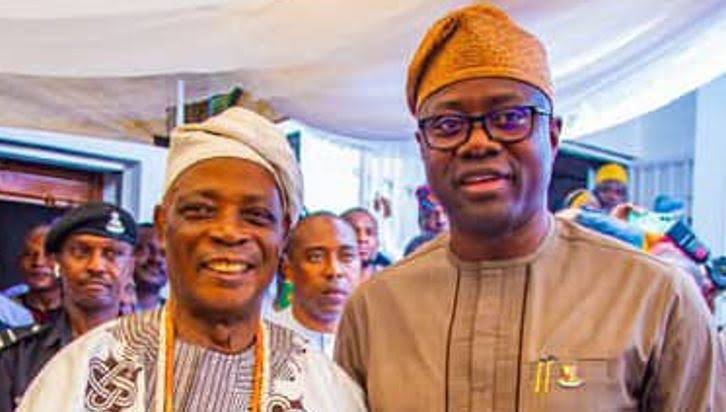
Oyo State Governor, Seyi Makinde, has inaugurated the Oyo State Council of Obas and Chiefs, declaring that the Olubadan of Ibadan, Oba Rashidi Ladoja, will be heading the council for a period of 2 years.
The declaration follows the passing of the Oyo State Council of Obas and Chiefs (Further Amendments) Bill, 2025, by the state House of Assembly, and the signing of the same into law by the governor.
Recall that the lawmakers had amended Clause 5 of Section 28 of the Chieftaincy Law to make the Council chairmanship rotational among the Alaafin of Oyo, the Soun of Ogbomoso, and the Olubadan of Ibadanland.
While inaugurating the Council, Governor Makinde said he had consulted with the trio of the Alaafin, the Olubadan and the Soun, with the three of them reaching a consensus that the chairmanship should start with the Olubadan of Ibadanland, His Imperial Majesty Oba Rashidi Ladoja.
-
6 years ago
Our situation in Kano terrible – Gov Ganduje cries out
-

 News11 months ago
FG pledges commitment to enhance Police officers Welfare, implement Tinubu’s 8-point agenda for NPF
-
 News11 months ago
BREAKING; NSCDC gets approval to commence 2025 recruitment exercise
-
 News9 months ago
Alleged cocaine deal: Court issues orders in suspended DCP Abba Kyari’s case
-
 News12 months ago
DPO under investigation for allegedly taking teenage girl to his home while in police custody
-

 News12 months ago
JUST IN; Commissioner of Police bows out of Service
-

 News9 months ago
JUST IN; Police Inspector dies watching Arsenal match
-

 News12 months ago
BREAKING; NLC declare nationwide protest