
Nigerians decry shortage of cash in Banks as CBN threatens sanction

Nigerians decry shortage of cash in Banks as CBN threatens sanction
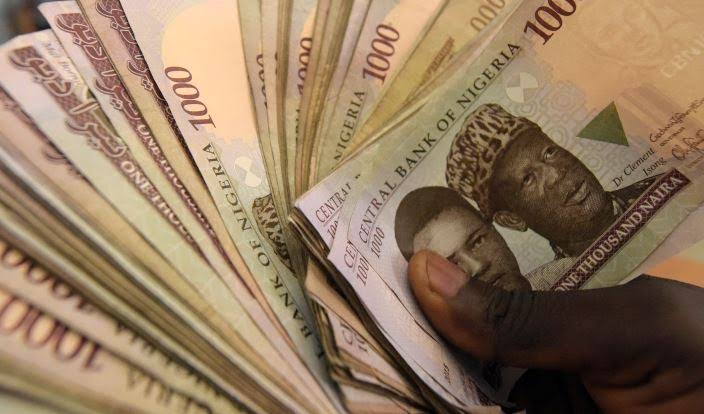
Some small business operators and residents in the Federal Capital Territory (FCT), have decried the scarcity of Naira notes for various transactions.
They spoke to the News Agency of Nigeria (NAN) on Sunday in Abuja.
Over the past few days, bank customers had experienced difficulty trying to get cash from banks’ Automated Teller Machines (ATMs) Point of Sale (POS) agents.
This has resulted in the hike in withdrawal charges by some of the POS operators.
Mary Isaac, a POS operator in Mabushi, complained that she spent more than five hours in the bank on Friday trying to get cash.
According to her, at the end, I only got very little cash which was not adequate for business..
“For every transaction, now the charge is from N200 and above, and it will go higher this December.
” This is not our fault but the Central Bank of Nigeria (CBN) which has not put more cash in circulation,” she said.
Mr Paul Uzor, a businessman who came to withdraw cash from a PoS agent said that he was charged N500 to withdraw N10,000 .
Uzor said that the extra charge was not fair on the masses, considering the harsh economic situation.
He called on the CBN to prevail on all Deposit Money Banks (DMBs) to make enough cash available, both in the ATMs and the banking halls.
Isah Abba, a trader, said that the scarcity of cash was particularly hurting small business owners who rely on cash for their daily business transactions. .
“We can not run our business like this.
“Both businesses and customers do not have enough cash, and when we go to the POS, they also do not have cash,” he said.
He urged the CBN to address the acute scarcity of cash before the festive season sets in.
Meanwhile, the CBN has threatened to impose fines on erring banks over scarcity of cash at the ATMs.
The CBN Governor, Yemi Cardoso, said this at the annual Bankers’ Dinner organised by the Chartered Institute of Bankers of Nigeria in Lagos at the weekend.
Cardoso said that the apex bank would be conducting spot checks across the DMBs, and would impose sanctions on underperforming banks.
He urged customers to report any difficulties in accessing cash directly to the CBN for prompt action.
“We also recognise the ongoing challenges with cash availability at ATMs, which disproportionately affect ordinary Nigerians.
“To address this, we are conducting spot checks across the DMBs, and we will impose penalties on the underperforming institutions.
“Effective Dec. 1, customers are encouraged to report any difficulties withdrawing cash from bank branches or ATMs directly to the CBN through designated phone numbers and email addresses for their respective states,” he said.
He said that guidelines would be circulated widely to raise public awareness.
He called for full regulative compliance by all stakeholders, including mobile money operators and POS agents, to promote digital transaction channels and improve service delivery.
He emphasised that financial institutions found engaging in malpractices or sabotage would face penalties.
“The CBN will continue to maintain a robust cash offering to meet the country’s needs, particularly during high demand periods such as the festive season and year-end,” Cardoso said. (NAN)

News
Get rid of Terrorists within 90 days or resign from office – Adeboye tells Service Chiefs
Get rid of Terrorists within 90 days or resign from office – Adeboye tells Service Chiefs
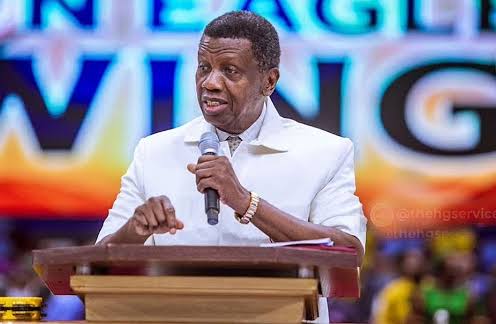
The General Overseer of the Redeemed Christian Church of God (RCCG), Enoch Adejare Adeboye, has called on Nigeria’s security chiefs to eliminate terrorists within 90 days or resign from office, amid growing concerns over insecurity across the country.
In a video shared on the church’s official X handle on Tuesday, Adeboye urged the Federal Government to take decisive and urgent steps to confront escalating attacks, kidnappings and killings in several parts of the country.
“If I were asked to make suggestions, I would say quietly to our government, move fast. And tell our security chiefs, get rid of these terrorists within 90 days, or resign,” Adeboye said.
The cleric noted that while religious leaders can only offer counsel to those in authority, the responsibility for national security ultimately rests with the Commander-in-Chief.
Adeboye referenced past efforts under former President Muhammadu Buhari, recalling that similar directives were issued to security chiefs to combat insurgency and banditry, though he said the targets were not fully achieved within the set timeframe.
In 2021, Buhari had instructed then-service chiefs to “take out” bandits, kidnappers and their sponsors, urging the military to adopt a more proactive approach in tackling insecurity.
Commenting on that period, Adeboye said the directive was not effectively implemented to completion.
“He ran with that advice, but he didn’t follow it through. Because he gave the order as the commander-in-chief of the armed forces. The three months went, and the work was not done,” he said.
The RCCG leader added that he later engaged the former president on the issue but declined to disclose details of their conversation.
He further urged the current administration to ensure that any renewed directive to security agencies should not only focus on neutralising armed groups but also on those financing and supporting them.
“When giving orders to the service chiefs this time around, we should make it clear to them that they are not only to eliminate the terrorists, they should eliminate their sponsors, no matter how influential they may be,” Adeboye added.
His remarks come amid renewed public concern over insecurity in parts of the country, following a series of recent abductions and attacks on schools and communities.
On May 15, gunmen reportedly attacked two schools in Ogbomoso, Oyo State, abducting several pupils and teachers, with one teacher later killed in captivity, according to reports circulating online.
Following the incident, President Bola Ahmed Tinubu ordered the deployment of 1000 Forest Guards and a specialised security unit with advanced rescue capabilities to intensify efforts to secure the release of the victims.
News
Five police officers remanded in Prison over alleged murder

Five police officers remanded in Prison over alleged murder
Five police officers accused of involvement in the alleged killing of 28-year-old Delta State musician and delivery worker, Oghenemine Million Ogidi, popularly known as OG Millan, have been arraigned before a High Court in Asaba and remanded in custody pending further proceedings.
The officers were brought before High Court 5 sitting in Asaba in a case that has drawn public attention and renewed calls for accountability. Proceedings were held before Justice Marshal Onome Umukoro under Suit No. THC/ASB/CR/M/66C/2026.
The defendants include ASP Usman Nuhu (42), ASP Onoloko Dauroupamo (47), ASP Okoh Kelechi (46), Inspector Goodluck Kingsley (42), and Inspector Omonigho Ahweyevu (41).
The court ordered that the accused officers be remanded at the Ogwashi-Uku Correctional Centre pending further legal steps in the matter. Journalists were also reportedly barred from covering the proceedings.
The case was adjourned to June 15, 2026, for arraignment, following a request for legal advice from the Directorate of Public Prosecutions (DPP).
OG Millan was reportedly killed on April 26, 2026, after he was allegedly intercepted in Effurun, Delta State, while delivering a package said to contain a firearm and ammunition.
Following the court proceedings, the deceased’s elder brother, Victory Ogidi, expressed concern over what he described as poor communication between authorities and the family regarding the progress of the case.
He said the family had been left to depend on social media reports and unofficial sources for updates on both the investigation and court proceedings.
“We lost our brother, and we should not be relying on social media to know what is happening in a case that concerns us directly,” he said.
Victory called on the Delta State Attorney-General, the Ministry of Justice, and the Nigeria Police Force to ensure transparency and provide regular updates to the family, stressing that their demand was for information, not preferential treatment.
Human rights activist Harrison Gwamnishu described the arraignment as a step forward in the pursuit of justice and accountability in the case.
He said the court ordered that the suspects remain in custody while the DPP reviews the file and provides legal advice.
“Today, they finally produced the officers in court, including the principal suspect and others. The judge ordered that they remain in custody while the DPP reviews the case,” Gwamnishu stated.
He expressed hope that the legal process would be accelerated to ensure a full and transparent trial.
However, the activist raised concerns over allegations from the family that they had not been properly briefed on key developments in the investigation, including access to the autopsy report.
He also noted claims that there were attempts to restrict media coverage of the proceedings, including limitations placed on journalists seeking to observe the court session.
News
30 days after opposition summit in Ibadan, plan to choose single presidential candidate collapses
30 days after opposition summit in Ibadan, plan to choose single presidential candidate collapses
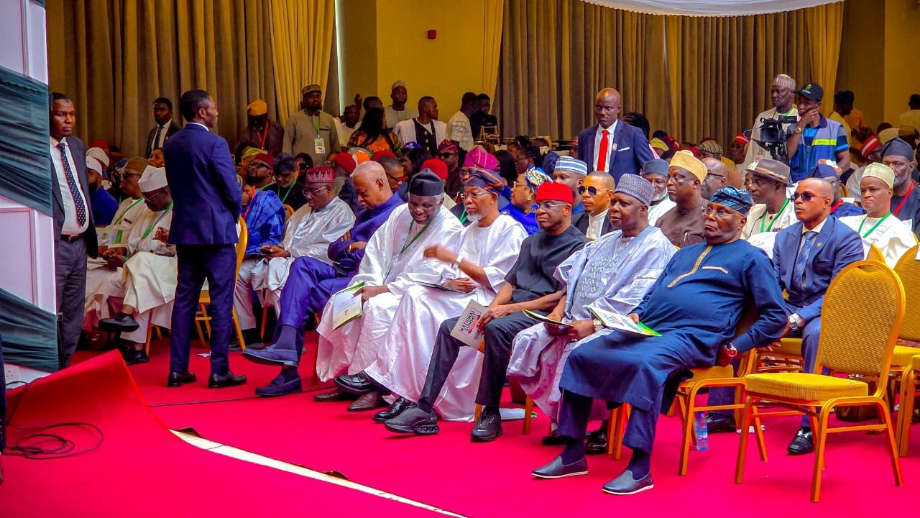
Opposition political parties converged in Ibadan on April 25, and unveiled what was widely described as their most ambitious political strategy ahead of the 2027 general election: a commitment to rally behind a single presidential candidate to challenge President Bola Ahmed Tinubu of the ruling All Progressives Congress (APC).
The meeting, which drew major political actors across party lines, was intended to reshape Nigeria’s electoral dynamics and prevent the fragmentation of opposition votes that has historically weakened their chances at the polls.
At the time, the coalition argued that failing to present a united front would only reinforce the dominance of the ruling party, and they pledged to avoid internal divisions that had previously cost them electoral victories.
However, barely five weeks after the Ibadan accord, the unity project has effectively collapsed.
Instead of consolidating around one candidate, the opposition has fractured into multiple camps, each backing its own presidential flagbearer ahead of the 2027 contest.
The African Democratic Congress (ADC) reportedly settled for former Vice President Atiku Abubakar, while the Allied Peoples Movement (AMP) nominated Oyo State Governor Seyi Makinde.
The Labour Party is said to have selected governance and policy expert Chibuzo Okereke, while the Nigeria Democratic Congress (NDC) reportedly backed former Anambra State Governor Peter Obi. Meanwhile, the Peoples Democratic Party (PDP), led by Kabiru Turaki, is said to have chosen former President Goodluck Jonathan.
What was initially presented as a broad opposition coalition aimed at resisting what leaders described as “machinations by the All Progressives Congress (APC) to foist a one-party state on Nigeria” has now devolved into competing political interests marked by mistrust and rivalry.
Political analysts say the breakdown of the single-candidate arrangement reflects deeper structural weaknesses within the opposition, particularly the inability of key stakeholders to prioritise collective strategy over personal ambition.
The Ibadan agreement was largely informed by the lessons of the 2023 presidential election, where a divided opposition vote between Atiku, Obi and Rabiu Kwankwaso enabled Tinubu to secure victory with a plurality of votes.
Opposition strategists had argued that a unified front would be the most viable path to challenging the APC in 2027, forming the basis of the now-fractured agreement.
However, entrenched political interests soon resurfaced, undermining efforts at consensus-building.
Atiku is believed to remain confident in his national political reach and experience, while Obi continues to enjoy strong support among young voters who see him as a key opposition figure.
These competing ambitions ultimately made consensus difficult to achieve.
For months, opposition leaders had warned of an alleged APC strategy aimed at turning Nigeria into a one-party state. Ironically, analysts now argue that the most significant threat to opposition unity has emerged from within the coalition itself.
With multiple candidates now in the field, the ruling APC is expected to face a divided opposition rather than a single coordinated challenger in the 2027 presidential election.
-
6 years ago
Our situation in Kano terrible – Gov Ganduje cries out
-

 News1 year ago
FG pledges commitment to enhance Police officers Welfare, implement Tinubu’s 8-point agenda for NPF
-

 News1 year ago
BREAKING; NSCDC gets approval to commence 2025 recruitment exercise
-

 News1 year ago
Alleged cocaine deal: Court issues orders in suspended DCP Abba Kyari’s case
-

 News1 year ago
DPO under investigation for allegedly taking teenage girl to his home while in police custody
-

 News1 year ago
JUST IN; Commissioner of Police bows out of Service
-

 News1 year ago
JUST IN; Police Inspector dies watching Arsenal match
-

 News1 year ago
BREAKING; NLC declare nationwide protest