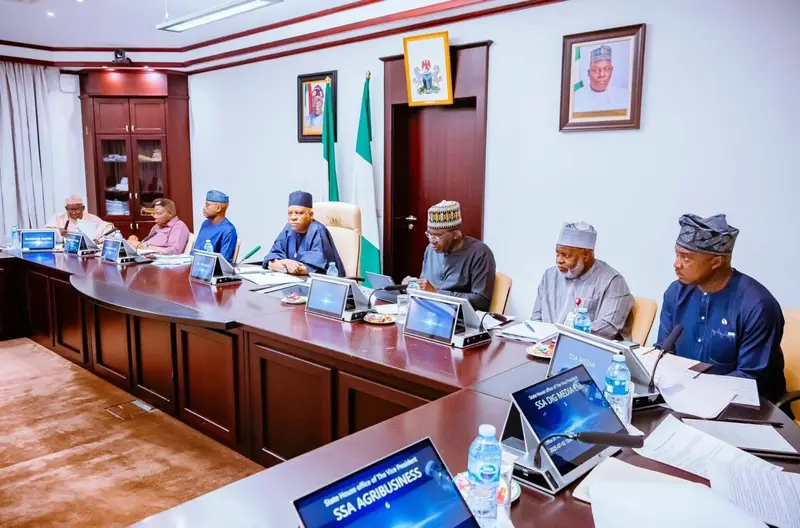
Your fact-finding mission to Nigeria was one sided – Group faults US Congressional delegation


Your fact-finding mission to Nigeria was one sided – Group faults US Congressional delegation
The national leadership of The Muslim Congress (TMC) and the Ulamah Wing of the Conference of Islamic Organisations (CIO) have raised serious objections to what they termed the unbalanced and selective conduct of a recent fact-finding mission to Nigeria by a United States congressional delegation.
In separate statements issued on Friday, both bodies faulted the delegation—tasked with investigating alleged killings of Christians, for failing to consult Muslim leaders or visit Muslim communities in areas affected by violence.
TMC’s Amir, Alhaji AbdulWasi’i Taiwo Bangbala, said that while Nigeria welcomes international attention on matters of security and human rights, such efforts must be rooted in fairness, respect, and a genuine appreciation of the country’s religious and cultural diversity.
He noted that the U.S. team held prominent meetings only with Christian religious figures and a traditional ruler in Benue State, while entirely bypassing recognised Muslim leadership.
The group argued that this omission amounted to a breach of diplomatic norms and called into question the integrity of any “fact-finding mission” that excludes significant stakeholders. TMC urged future delegations to adopt a more inclusive strategy, especially on issues capable of affecting national cohesion.
The Amir warned that the selective nature of the visit suggested the delegation arrived with preconceived notions rather than an interest in grasping Nigeria’s “complex, multifaceted realities.”
He added that the failure to consult the Nigerian Supreme Council for Islamic Affairs or to hear from Muslim victims of violence rendered the mission “incomplete at best,” as noted in the statement.
TMC further cautioned that such one-sided engagement jeopardises efforts toward peace and stability and risks deepening mistrust at a time when broad, inclusive dialogue is essential. It questioned the criteria used to determine which religious groups were included or excluded, asking: “We are compelled to ask what criteria informed the decision to exclude recognised national Muslim leadership from the delegation’s itinerary. What steps will be taken to ensure such exclusion does not recur?”
The organisation pressed for transparency in shaping U.S. foreign policy discussions on Nigeria, insisting that they be objective and shielded from partisan or ideological influences.
It reiterated that “Nigeria’s strength lies in its diversity” and stressed that any credible international cooperation must uphold fairness and respect. Anything less, it warned, “does a disservice to all Nigerians, Muslim and Christian alike.”
Bangbala reaffirmed TMC’s dedication to promoting interfaith understanding and advocating justice for all victims of violence. He added that the group is open to constructive engagement with international partners whose work reflects “professionalism, balance and respect for the complexity of Nigerian society.” He urged future missions to adopt an approach “that listens to all Nigerian voices without bias.”
In its own reaction, the Ulamah Wing and the CIO, led by Sheikh Abdur Rahman Ahmad and Engr. Luqman Balogun, said Nigeria’s security problems cannot be interpreted through “a singular religious lens.”
They criticised the U.S. team for focusing solely on Christian leaders and traditional rulers, “conspicuously excluding representatives of the Muslim community residing in the same violence-affected areas.”
The organisations described the delegation’s one-sided consultation as “highly regrettable” and as an approach that fails the test of a “comprehensive, impartial fact-finding mission.”
According to the CIO, any credible investigation must involve all groups affected by the crisis. By overlooking Muslim voices, the delegation ignored vital testimonies necessary for understanding the full scope of violence in the country.
The CIO stressed that Nigeria’s conflicts are often tied to resource disputes, crime, and communal clashes, not just religion—and that Muslims, too, have suffered widespread attacks, kidnappings, and killings.
The group warned that the limited engagement risks reinforcing “simplified narratives” that misrepresent the complexities of Nigeria’s crises.
It added that “Limiting consultations to only one side of the religious divide risks validating preexisting narratives and may inadvertently create a report that lacks objectivity and fairness.”
CIO leaders argued that the conflict’s root causes—including long-term security failures, banditry, and deep-seated grievances—cannot be understood from a narrow perspective. They described the exclusion of Muslim communities as a “missed opportunity for peace,” saying sustainable reconciliation requires listening to all affected populations.
The CIO called for an immediate “re-engagement process that is inclusive and balanced” to ensure that respected Islamic scholars, community leaders, and Muslim residents in affected areas are consulted moving forward.
Only through such broad-based dialogue, the group maintained, can investigators gain an accurate understanding of Nigeria’s situation and develop meaningful recommendations.
The organisation reiterated its willingness to work with any impartial body committed to uncovering the truth and advancing unity, justice, and peace for all Nigerians.