

Tension trails nationwide implementation of revised secondary school curriculum

Tension trails nationwide implementation of revised secondary school curriculum
The introduction of a new secondary school curriculum has sparked anxiety nationwide, with stakeholders describing the process as hurried and potentially harmful to students preparing for crucial examinations.
The Stakeholders who spoke to the News Agency of Nigeria (NAN) in Abuja, raised alarm over the rushed implementation of the new curriculum, warning that poor coordination could jeopardise students’ performance in external examinations.
NAN recalls that the federal government introduced a revised Senior Secondary School Curriculum nationwide, aiming to make learning more flexible, student-centred and aligne with global standards.
The reform renamed Information and Communication Technology as Digital Technology and approved six trade subjects, while allowing students to combine science, arts and social science subjects more freely.
The six trade subjects newly introduced to the curriculum included, Solar Photovoltaic Installation and Maintenance, Fashion Designing and Garment Making, Livestock Farming
Others were, Beauty and Cosmetology, Computer Hardware and GSM Repairs, Horticulture and Crop Production.
In the new curriculum, there is
reduction of overall subject load – students now take eight to nine subjects instead of up to 20 in the old system-.
Many traditional electives or optional subjects were consolidated or removed to make space for core and trade subjects.
Trade subjects also became part of the core structure, and rather than being peripheral electives, vocational and practical trade skills are now compulsory options within a student’s programme.
Laudable as the initiative is, its hurried rollout without adequate transition measures has drawn sharp criticism from key stakeholders.
Many argued that while the vision behind the reform is commendable, the execution leaves much to be desired.
In separate interviews with NAN, the stakeholders said the curriculum was rolled out across all classes in secondary schools without adequate transition measures for students already in the system.
According to them, the sudden implementation affected the current SS3 students, forcing some of them to drop previously offered subjects and register new ones ahead of their WAEC and other external examinations.
A secondary school teacher, Mrs Ife Olorunmolu, noted that the curriculum reform itself was not the problem, but the manner of implementation.
Olorunmolu said the curriculum should have commenced with Junior Secondary School (JSS 1) and Senior Secondary School (SSS1) students.
“Considering the short time the students have to prepare for their Senior Secondary Certificate Examination (SSCE), how are they expected to perform in the new subjects in their external examinations?,’’ she queried.
Olorunmolu expressed concern that the affected students had limited time to prepare for the new subjects ahead of their SSC Examination.
She warned that the development could negatively affect students’ performance in external examinations if urgent corrective measures were not taken.
She, therefore, urged relevant authorities to review the implementation strategy and ensure a smooth transition that would not be of disadvantage to the current SS 3 students.
Speaking in the same vein, a parent, Christianah Okechukwu, said the revised curriculum introduced new subject combinations and content areas that the current SS3 students were only exposed to in their final year.
Okechukwu said students preparing for the 2026 WAEC examinations were disadvantaged because they lacked foundational knowledge from SS1 and SS2.
He said teaching complex concepts within a limited timeframe placed undue pressure on both teachers and students.
Another parent, Ngozi Okonkwo, whose child is from a Federal Government College, also expressed worry that their children were being unfairly assessed.
Okonkwo said the situation had caused anxiety among candidates who feared failing subjects they barely understood.
She urged education authorities and examination bodies to consider transitional arrangements to protect the affected students.
“I was invited by the authority of my son’s school in one of the federal government colleges in Abuja to come and assist him in choosing his WASCE subjects.
” I was so surprised to find out that my son has to drop two subjects he has been offering from SS1 because these subjects are not slated to be examined in this year’s WASCE.
“My son was made to choose two other subjects he did not offer from SS 1 and the examination is just barely few months. How do we expect good performance from this examination,” she queried.
Some of the affected students told NAN that the sudden curriculum shift has hurt their academic performance, forcing last-minute subject changes with little warning or preparation.
An SS 3 student in a private school in Kubwa said he was introduced to Horticulture at the beginning of the term, despite never studying it before, scrambling to grasp new theory and practical requirements.
A female student from the same school said she dropped Data Processing for History, a subject she abandoned in SS1, and now struggling to revisit past topics to catch up with classmates.
At a Federal Government College in Gwagwalada, an SS3 technical student said he was ordered to drop Basic Electricity and Basic Electronics after studying them for three years, since SS1.
He said he replaced them with Physical and Health Education, with the fear that the abrupt switch will undermine his readiness for technical courses at the tertiary level.
A school proprietor, who preferred anonymity called for urgent intervention by the Federal Ministry of Education and the West African Examinations Council (WAEC).
According to the proprietor, the curriculum changes should follow a gradual implementation process.
She said that examining students on content they had not studied over three years undermined educational fairness.
The proprietor warned that the policy could widen learning gaps, noting that curriculum reforms should align teaching duration with assessment requirements.
She said abrupt changes without adequate teacher training and learning materials could compromise learning outcomes.
Alhaji Haruna Danjuma, National President of the National Parent Teacher Association of Nigeria (NAPTAN), described the recent policy change affecting school curricula as a policy somersault with potential negative implications for students nationwide.
Danjuma said that, while the intention to enable Nigeria compete favourably with other countries was commendable, such reforms should not be introduced in ways that could adversely affect students preparing for external examinations.
According to him, the current policy ought to have commenced at the beginning of an academic session rather than midstream.
He noted that candidates preparing for final examinations conducted by examination bodies such as WAEC and NECO should have been exempted.
“We are appealing to all the examination bodies to consider many variables in setting up their questions, especially the period that was introduced and the areas covered by teachers.
“Secondly, we urged teachers to redouble their efforts in covering the syllabus while the ministry of education should consider extension period for the students.
“On the part of parents, we should make sure the required learning materials are provided for the students as well as ensuring their wards read at home,” he said.
Meanwhile, the Minister of Education, Dr Tunji Alausa had issued comprehensive guidance to address widespread enquiries from students, parents, school proprietors and administrators regarding subject selection under the revised curriculum.
Alausa, in a statement, said the clarification followed numerous calls, letters and public concerns arising from misinterpretations circulating across various platforms.
He explained that there was no restriction or exclusion attached to the selection of any approved subject within the Senior Secondary School Curriculum.
Alausa emphasised that all subjects remain fully open for students to choose from, provided such choices are properly guided by the school authority, parents or a certified school counsellor.
He further noted that the curriculum is designed to be flexible, student centred and supportive of diverse academic interests and career pathways.
On the matter of Trade Subjects, the minister said a student might register for any of the subjects if the school offers them and the student has been taught the subject.
“Where a student has not been exposed to or offered any of the six trade subjects, there is no obligation for such a student to register for any trade subject as a third subject,”he said.
The Minister reaffirmed the Federal Government’s commitment to ensuring a smooth, inclusive and well guided implementation of the revised Senior Secondary School Curriculum nationwide.
As a saying goes, “however beautiful the bird may be, if it perches wrongly, it will fall”. The curriculum, might be well designed on paper, but without careful planning, phased implementation, and adequate support, its promise could falter.
Therefore, as debates continue, stakeholders are calling for a more deliberate transition process, one that preserves the reform’s innovative spirit while safeguarding the academic stability of learners.
They insist that meaningful change in education must be both visionary and methodical, balancing ambition with preparedness to truly achieve its intended impact. (NAN)

News
Three police officers, one army captain get community impact award

3 police officers, 1 army captain get community impact award
Three police officers and one army captain have received the prestigious Community Impact Award for professionalism and humility in the line of duty from the Youth Initiative for Fitness and Impact (YIFI).
The awardees are Capt. Ishaq Abdulhamid, Officer Commanding (OC), Forward Operational Base (FOB) Bwari, and DCP Toyin Sulyman, Deputy Commissioner, Special Protection Unit (SPU), Force Headquarters, Abuja.
Others are ACP Michael Tarfa, Assistant Commissioner of Police, Homicide, FCID, and CSP Ajaegbu Onyeka, Area Crime Officer, Karu Area Command.
Speaking at the award presentation, the National President of YIFI, Kenneth Chima, said the awards were part of activities to mark Global Wellness Day (GWD) coming up on June 13.
According to him, the day was established as a non-profit social project in 2012 to promote holistic well-being and healthier lifestyles.
”It was created in Turkey in 2012 by Belgin Aksoy and is now celebrated in over 100 countries with entirely complimentary and volunteer-led activities.
“Today is a very special day for us in YIFI, because it is part of our activities to mark GWD, coming up on Saturday.
“As our name implies, fitness, we deem it fit to recognise and appreciate exceptional police officers who have done well in their professions.”
He explained that some of the officers were nominated, screened and vetted.
”We have approved them. That is why we are here.
“We gave a Community Impact Award to these exceptional officers who have demonstrated superior dedication and commitment to community safety and peace.
“We did this to appreciate and encourage them to continue to exhibit these good deeds. When you die, the only thing that can speak for you is not your words but your deeds,” he said.
Speaking on behalf of the recipients, Tarfa appreciated YIFI for the award.
“It is an honour that I appreciate. I pledge to do more. I will not relent, in spite of any pressure.
”By the special grace of God, I will continue to protect lives and property and ensure that the people have a better life.
“This award is coming at a good time and I want to appreciate you for recognising me. On behalf of other recipients, we are grateful,” Tarfa stressed.
The News Agency of Nigeria (NAN) reports that YIFI will host a fitness and wellness event in Bwari on June 13 to commemorate GWD. (NAN)
News
*Senate orders Police to arrest bandits doing millions of naira giveaways on TikTok

The Senate has called on security agencies to intensify surveillance and enforcement against bandits and terrorists who openly display their criminal activities and proceeds on social media platforms, particularly TikTok, amid rising concerns over the growing use of digital platforms by criminal networks.
The resolution followed a motion sponsored by Senator Sunday Karimi, who represents Kogi West Senatorial District, on the escalating wave of bandit attacks and terrorist incursions in Kogi West and other parts of the country.
During the debate, lawmakers also backed an additional prayer moved by Senator Natasha Akpoti-Uduaghan of Kogi Central, urging coordinated action by the Nigerian Police Force National Cybercrime Centre and other security agencies to track, monitor and arrest individuals using social media to publicise criminal operations.
Akpoti-Uduaghan expressed concern that armed groups were increasingly leveraging social media not only to flaunt illicit wealth but also to conduct public displays of influence.
“Bandits and terrorists who carry out these activities live on their social media handles. Two days ago, bandits conducted a giveaway, distributing over ₦100m within the space of 30 minutes through their social media handles, especially TikTok,” she said.
She questioned why such online activities had not led to arrests despite clear digital footprints.
“I wonder why the Cybercrime Unit and the Police Force generally cannot track these activities and apprehend them since they are on social media. Therefore, I urge the Nigerian Police Force National Cybercrime Centre to track and arrest these individuals,” she stated.
The motion was seconded by Senator Osita Ngwu of Enugu West Senatorial District and enjoyed broad support across party lines, reflecting growing legislative alarm over the intersection of insecurity and unchecked online criminal exposure.
Senate President Godswill Akpabio described the trend as a direct challenge to state authority and an indication of rising impunity among criminal groups.
“The Department of State Services should be able to track their movements and arrest them because this is a show of impunity, as if there is no law at all,” he said.
He warned that the circulation of videos showing cash displays and criminal activities online was being used to undermine government institutions.
“I do not see why we should not have control over the social media space. That idea of showing themselves, showing the cash collected and displaying it is a way of challenging the government,” he added.
Akpabio urged security and intelligence agencies to treat the matter as an urgent national security priority, calling for stronger coordination and real-time digital monitoring.
“I want the security agencies and heads of security services to see this as a major challenge. Whenever anybody finds such content, bring it to the attention of the Senate, and we shall invite the relevant federal authorities to explain why those people have not been apprehended,” he said.
He also stressed the need for transparency in enforcement efforts, insisting that Nigerians must be informed when arrests and prosecutions are made.
“If they are apprehended, they should also report back so that Nigerians can know that those who openly show their faces while committing crimes are being arrested and prosecuted,” the Senate President stated.
News
Questions, reaction over reported death of 200 Amotekun operatives
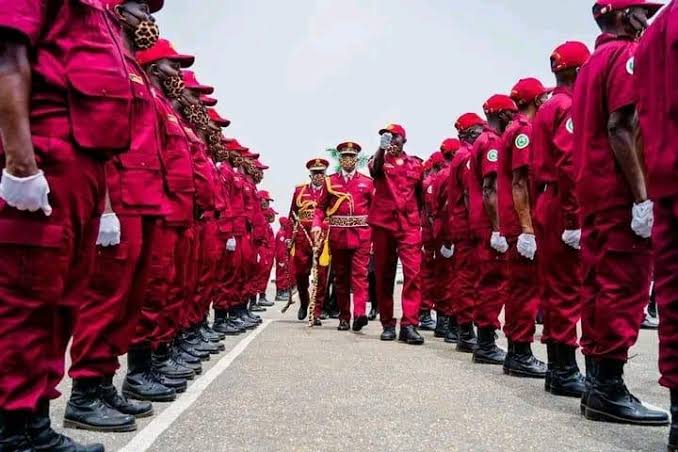
Oyo APC demands clarification over reported death of 200 Amotekun operatives
The All Progressives Congress (APC) in Oyo State has described as “saddening, alarming and unacceptable” the reported death of more than 200 operatives of the Western Nigeria Security Network, Amotekun Corps, in undisclosed circumstances.
The party called on Governor Seyi Makinde to provide full details surrounding the revelation and ensure adequate protection for security personnel and residents across the state.
Governor Makinde had on Saturday, May 30, during a sympathy visit to Oriire Local Government Area, disclosed that over 200 Amotekun operatives had lost their lives in active service, without giving further explanation of the circumstances leading to their deaths. The visit followed an attack on Friday, May 15, in which suspected bandits killed two people and abducted over 40 schoolchildren and teachers.
Reacting on Thursday, the Oyo APC, in a statement by its Publicity Secretary, Olawale Sadare, in Ibadan, expressed shock at what it described as the governor’s “flippancy” in handling such a sensitive disclosure.
“With this ugly development, there is no denying the fact that the current administration in Oyo does not attach much importance to the lives of the people,” the party said.
“How can a governor mention the death of over 200 dedicated crime fighters flippantly and without any recourse to the feelings of their family members and loved ones? Why did the governor withhold information on the high casualty figures of the slain Amotekun Corps?” it queried.
The APC argued that the reported fatalities raised concerns about the level of insecurity in the state, suggesting that crime may have reached an alarming peak.
“For Oyo to have recorded such a high number of fatalities among its security team, it indicates that crime rates in the state have reached the crescendo while the state government covers up a whole lot of things,” the statement added.
The party also raised questions about the welfare, training, and operational structure of the Amotekun Corps, urging reforms and improved coordination with federal security agencies.
“The revelation by the governor also raises a lot of questions regarding the condition of service in the Amotekun Corps Service,” it said.
“From our own discreet investigations, we found that Makinde has failed to work a synergy between the corps and the federal security agencies on account of needless ego and cluelessness,” the APC added.
It further urged the state government to strengthen security coordination and prioritize professional standards within the corps.
“The practice whereby Amotekun Corps members are being deployed to man hotels, properties and business facilities belonging to friends and political associates of the governor should be stopped, while only competent hands should be recruited, even as training, retraining and good welfare packages must be put in place for the officials for them to operate under minimum risk and high motivation,” the party stated.
-
6 years ago
Our situation in Kano terrible – Gov Ganduje cries out
-

 News1 year ago
FG pledges commitment to enhance Police officers Welfare, implement Tinubu’s 8-point agenda for NPF
-

 News1 year ago
BREAKING; NSCDC gets approval to commence 2025 recruitment exercise
-

 News1 year ago
Alleged cocaine deal: Court issues orders in suspended DCP Abba Kyari’s case
-

 News1 year ago
DPO under investigation for allegedly taking teenage girl to his home while in police custody
-
6 years ago
COVID 19: 6 Steps all Countries must take now – WHO
-

 News1 year ago
JUST IN; Commissioner of Police bows out of Service
-

 News1 year ago
JUST IN; Police Inspector dies watching Arsenal match