

Silence is not fear” — Governor Yusuf of Kano State warns Kwankwaso

“Silence is not fear” — Governor Yusuf of Kano State warns Kwankwaso
Kano State Governor, Abba Kabir Yusuf on Monday broke his silence over the growing rift between him and former governor, Rabiu Musa Kwankwaso, warning that he may soon respond publicly to what he described as persistent attacks from his former political mentor.
Yusuf spoke during the official affirmation of Senator Sulaiman Kawu Sumaila as the senatorial candidate of the All Progressives Congress for Kano South at an event held in Rano.
The governor said his restraint should not be interpreted as weakness, stressing that his administration had chosen peace in the interest of Kano State.
“For us, Kano peace is our priority, but if we are pushed to the wall, we will open our mouths and talk. Silence is not a sign of fear,” Yusuf declared.
“To even keep quiet is an act of worship, not because we are afraid, not because we are kids. How could a 69-year-old call a 63-year-old a kid? It is just a personal respect that you are slightly elder than me.”
In what appeared to be a direct response to recent comments credited to Kwankwaso, Yusuf warned that continued attacks could force him to make public revelations.
“However, if an old man does not respect himself and keeps quiet, the younger one will have what to say. So, we are pleading with them in the name of Almighty and His Messenger to keep their mouths shut. Else, you will hear a lot of revelations,” he added.
The remarks marked the first time the governor openly confronted the leader of the Kwankwasiyya Movement since both men reportedly fell out earlier this year.
Kwankwaso had, in an interview with Trust TV, criticised Yusuf’s decision to part ways with the Kwankwasiyya Movement, describing it as a major political mistake.
The chieftain of the Nigeria Democratic Coalition also boasted that the movement was responsible for Yusuf’s emergence as governor, noting that the former governor once served as his personal assistant.

News
President Tinubu establishes Ebola task force, approves N10bn for preparedness

President Tinubu establishes Ebola task force, approves N10bn for preparedness
President Bola Tinubu has approved the establishment of a Presidential Task Force on Ebola Virus Disease Preparedness and Emerging Public Health Threats.
The president also ordered the immediate release of N10 billion for emergency preparedness.
The fund is to strengthen the operational readiness of the Nigeria Centre for Disease Control and Prevention (NCDC) and support critical national public health emergency response activities.
This is contained in a statement issued by the Presidential Spokesperson, Mr Bayo Onanuga, on Tuesday in Abuja.
The Presidential Task Force will be chaired by the Chief of Staff to the President, Femi Gbajabiamila, with membership drawn from relevant Ministries, Departments and Agencies (MDAs) as well as state representatives.
The approval followed a high-level stakeholder meeting convened by the Chief of Staff to assess Nigeria’s preparedness and develop strategies against the possible importation of Ebola into the country.
The meeting was attended by representatives of the Ministry of Interior, the Federal Airports Authority of Nigeria (FAAN), the Nigeria Immigration Service (NIS), the Nigerian Civil Aviation Authority (NCAA), the Lagos State Government and other key stakeholders.
Tinubu also directed all states hosting international airports and border corridors, as well as relevant MDAs, to submit their preparedness plans, funding requirements and intervention needs for coordinated implementation.
The president approved a series of immediate measures to strengthen surveillance and response mechanisms across the country.
These include intensified passenger screening at all international airports through enhanced temperature checks and crowd-control protocols.
Other measures include increased monitoring of passengers arriving through designated high-risk airline routes, including Air Uganda, RwandAir, Air Tanzania, TAAG Angola Airlines, Kenya Airways and Ethiopian Airlines.
The task force is also to ensure the immediate activation of referral and isolation centres at the international airports in Lagos and Abuja, with similar facilities to be established at other airports.
In addition, a QR code-based pre-arrival health declaration system will be activated for passengers arriving from or transiting through designated high-risk countries.
The government also approved the disinfection of departure halls, baggage areas, cargo sections and other airport facilities as precautionary environmental measures.
Tinubu further directed the advisory group to consult with security, diplomatic and aviation authorities on measures to regulate flights from affected and designated high-risk countries.
The task force is expected to designate specific airports or terminals for high-risk flights to facilitate controlled screening, isolation and response procedures.
It will also consider adjusting flight schedules where necessary to minimise interaction between high-risk passengers and other travellers.
Onanuga said that the
MUYI/SH
News
IMF hails Nigeria’s strong economic reforms, resilience under Tinubu Presidency
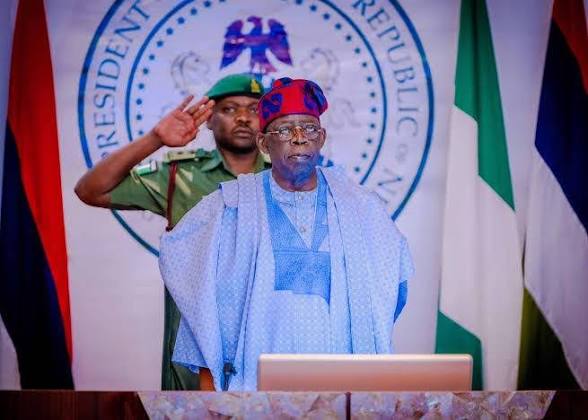
IMF hails Nigeria’s strong economic reforms, resilience under Tinubu Presidency
The International Monetary Fund (IMF) has commended Nigeria’s economic reforms, saying measures implemented over the past three years have strengthened macroeconomic stability and improved resilience.
In a statement issued on Tuesday in Washington, DC, the IMF said Nigeria’s “strong reforms over the past three years have yielded improved macroeconomic outcomes and built resilience”.
The Fund reported that Nigeria’s gross international reserves rose to 46 billion dollars in 2025, up from 40 billion dollars at the end of 2024.
According to the IMF, the improvement was supported by a current account surplus, non-resident purchases of Central Bank open market instruments, and a successful Eurobond issuance.
The institution also disclosed that net international reserves increased significantly to 35 billion dollars at the end of 2025 from 23 billion dollars a year earlier.
In spite of the positive indicators, the IMF cautioned that economic conditions remained difficult for many Nigerians, particularly low-income households.
It noted that poverty reached 63 per cent under the national poverty line, while an estimated 27 million Nigerians experienced food insecurity during the latter part of 2025.
The Fund warned that higher global fuel, food and fertiliser prices could support export earnings and government revenues but would also intensify inflationary pressures.
It said such pressures could worsen poverty levels and deepen food insecurity across vulnerable communities.
The IMF estimated Nigeria’s economic growth at four per cent in 2025 and projected a modest increase to 4.1 per cent in 2026.
It explained that higher food and transportation costs would continue to weigh on economic activity despite ongoing reforms.
According to the Fund, inflation rose to 15.4 per cent year-on-year in March 2026 after declining for more than a year.
The increase was attributed largely to rising international fuel and food prices, which began filtering into domestic markets.
“After being on a declining trend for over a year, inflation nudged up to 15.4 per cent year-on-year in March 2026 as the jump in international fuel and food prices started hitting Nigeria,” it stated.
However, the IMF maintained that inflation was expected to resume its downward trajectory during the second half of the year.
It added that although external price shocks would push inflation higher in the short term, the broader disinflation trend remained intact.
On fiscal performance, the IMF estimated that Nigeria’s consolidated government deficit increased to 4.4 per cent of Gross Domestic Product in 2025.
The organisation noted that while non-oil revenues met expectations, oil revenues fell below budget projections.
“While non-oil revenues were on target, oil revenues fell short of budget expectations,” the Fund stated.
According to the IMF, the revenue shortfall was offset partly by under-execution of reported capital expenditure programmes.
It welcomed the inclusion of additional capital spending previously undertaken outside the budget framework through recent repeal and re-enactment legislation.
The IMF identified risks to Nigeria’s economic outlook, particularly uncertainty surrounding global fuel and food prices.
It also highlighted domestic security challenges as a major threat to economic activity and citizens’ welfare.
“Risks to the outlook come from the uncertain global environment, in particular the outlook for fuel and food prices.
“The domestic security situation is another risk to people and economic activity,” the Fund stated.
The IMF said stronger revenue mobilisation could create additional fiscal space for investments that support economic growth and development.
It nevertheless stressed that poverty and food insecurity could worsen if external economic pressures persist.
“Tight macroeconomic policies and continued reforms supported by technical assistance from the Fund and other partners will be crucial to preserve stability and boost inclusive growth,” it said.
The Fund recommended maintaining a neutral fiscal stance in 2026 to reinforce macroeconomic stability and support the ongoing disinflation process.
It urged authorities to continue protecting priority expenditures and social spending programmes despite fiscal pressures.
The IMF welcomed recent tax reforms but suggested additional tax policy measures may be required over the medium term.
It said such measures could help finance an expanded cash transfer programme aimed at supporting vulnerable Nigerians.
The institution also raised concerns about off-budget spending practices and complex financing arrangements.
It called for accelerated reforms to strengthen budgeting processes, fiscal reporting systems and risk management frameworks.
The Fund further advocated improved transparency, accountability and public financial management standards across government institutions.
On monetary policy, the IMF commended Nigerian authorities for reducing inflation while acknowledging renewed external price pressures.
It agreed that the Central Bank of Nigeria should maintain a tight monetary policy stance guided by incoming economic data.
The Fund said such an approach should remain in place until inflation is firmly contained and expectations become anchored.
It also welcomed progress towards adopting an inflation-targeting framework and encouraged stronger monetary policy communication.
The IMF praised Nigeria’s commitment to a flexible exchange rate regime and recognised that foreign exchange interventions could play a supportive role when necessary.
It urged authorities to reduce dependence on short-term portfolio inflows that carry rollover risks.
The institution also encouraged the gradual removal of remaining exchange restrictions, capital flow management measures and multiple currency practices when conditions allow.
The IMF noted that Nigeria’s financial system remained resilient, supported by the ongoing recapitalisation of banks.
However, it advised regulators to remain vigilant regarding rising non-performing loans and links between banks and sovereign debt exposure.
The Fund encouraged faster implementation of Basel III standards, including countercyclical capital buffers and liquidity coverage requirements.
It also stressed the need to strengthen financial supervision and bring stablecoin and other crypto-asset activities within regulatory oversight.
The IMF welcomed Nigeria’s removal from the Financial Action Task Force grey list and said sustained reforms would be necessary to preserve gains in financial integrity.
The organisation reiterated the importance of structural reforms to promote inclusive growth and economic diversification.
It identified governance, security, electricity, agriculture, infrastructure and human capital development as critical priority areas.
The IMF also called for stronger macroeconomic statistics to improve policy formulation, implementation and monitoring. (NAN)
News
Nigeria, U.S. Military partnership has degraded ISIS operations – DHQ
Nigeria, U.S. Military partnership has degraded ISIS operations – DHQ
The strategic partnership between Nigeria and the United States has significantly degraded the operational capability of the Islamic State of West Africa Province (ISWAP) and other terrorist groups, the Defence Headquarters said on Tuesday.
The Director of Defence Information, Maj.-Gen. Samaila Uba, stated this in an X Spaces engagement on strengthening security through strategic information sharing on the Nigeria-U.S. military partnership against terrorism.
Uba said the collaboration had enhanced intelligence sharing, capacity building, strategic communication, logistics support and operational effectiveness in Nigeria’s counter-terrorism operations.
According to him, terrorism remains a transnational threat that requires intelligence cooperation, technological innovation, strategic communication and strong partnerships to defeat.
He said recent collaborative efforts had contributed to intelligence-driven operations that disrupted terrorist networks and destroyed terrorist enclaves and logistics infrastructure.
The defence spokesman added that the partnership had also enhanced surveillance and reconnaissance capabilities and improved the operational readiness of Nigerian troops through specialised training programmes.
Uba expressed appreciation to the U.S. Government and the United States Africa Command (AFRICOM) for their support in the fight against terrorism and violent extremism.
He also commended President Bola Tinubu for providing the Armed Forces of Nigeria with platforms, equipment and resources required to prosecute ongoing operations.
The Director of Public Affairs, AFRICOM, Col. Rebecca Heyse, similarly said that the joint counter-terrorism operations conducted by Nigerian and U.S. forces had significantly weakened ISIS activities in the region.
Heyse said the operations, which commenced on May 16, were based on months of deliberate planning and intelligence sharing between both countries.
She disclosed that the operations led to the elimination of ISIS global second-in-command, Abu Bilal al-Minuki, alongside several key operational and media leaders.
According to her, more than 200 ISIS fighters were eliminated during the operations, while terrorist checkpoints, weapons caches, logistics hubs and training sites were destroyed.
She said the operations also disrupted financial networks and media structures that supported terrorist activities across Nigeria.
Heyse attributed the success of the operations to close collaboration between Nigerian and U.S. military forces as well as intelligence support provided by relevant agencies.
She said the cooperation was rooted in respect for Nigeria’s sovereignty and demonstrated the effectiveness of strong international partnerships against terrorism.
The AFRICOM spokesperson commended the professionalism of the Nigerian Armed Forces and reaffirmed the U.S. commitment to continued collaboration in addressing security challenges.
Both officials emphasised the importance of strategic information sharing, intelligence cooperation and public engagement in sustaining gains recorded against terrorism and promoting regional stability. (NAN)
-
6 years ago
Our situation in Kano terrible – Gov Ganduje cries out
-

 News1 year ago
FG pledges commitment to enhance Police officers Welfare, implement Tinubu’s 8-point agenda for NPF
-
 News1 year ago
BREAKING; NSCDC gets approval to commence 2025 recruitment exercise
-

 News1 year ago
Alleged cocaine deal: Court issues orders in suspended DCP Abba Kyari’s case
-
 News1 year ago
DPO under investigation for allegedly taking teenage girl to his home while in police custody
-

 News1 year ago
JUST IN; Commissioner of Police bows out of Service
-
 News1 year ago
JUST IN; Police Inspector dies watching Arsenal match
-
6 years ago
COVID 19: 6 Steps all Countries must take now – WHO