Connect with us

Published

on

banner

REVEALED; Why Governors are reluctant to sign death warrants in Nigeria
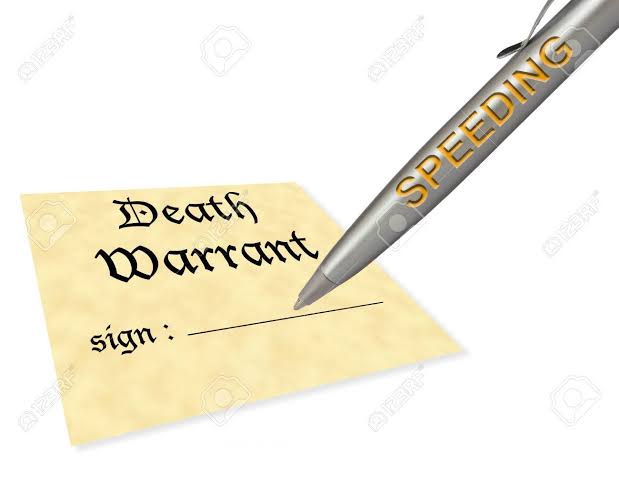

Most Governors in Nigeria are hesitant to sign death warrants due to several complex reasons.
The News Agency of Nigeria (NAN) reports that their stand may not be far from some moral and religious convictions.
Pundits say many governors are deeply influenced by their personal beliefs, with both Christianity and Islam emphasising mercy and forgiveness.
According to NAN findings in Kaduna, Kano and Katsina States,this makes them reluctant to authorise such pending executions.
Also, some of them take such actions due to the fear of wrongful convictions.
Nigeria’s legal system is often criticised for delays, weak investigation procedures, and lack of access to quality legal representation, raising concerns about potential wrongful convictions.
Others hinged their procrastination political sensitivity as they think signing a death warrant can be politically risky, potentially alienating voters or interest groups who oppose capital punishment.
Also, some governors posit that they may face public backlash or protests from human rights groups and religious bodies.
Similarly, the lengthy appeal process, which can take years, also contributes to the delay. Inmates on death row have the right to appeal to the Court of Appeal and even the Supreme Court.
This makes the governors cautious about signing death warrants without exhausting all legal avenues.
Nigeria’s signatory status to international human rights treaties, which often criticize capital punishment, may also influence governors’ decisions.
Some governors may simply believe in the sanctity of life and oppose capital punishment on ethical grounds.
These factors combined create a de facto moratorium on executions, leaving thousands of condemned inmates in limbo.
Some experts and citizens are calling for a review of the constitutional provision, suggesting that Judges should sign death warrants instead of governors.
In Kano, residents of the state have expressed divergent views on whether to retain or abolish the death penalty in the country’s constitution.
Some have argued that the governors lack of commitment to carrying out death sentences makes the provision irrelevant, while others insist it should remain part of the law.
Prof. Yahaya Bunkure, of the Department of Science Education, Bayero University, wholeheartedly support the constitutional provision under Section 212 of the Nigerian Constitution.
It empowers state governors to lend their consent before the execution of individuals sentenced to death.
This provision is a critical safeguard that underscores the gravity of capital punishment.
It ensures that the decision to end a life is not taken lightly but is subject to a final review by an elected official who represents the will of the people.
He said, “However, I believe there is a need for an amendment to this section to compel governors to strictly adhere to its provisions.
“This amendment should ensure that all possible avenues, including those of amnesty and adherence to the rule of law, are exhausted before any execution can proceed.
“By doing so, we would reinforce the integrity of our judicial system, promote transparency, and ensure that mercy and justice are not just options but obligations that governors must consider seriously.”
Alhaji Abubakar Malam of Unguwar Wambai, suggested amending the law to allow for life imprisonment or a specific number of years at the court’s discretion.
He said that Section 212 of the 1999 Constitution gives governors the power of prerogative of mercy over convicts, but argued that this power is not absolute and can be subject to certain conditions.
Malam said, “The debate highlights the complexities surrounding the death penalty and the need for careful consideration of its implications.”
Alhaji Abdulsalam Mohammad, a resident of Unguwa Uku in Tarauni Local Government Area, lamented Nigerian governors have failed to sign death warrants for condemned criminals over the past two decades.
He suggested that the legislature should amend the constitution to make it mandatory for governors to sign death warrants within a specified timeframe, such as three months, after a Court verdict is pronounced, to uphold justice and promote the rule of law.
Mr Paul Israel, of Igbo Road in Sabon Gari Area, believed that notorious criminals who had committed heinous crimes and sentenced to death should be executed.
He decried that governors often fail to sign death warrants, leading to overcrowding in prisons and the potential for released inmates to return to criminal activities.
Israel advocated compelling state executives to sign death warrants, arguing that this would help curb rising criminality in the country.
Some individuals alleged that governors are hesitant to sign death warrants due to corruption, in spite of it being constitutional.
They recalled that during the military era, administrators were more inclined to enforce the law, which maintained order in society.
Some individuals, like Mr Friday John, advocated abolishing the death penalty, citing that many developed countries had done so.
They argued that governors should not sign death warrants, emphasising the value of life.
Alhaji Musa Abdullahi of Hotoro Quarters, who opposed abolishing the death penalty, instead urged governors to fulfill their statutory responsibility of signing death warrants.
He warned that failing to apply the law in cases of treason, homicide, and armed robbery could have repercussions, and argued that the death penalty serves as a deterrent to potential offenders.
In Katsina State, a legal practitioner, Mr Abdullahi Muhammad, has called for the removal of state governors consent in signing death warrant of convicts.
Muhammad made the call on Tuesday in an interview with the News Agency of Nigeria (NAN).
He said that the call has become imperative because in the history of the country since the return to the democracy in 1999, very few governors signed the death warrant of convicts.
Muhammad observed that the governors were reluctant to sign such death warrants even after the courts convicted a person.
“Just remove the governor’s consent on the issue of whether the warrant should be signed to execute the convict or not,” he said
According to him, that has been costing the government a lot of money, hence the need to review the law in the interest of justice.
He further revealed that had been contributing to the prison congestion in the country.
“If you visit Correctional Centers, you see some convicts that have already exhausted their appeals, but still waiting for execution.
“We really need to review the law to allow for the execution of such persons.
“That will even serve as a deterrent to others who might want to commit similar capital offence,” he said.(NAN)

Advertisement
banner
Continue Reading
Advertisement

News

Government agency demolishes building used as kidnappers’ hideout

Published

on

banner

Government agency demolishes building used as kidnappers’ hideout

The Oyo State Government has demolished the three-bedroom bungalow where kidnappers held hostage Mrs Busayo Adelabu John-Paul and her twin sons in Ibadan.
Mrs Adelabu John-Paul and the twins, the younger sister and nephews of former Minister of Power, Chief Bayo Adelabu, were abducted at Elewura area of Ring Road in Ibadan on June 3.
The hostages were, however, rescued by the police on Saturday night at Lako Community, Ayegun Anaye area of Ibadan, during which two of the kidnappers were neutralised and others arrested.
The demolition exercise was carried out on Monday by a team led by the Commissioner for Works and Transport, Mr Abdulmojeed Mogbonjubola, accompanied by operatives of the Nigeria Police Force.
The commissioner said that the demoltion was part of efforts by the government to tackle kidnapping and other criminal activities in the state.
According to Mogbonjubola, the state government has also revoked the land from its owner in its commitment to ensure safety of lives and combat insecurity in the state.
He admonished landlords’ associations, housing agents and residents in the state to always be vigilant about their surrounding and tenants living in their areas.
The commissioner advised residents to alert security agents and the government to any suspicious criminal activities.
Speaking earlier, the Vice Chairman of the Landlords Association, Ayegun- Lako Community, Mr Matthew Olaiya, said that occupants of the three-bedroom bungalow rented the apartment recently.
Olaiya said that the occupants of the building always returned late in the night and used to be away for days.
Also present during the demolition was the Permanent Secretary, Ministry of Works and Transport, Prince Goke Adenrele and other officials of the ministry (NAN)

Advertisement
banner
Continue Reading

News

Fed Govt decries attacks on Nigerians in S/ Africa, plans retaliatory response

Published

on

banner

Fed Govt decries attacks on Nigerians in S/ Africa, plans retaliatory response

The Federal Government has again strongly condemned the attacks, harassment and forced displacement of Nigerians in South Africa, saying it is considering appropriate measures in response.

Advertisement

The Minister of Foreign Affairs, Amb. Bianca Odumegwu-Ojukwu, stated this while speaking with State House Correspondents on Monday in Abuja.

According to the minister, many Nigerians are unhappy with the treatment of their compatriots in South Africa, considering Nigeria’s historical support for the country’s anti-apartheid struggle.

Advertisement

“Nigeria is not happy because Nigeria sacrificed much for the South African struggle for independence.

“Nigeria committed funds and resources. Seats were reserved for South African students, and many Nigerians actively supported the anti-apartheid movement,” she said.

Advertisement

Odumegwu-Ojukwu said the Federal Government had not ruled out any response, including possible retaliatory measures, although any decision would be taken at the highest level of government.

“That is a situation that we are considering. This is up to our legislature and the highest levels of government, but it is not off the table,” she said.

Advertisement

On the evacuation of affected Nigerians, the minister said arrangements were ongoing to repatriate those willing to return home.

She explained that, although, the airlift did not commence on Monday as initially expected, documentation and other formalities were being concluded.

Advertisement

“The repatriation is on course. Mr President has reiterated that the aircraft will go to South Africa and our citizens who are affected will have the opportunity to return home,” she said.

Odumegwu-Ojukwu said the number of Nigerians seeking evacuation continued to rise, adding that screening processes involving both Nigerian and South African authorities were ongoing.

Advertisement

She disclosed that President Bola Tinubu had directed the immediate establishment of a crisis response unit at Nigeria’s Consulate in Johannesburg and the country’s mission in Pretoria to coordinate assistance for affected citizens.

The minister dismissed claims that the affected Nigerians were illegal migrants, insisting that many were legitimate residents and business owners.

Advertisement

According to her, some Nigerians had suffered attacks on their businesses and properties, while others faced intimidation and insecurity.

“To say that Nigerians in South Africa doing legitimate business are illegal migrants is absolutely untrue,” she said.

Advertisement

Odumegwu-Ojukwu added that the Federal Government, working with the National Emergency Management Agency (NEMA) and other relevant agencies, had put plans in place to support and rehabilitate returnees.

“This evacuation is being undertaken with NEMA and other government agencies to ensure that those who return are properly rehabilitated,” she said. (NAN

Advertisement
banner
Continue Reading

News

Troops neutralise terrorist scout, arrest suspects recover weapons, ammunition

Published

on

banner

Troops neutralise terrorist scout, arrest suspects recover weapons, ammunition

The Nigerian Army says its troops have in the last 24 hours, recorded significant operational successes against terrorists, bandits, kidnappers and other criminal elements in various operations across the country.

Advertisement

The operational report made available to the News Agency of Nigeria (NAN) on Monday in Abuja, indicated that troops neutralised a terrorist scout, apprehended several suspects and recovered weapons, ammunition and communication equipment.

In Borno, the report said troops of 73 Battalion (Motorised) neutralised a suspected terrorist scout during an ambush operation near Malari village in Konduga Local Government Area after the suspect ignored repeated warnings to halt.

Advertisement

It also disclosed that troops of 162 Amphibious Battalion recovered seven motorcycles, a PKT machine gun, 1,010 rounds of QJC ammunition and other military items during exploitation operations following the recent terrorist attack on Mandaragirau in Biu Local Government Area.

It added that troops of 145 Battalion arrested a suspected drug peddler in Damasak and recovered illicit substances, while troops of 144 Battalion apprehended a suspected terrorist informant in Madagali, Adamawa.

Advertisement

In Kaduna State, the report said troops of Operation Fansan Yamma fought through an ambush mounted by more than 50 suspected terrorists during a fighting patrol in Kachia Local Government Area and forced the criminals to retreat.

It added that troops of 1 Brigade Quick Response Force apprehended eight suspected terrorists in Zamfara and recovered seven motorcycles, mobile phones, power banks, handheld radios, camouflage uniforms and other items.

Advertisement

“In Niger State, troops of Operation Savannah Shield arrested three suspected terrorists linked to the abduction of a medical doctor and recovered phones, cash and materials believed to be connected to criminal activities.

“The troops also apprehended two suspected terrorist spies allegedly conducting reconnaissance around military facilities in Borgu Local Government Area of the state.

Advertisement

“In Plateau, troops launched a search-and-rescue operation following the abduction of a three-year-old girl in Bassa Local Government Area and arrested a suspected kidnappers’ informant in Mangu Local Government Area,” it said.

The report further revealed that troops of Operation Whirl Stroke recovered a locally fabricated pistol abandoned by fleeing bandits in Katsina-Ala Local Government Area of Benue.

Advertisement

“Similarly, troops of 14 Brigade and other security agencies arrested three suspected gunrunners in Abia and recovered seven Dane guns, 22 live cartridges and a motorcycle.

“In Rivers, troops conducting anti-illegal bunkering operations uncovered and destroyed an illegal refining site in Orashi National Forest, recovering equipment and petroleum products used for illicit activities.

Advertisement

“Ongoing operations across various theatres remain focused on sustaining pressure on terrorists, bandits, kidnappers and othercriminal elements threatening national security,” it said. (NAN) (www.nannews.ng)

Advertisement
banner
Continue Reading

Trending

© 2025, All Rights Reserved | Crime Channels