
Nigerians decry electricity tariff hike amidst poor power supply

Nigerians decry electricity tariff hike amidst poor power supply
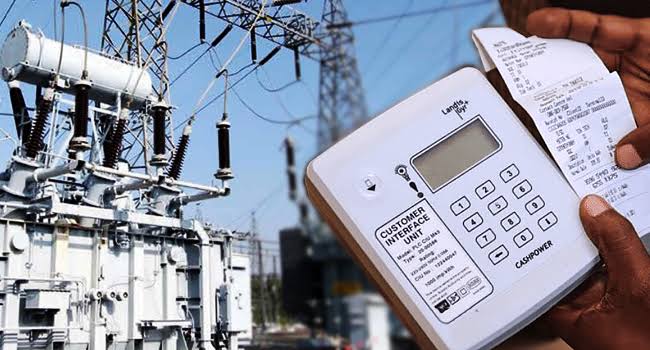
Electricity consumers in Osun, Ondo and Ekiti states have decried the hike in tariff amidst epileptic power supply in the country.
In a survey conducted by the News Agency of Nigeria (NAN) in the states, some electricity consumers described the hike as exploitative.
They said that improving power supply should be the government’s priority and not tariff hike.
Mr Sadiq Adewale, a former Vice-President of National Union of Electricity Employees (NUEE) for South-West, said that the epileptic power situation in the country could be attributed to obsolete power generation and distribution equipment of gencos and discos respectively.
Adewale said that most of the equipment being used by discos needed to be replaced with modern ones to meet the increasing electricity demands by Nigerians
According to him, except those equipment were replaced with modern ones, it would be difficult to guarantee regular power supply across the country.
Adewale also said that the current electricity generating capacity was very low when compared with what was required.
Also, Mr Abiodun Ogunyomi, a resident of Ile-Ife, said that the poor electricity supply currently being experienced across the country had crippled many businesses.
Ogunyomi said that the hike in electricity tariff amidst poor power was a proof of government’s insensitivity to the plights of the masses.
According to him, the power supply situation in Nigeria is frustrating.
Mr Dara Olagoke, who resides in Osogbo, said electricity supply in his area, Agunbelewo, was not regular.
Olagoke said that with the current power supply situation in the country, increase in electricity tariff was unjust and uncalled for.
“How do they want the masses to cope?
There isn’t regular electricity supply and yet you increase the tariff. This is unacceptable,” he said.
Meanwhile, Mrs Kikelomo Owoeye, the Senior Communication Officer, Ibadan Electricity Distribution Company (IBEDC), Osun Region, said that many factors were responsible for poor power generation and distribution in the country.
Owoeye said that one of the major factors was the low energy allocation from energy generation companies (gencos).
“We cannot distribute what we do not generate. If there is insufficient power generation, supply to customers will also be limited.
Other challenges, according to her, include grid disturbances, energy theft, illegal connections, meter tampering, vandalism, non-payment of bills (for post-paid customers), and lack of regular vending (for pre-paid customers).
“Maintaining and upgrading electricity infrastructure require adequate funding, which depends on timely payments from customers,” she said.
Owoeye, however, said that IBEDC had been supplying energy to customers on power distribution based on customer band.
“We ensure that power distribution aligns with the assigned customer bands, like Band A: 20 hours, Band B: 16 hours, Band C: 12 hours, Band D: 8 hours, Band E: 4 hours.
“Additionally, we engage in vegetation management and proactive maintenance to enhance reliability of electrical infrastructure,” she said.
A landlord in Ado-Ekiti, Mr Sunday Ajibade, condemned what he called outrageous monthly bills of N25,000 or more issued to many residents in his area.
Ajibade said that while monthly bills were on the high side, electricity supply had not been of commensurate level.
He said that the Federal Government should no longer condone discos’ requests for increase in tariff without improvement in electricity supply.
Another resident, Mrs Iyabo Ogundele, a frozen foods seller, said poor power supply had continued to threaten the survival of her business.
Similarly, Mr Joel Ilesanmi, a barbing salon operator, said the fuel he buys to keep his generator working has posed a serious threat to his business.
According to him, a large percentage of the money made on a daily basis goes into fuel purchase.
He urged government to compel distribution companies to give prepaid meters to all those who applied for them so as to end issues relating to what he called systemic cheating.
Also commenting, a hospitality entrepreneur, Mr Kehinde Owolabi, said that the current transmission and distribution networks in Nigeria appeared outdated and inefficient, often leading to frequent power outages and voltage fluctuations.
He said that investment in renewable energy sources, such as solar and wind power, which had become affordable and efficient in foreign countries, should be explored in Nigeria.
“If government can invest in these sources of energy, it will help to reduce its reliance on fossil fuels and improve its energy security,” Owolabi said.
He said that the government could also encourage private investments by creating a more favourable regulatory environment and providing financial incentives.
The hospitality expert also blamed consumers for the problem, saying many of them had habits of not conserving energy and failing to turn off lights and appliances, when they were not in use.
Also, Mrs Abiodun Ibiwoye, who is a trader, said that crazy bills from BEDC had forced her to adopt an alternative energy source, that is, solar, for her soft drink business.
Ibiwoye said that a long-term solution capable of addressing the root problem of affordability and reliable energy access must be applied by government.
A business centre operator, Mr Solomon Ogunlola, said he had explored energy-efficient appliances to reduce electricity consumption in the face of price hike without regular power supply.
He said that the intention behind the tariff hike might be to ensure the financial viability of the electricity sector, saying its impact on ordinary Nigerians had been overwhelmingly negative.
Ogunlola stressed the urgent need for a more balanced and sustainable approach to energy pricing in the country.
In his contributions, Mr James Anifowose, a welder, called for revocation of licences of non-performing power distribution companies.
Anifowose said that many times, he often relied on generator to power his machines because the electricity supplied to his street had been consistently poor.
In Akure, Mrs Kehinde Aruleba, an electricity consumer, said that the proposed strike by Nigeria Labour Congress (NLC) would receive great support because Nigerians could no longer cope with persistent increase in electricity tariff, especially when the supply was not guaranteed.
Aruleba, who teaches in Hapa College, Oba-Ile, said that the most affected Nigerians were those living in houses that were not metered.
She said that most residential apartments received electricity bills of between N35,000 and N40,000 in a month for post-paid meters without any evidence of such consumption.
“How will an apartment of two to three bedrooms with five occupants consume power that will amount to N35,000 to N40,000 when sometimes, there will be no power supply for several days?
“Even those with meters are grumbling because of the high speed at which the units are consumed. And they still have gut to increase the tariff. It’s so unfair to Nigerians.
“I think the proposed strike by NLC will receive great support,” she said.
Mr Daniel Akeju, a resident of Akure, described the service provided by BEDC as average, with power supply of 10 hours per day or lower.
Akeju said that the increase in electricity tariff in the face of epileptic power supply should be questioned by the country’s authorities.
Also, Dr Foluso Taiwo, Secretary of NLC in Ekiti, said that obsolete equipment contributed immensely to electricity load shedding and poor power supply.
“Most of these transformers are old. Also at installation, the capacity could be 200 KV to 500KV and serve the people in the area then, but now the demographic capacity of the area has increased.
“More buildings are now available and funny enough, the same transformer is still there to serve such a densely populated area.
“So, the load that a transformer can carry becomes a challenge at different intervals when everybody is around and they try to use electricity.
“Some of them will burn the feeder pillar unit of the transformer. We are not talking about stealing where people will come to vandalise it in order to steal its parts.
“So, what the disco staff do is to ensure that they supply the power to people in different areas at different times in a community because of the capacity of the transformer now, unlike what it was at installation stage,” he stated.
Taiwo, who gave kudos to military governments in the country for building different dams for power generation, said that no successive civilian government had been able to complete a power generation dam in the country.
He said power generation in the country was very low, adding that despite the excess of liquified gas, the country had not been able to channel it to power generation.
“The other problem is corruption in the power sector.
“We just must address these problems totally to tackle the issue of adequate and uninterrupted power supply in the country,” Taiwo said. (NAN)

News
Siting of gold refinery in Lagos: Fed Govt reacts to Northern Elders Forum allegations
Siting of gold refinery in Lagos: Fed Govt reacts to Northern Elders Forum allegations
Abuja, Jan.18, 2025(NAN) The Federal Ministry of Solid Minerals Development has dismissed claims by the Northern Elders Forum (NEF) that the Federal Government sited a gold refinery in Lagos in violation of the federal character principle.
It said the allegations contained in a statement signed by the Northern Elders Forum (NEF) spokesperson, Prof. Abubakar Jiddere, were not true and misleading.
In a statement on Sunday in Abuja, Mr Segun Tomori, Special Assistant to the Minister of Solid Minerals Development, Dr Dele Alake, said the minister had not made any such announcement.
“There was nowhere in the Minister of Solid Minerals announcement that the Federal Government owned or established a gold refinery in Lagos or anywhere for that matter.
“Dr Dele Alake was very clear, concise and emphatic in the announcement of the proposed inauguration of the refinery, that other gold refineries are in the works across the country and all privately-owned by different companies,” he said.
Tomori said the newly established gold refinery was an initiative of Kian Smith, a fully privately-owned mining company, aimed at developing the local gold industry through innovative practices.
He explained that the Federal Government does not compel private companies to locate their operations in any particular part of the federation, as each firm has its own operational and marketing strategy to ensure profitability.
He said the Federal Government acknowledged the doggedness of the company’s founder and Managing Director, Ms Nere Emiko, for delivering a flagship project after years of perseverance, enterprise and leadership.
According to him, the refinery reflects the solid minerals sector’s response to the value-addition policy introduced to discourage the export of raw minerals and to promote local processing and manufacturing.
Tomori said the policy had stimulated the conversion of raw mineral exports into processing factories across the country, generating massive inflows of foreign capital and providing thousands of jobs for Nigerians.
He said this included the 600 million dollars lithium plant in Nasarawa state, the 400 million dollars rare earth plant also in Nasarawa State and the 200 million dollars ASBA lithium plant in Abuja.
Tomori said the Ministry of Solid Minerals Development, through its policy reforms, had been creating an enabling environment for the private sector to thrive and flourish in the mining sector over the past two years.
He said the Lagos gold refinery and similar projects were clear evidence of the effectiveness of reforms in the solid minerals sector.
“The Ministry of Solid Minerals Development shall continue to encourage more mining companies to set up processing and manufacturing plants across the country.
“ We urge NEF to turn a new leaf and join the efforts of President Bola Ahmed Tinubu, to build a stronger, self-reliant economy that meets the needs of the Nigerian people, ”he said.(NAN)
News
BREAKING: Drama as Senegal beat Morocco to clinch AFCON glory

BREAKING: Drama as Senegal beat Morocco to clinch AFCON glory
Senegal clinched their second Africa Cup of Nations title after edging hosts Morocco 1–0 after extra time in a thrilling 2025 Africa Cup of Nations (AFCON) final.
The decisive moment came three minutes into extra time when Pape Gueye fired a superb left-footed strike from the edge of the box, stunning the home crowd in Rabat.
Morocco had earlier missed a golden chance to win in regulation time after VAR awarded a late penalty, but Edouard Mendy saved Brahim Diaz’s effort.
Both sides traded chances in a finely balanced contest, with Morocco chasing a first continental title in over 50 years and Senegal aiming to reclaim their crown.
Senegal started brightly, dictating play early and forcing Morocco goalkeeper Yassine Bounou into sharp saves from Pape Gueye and Iliman Ndiaye.
Morocco responded before half-time, with Nayef Aguerd narrowly missing Abdessamad Ezzalzouli’s dangerous cross across the face of goal.
After the break, the Atlas Lions pressed harder, but Ayoub El Kaabi squandered a clear chance, failing to hit the target from close range.
Senegal threatened on the counter and nearly scored late on, but Bounou produced a fine save to deny substitute Ibrahim Mbaye in the 89th minute.
Extra time proved decisive as Sadio Mané’s clever pass released Pape Gueye, who showed composure and power to beat Bounou with an unstoppable strike.
Morocco pushed desperately for an equaliser, but Mendy stood firm as Senegal defended resolutely to secure a historic victory.
The triumph confirms Senegal’s status among Africa’s elite, sealing a second AFCON title with discipline, resilience and championship pedigree.(NAN)
News
President Tinubu orders suspension of APC e-registration in Kano, over Gov’s defection
President Tinubu orders suspension of APC e-registration in Kano, over Gov’s defection
President Bola Ahmed Tinubu has allegedly ordered the suspension of the All Progressives Congress (APC) e-registration exercise in Kano State, pending the formal defection of Governor Abba Kabir Yusuf to the ruling party.
The allegation was made by Hon. Alhassan Ado Doguwa, a member of the House of Representatives and a prominent APC leader in Kano.
Doguwa disclosed this in a video shared on X by user @jrnaib2, where he suggested that the President had already welcomed Governor Yusuf into the ruling party.
Speaking in the video, the lawmaker stated: “What could you do when Tinubu said he has accepted Abba? What would you do?
“Tinubu has accepted him (into APC), we were going to start APC e-registration in Kano tomorrow, but the President and the APC national leadership has directed that it should be put on hold.”
Doguwa further explained that the APC leadership intends for Governor Yusuf to be the first person to register electronically in Kano once the process resumes.
He added: “If we accept the ‘hunch backed,’ what would he do with me? We could only be patient.”
While the exact date the remarks were made remains unclear, they come as the APC continues its nationwide membership registration drive.
The statements have sparked mixed reactions online. Some social media users dismissed the claim that Governor Yusuf is considering a move to the APC. User @auwal_sls argued that the governor is not prepared to abandon his current political platform, while another user, @Teemaah88, warned that Kano State “will lose this election.”
In recent months, there have been growing reports that associates of Governor Yusuf and his political mentor, Senator Rabiu Musa Kwankwaso, are pushing for a defection to the APC.
Supporters of the idea believe such a move would strengthen Kano’s political alignment with the federal government.
The Kano State Commissioner for Information, Ibrahim Abdullahi Waiya, has publicly defended these calls, insisting that joining the APC would be beneficial to the state. However, Kwankwaso has strongly opposed any suggestion of defection.
He has repeatedly maintained that Governor Yusuf should remain in his current party and has even challenged him to resign from office if he intends to cross over to the APC.
Speculation peaked earlier this week with reports that the governor was expected to defect on Monday, but no such move has taken place.
So far, Abba Kabir Yusuf has kept silent on the issue, leaving the political future of Kano State uncertain.
-
6 years ago
Our situation in Kano terrible – Gov Ganduje cries out
-

 News12 months ago
FG pledges commitment to enhance Police officers Welfare, implement Tinubu’s 8-point agenda for NPF
-

 News11 months ago
BREAKING; NSCDC gets approval to commence 2025 recruitment exercise
-

 News9 months ago
Alleged cocaine deal: Court issues orders in suspended DCP Abba Kyari’s case
-

 News12 months ago
DPO under investigation for allegedly taking teenage girl to his home while in police custody
-

 News12 months ago
JUST IN; Commissioner of Police bows out of Service
-

 News9 months ago
JUST IN; Police Inspector dies watching Arsenal match
-

 News12 months ago
BREAKING; NLC declare nationwide protest