
New Minimum Wage, better welfare package on the way for Armed Forces, NPF, other Agencies

New Minimum Wage, better welfare package on the way for Armed Forces, NPF, other Agencies
The Senate has slated a debate on a motion seeking to increase the minimum wage and enhance overall conditions of service for members of the Nigerian Armed Forces and other security agencies, citing economic hardship, low morale, and the pressing need to strengthen national security operations.
The motion, titled “Urgent Need to Increase the Minimum Wage and Improve Conditions of Service for Members of the Nigerian Armed Forces and Other Security Agencies,” was sponsored by former Senate Leader, Senator Mohammed Ali Ndume (Borno South), and is scheduled for discussion on Wednesday.
Ndume lamented what he described as the “grossly inadequate” remuneration of military personnel, arguing that their pay falls far behind that of counterparts in other African countries despite higher deployment frequencies and operational demands.
Quoting Section 217(2) of the 1999 Constitution (as amended), which empowers the Armed Forces to defend the country’s territorial integrity, assist civil authorities, and maintain law and order, Ndume stressed that the current salary structure fails to reflect the magnitude of sacrifices made by soldiers who “daily risk their lives in internal and external operations under extreme and hazardous conditions.”
He noted that the Consolidated Armed Forces Salary Structure (CONAFSS), along with operational allowances and group life insurance provisions, has become outdated amid rising inflation, increasing cost of living, and worsening socio-economic conditions.
“Many junior and mid-level personnel now face severe financial hardship, with salaries that can no longer meet basic needs such as food, accommodation, schooling, and transportation,” he said.
According to the motion, the current minimum monthly wage for junior personnel in the Armed Forces ranges between ₦50,000 and ₦60,000, depending on rank.
Ndume described this as “grossly inadequate” compared with other African countries. He cited that “a private soldier in Ghana earns the equivalent of ₦180,000, while in South Africa, entry-level personnel receive around ₦250,000. In Egypt, the equivalent pay ranges from ₦230,000 to ₦280,000, and in Kenya, privates earn about ₦200,000, excluding operational allowances.”
Ndume warned that such disparities not only affect morale and retention but also increase vulnerability to economic stress, corruption, and mental health challenges.
“It is both constitutionally permissible and morally justifiable that Nigeria adopts a special salary structure for the Armed Forces,” he argued, noting that “countries such as the United States, United Kingdom, and India benchmark military pay above national minimum wage levels to reflect the unique risk and discipline associated with the profession.”
He urged the Senate to direct the Federal Government, through the Ministry of Defence, Ministry of Finance, Budget and National Planning, and the National Salaries, Incomes and Wages Commission, to review and substantially increase the minimum wage and salary structure of the Armed Forces in line with current economic realities.
The motion also called for Senate Committees on Defence, Army, Navy, and Air Force to work with relevant agencies to determine realistic remuneration benchmarks for different ranks, drawing on international standards.
Additionally, Ndume recommended that the Revenue Mobilisation Allocation and Fiscal Commission (RMAFC) and the National Assembly’s Appropriations Committee include provisions for enhanced Defence Personnel Costs in the 2026 Appropriation Bill, and that the Federal Government institute a policy for periodic wage reviews every three years to maintain parity with inflation and global benchmarks.
Ndume emphasised that improving the welfare of military and paramilitary personnel would “strengthen professionalism, boost operational readiness, and demonstrate national appreciation for their sacrifices in defending the country from terrorism, insurgency, oil theft, and other forms of insecurity.”
He further warned that continued neglect of the welfare of security personnel could undermine morale and national stability, urging the Tinubu administration to act decisively and “accord the Nigerian Armed Forces the dignity and reward they deserve.”

News
Tinubu mourns Abubakar’s passing, the Imam who shielded over 200 Christians in his mosque during communal riot
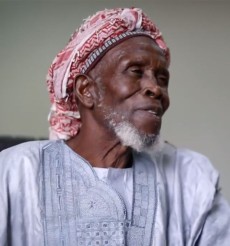
Tinubu mourns Abubakar’s passing, the Imam who shielded over 200 Christians in his mosque during communal riot
President Bola Tinubu has expressed deep sorrow over the death of Imam Abdullahi Abubakar, Chief Imam of Nghar village, Barkin Ladi Local Government Area of Plateau, who passed away at 92.
This is contained in a statement issued by Presidential Spokesperson, Mr Bayo Onanuga, on Friday in Abuja.
The late cleric gained national and international recognition in 2018 for sheltering more than 200 Christians during communal violence in Plateau.
Tinubu described Abubakar as an extraordinary religious leader whose life exemplified faith, courage and a deep reverence for the sanctity of human life.
“At such a time when tribal and religious tendencies seemed to overwhelm reason, Imam Abubakar stood firmly on the side of peace, benevolence and conscience.
“Mindless of the enormous risk to his own life, the noble cleric chose humanity over division, love as opposed to hatred and embrace rather than rejection,” the President said.
He said the Imam’s actions embodied the true essence of faith and delivered a powerful message beyond sermons.
The President noted that the cleric’s uncommon bravery earned him local and international honours celebrating peaceful coexistence.
“I urge religious and community leaders to imbibe and preach the spirit of tolerance, mutual respect and peaceful togetherness as expounded in the life of Imam Abubakar,” Tinubu said.
He prayed that God grants the late Imam eternal rest and rewards him for his courage and good deeds. (NAN)
News
Govt. introduces solar installation, garment making, GSM repairs in jss curriculum
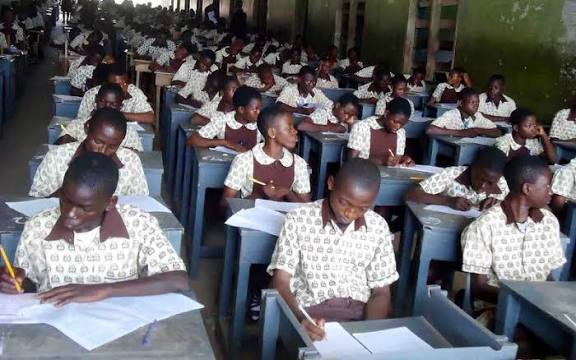
Govt. introduces solar installation, garment making, GSM repairs in jss curriculum
The Anambra Government has introduced 15 entrepreneurial subjects into the Junior Secondary School (JSS) curriculum to enhance students’ practical skills and foster an entrepreneurial mindset.
The News Agency of Nigeria (NAN) reports that the new subjects include solar installation, garment making, GSM repairs, agriculture and processing, plumbing, tiling, POP installation and event management.
Others are bakery, hairstyling, make-up, interior design, CCTV/intercom installation, digital literacy, information technology and robotics.
Prof. Nkechi Ikediugwu, Chairperson ,Post Primary Schools Service Commission (PPSSC), while speaking at the occasion in Awka on Friday, said the initiative was aimed at repositioning education to meet contemporary needs.
Ikediugwu noted that in a rapidly changing world, education should go beyond theory and examinations to equip students with practical skills, creativity, innovation and an entrepreneurial mindset.
“The goal of the programme is to prepare learners, not only to seek jobs but to create value, generate employment and contribute meaningfully to the economic development of the state,”she said.
Mr Cyril Nwuche of Nnamdi Azikiwe University, Awka, delivered a paper titled “Building Entrepreneurial Secondary Schools: Why Every School Needs an Entrepreneurship Club”.
Nwuche said the introduction of entrepreneurial subjects showed that the government was on the path to transforming the state’s economy.
“Traditional academic instruction alone is no longer sufficient to prepare children for the future.
“There is the need for schools to embrace practical and skill-based learning to enable students to thrive in a dynamic global environment, ” he said. (NAN)
News
Two men docked for allegedly defiling underaged girl
Two men docked for allegedly defiling underaged girl
The police in Lagos on Friday, charged two men before an Ikeja Chief Magistrates’ Court for allegedly defiling an 11- year-old girl.
The defendants are: Prince Tomnyie, 40, a businessman, who resides at Agege, and Micheal Adenuga, 24, a furniture maker, who resides at Atere Street in Lekki.
They are standing trial on charges of defilement, and had each pleaded not guilty to the charges.
The prosecutor, ASP Adegoke Ademigbuji told the court that they committed the offence sometimes in December 2024, and September 2025, at Langbasa Ajah and Igbara Lekki, Lagos .
The prosecutor alleged that the victim’s father, had taken his daughter for medical check and it was discovered that the minor had been defiled.
The prosecution alleged that the victim had told her father that his friend, Tomnyie, defiled her sometimes ago.
Ademigbuji alleged that the victim also mentioned the second defendant’s name who lives in their neigbourhood.
The offence contravenes the provisons of section 137 of the Criminal Law of Lagos, 2015.
The Chief Magistrate, Mr L. A Owolabi, granted the defendants bail in the sum of of N600,000 each, with two sureties each in like sum.
He adjourned the case until March 5, for mention. (NAN)
-
6 years ago
Our situation in Kano terrible – Gov Ganduje cries out
-

 News11 months ago
FG pledges commitment to enhance Police officers Welfare, implement Tinubu’s 8-point agenda for NPF
-
 News11 months ago
BREAKING; NSCDC gets approval to commence 2025 recruitment exercise
-

 News9 months ago
Alleged cocaine deal: Court issues orders in suspended DCP Abba Kyari’s case
-

 News12 months ago
DPO under investigation for allegedly taking teenage girl to his home while in police custody
-

 News12 months ago
JUST IN; Commissioner of Police bows out of Service
-

 News9 months ago
JUST IN; Police Inspector dies watching Arsenal match
-

 News12 months ago
BREAKING; NLC declare nationwide protest