Middle-East peace moves deadlocked as Iran stage walk out during talks with US
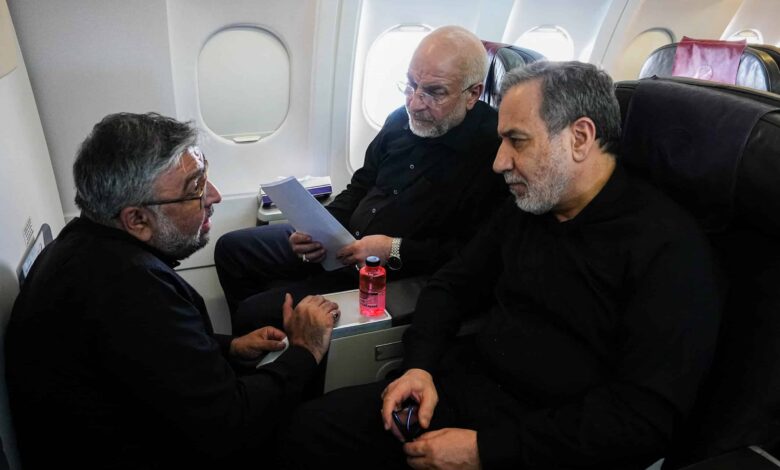

Fresh tensions between the United States and Iran cast a shadow over ongoing negotiations in Switzerland on Sunday, after President Donald Trump threatened military action against Tehran over its support for Hezbollah.
The talks, aimed at securing a lasting framework to address long-standing disputes between Washington and Tehran and prevent further instability in the Middle East, continued amid conflicting reports over Iran’s participation and renewed concerns about the situation in Lebanon.
Iran’s state news agency, IRNA, reported that members of the Iranian delegation left the venue in Switzerland shortly after discussions commenced.
“The delegation of the Islamic Republic of Iran, after meeting with the Qatari delegation as one of the mediating parties, left the building where the negotiations were being held,” the agency said.
IRNA linked the move to remarks made by Trump on social media as the talks began.
“At the same time as the talks began in Switzerland, Donald Trump published a message on X in which he repeated his threats and remarks against Iran,” it added.
However, a diplomat familiar with the negotiations disputed suggestions that Tehran had withdrawn from the process.
“The Iranian delegation remains engaged in the talks and has not indicated to the mediators any intention to leave,” the diplomat told AFP on condition of anonymity.
The latest diplomatic effort follows a memorandum of understanding signed earlier this week between Washington and Tehran, which included provisions aimed at ending hostilities in Lebanon and creating a pathway for broader negotiations over regional security issues.
Ahead of Sunday’s meeting, Trump warned that Iran would face military consequences if it failed to restrain Hezbollah.
He threatened to strike Iran if it did not “immediately stop their highly paid PROXIES in Lebanon from causing trouble.”
Iran responded with a warning of its own.
“They would do better to be careful with their statements; our armed forces are ready to respond to them in a different manner. No matter what they say, we are the ones who act,” Iran’s chief negotiator, Mohammad Bagher Ghalibaf, said.
The developments came as Israeli Prime Minister Benjamin Netanyahu reiterated his country’s position on security in Lebanon and Iran’s nuclear programme.
Netanyahu said Israeli troops would remain in southern Lebanon “as long as necessary” and vowed that he would “not allow Iran to acquire nuclear weapons”.
Iranian state media reported that Tehran’s nuclear programme was not discussed during the opening round of talks, which lasted about 80 minutes.
According to the broadcaster, discussions focused on implementing the memorandum of understanding between the two countries and developments in Lebanon.
Earlier, US Vice President JD Vance described the meeting as “a historic meeting”.
Addressing reporters alongside US negotiators Jared Kushner and Steve Witkoff, Vance said the negotiations presented an opportunity to reshape regional relations.
“The question before us now is how much more can we accomplish together?
“Can we turn over a new leaf? Can we change relations in the Middle East permanently?
“Or do we go back to doing things the old way, which is not our preference, but it’s certainly very much something that can happen?”
Iran has maintained that any final agreement depends on ending hostilities in Lebanon.
“It is not possible to enter the negotiation phase for a final agreement” unless there is an end to the war in Lebanon, Iranian Foreign Ministry spokesman Esmaeil Baqaei wrote on X.
Despite recent clashes, there were no reports of major fighting or Israeli strikes in Lebanon on Sunday, with some residents gradually returning to southern communities.
Speaking separately, Iranian President Masoud Pezeshkian reaffirmed Tehran’s position on uranium enrichment while rejecting accusations that the country seeks nuclear weapons.
“We can also state in writing that we have no intention of building a bomb,” he said.
The conflict between Israel and Hezbollah has remained one of the biggest obstacles to peace efforts, with recent violence repeatedly threatening diplomatic progress.
On Friday, a previous round of talks was postponed after Israeli strikes in Lebanon followed the deaths of four Israeli soldiers in combat.
During a visit to Israeli troops in southern Lebanon on Sunday, military chief Lieutenant General Eyal Zamir said Hezbollah had suffered major setbacks.
“Hezbollah has suffered a severe and significant blow, and we are committed to remaining prepared to continue operating and prevent its rebuilding,” he said.
According to Lebanese health authorities, the death toll from the conflict has surpassed 4,100.