Iran executes three Men for supporting Israel leading, anti-government protest

Iran executes three Men for supporting Israel leading,anti-government protest
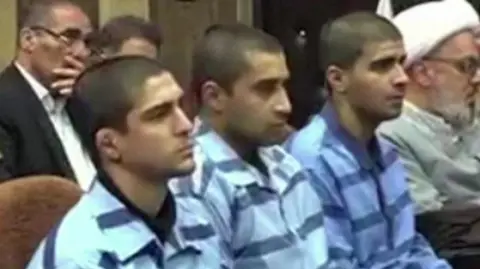
Authorities in Iran have carried out the execution of three men convicted over violence during recent anti-government protests, a move that is drawing renewed scrutiny over the country’s judicial process and treatment of detainees.
The executions, confirmed by the judiciary’s official outlet, Mizan News Agency, took place Thursday in the city of Qom after what officials described as the completion of legal procedures, including court approvals and access to defence lawyers.
Those executed, Mehdi Ghasemi, Saleh Mohammadi and Saeed Davoudi had been convicted for their alleged role in the killing of two security personnel during protests on January 8.
Authorities said the attack involved weapons such as knives, swords and machetes, and accused the men of acting in support of foreign interests, including the United States and Israel.
They were sentenced under moharebeh, or “waging war against God,” a capital offence under Iranian law.
One of the executed, 19-year-old Saleh Mohammadi, was a wrestler who had represented Iran internationally, winning a bronze medal at the Saytiyev International Cup in Russia. His case had drawn international attention prior to the execution.
However, human rights organisations have challenged both the convictions and the process leading to them.
The Hengaw Human Rights Organisation alleged that confessions used in the case were obtained under torture and that there was no credible evidence linking the men to the killings.
Similarly, Amnesty International said Mohammadi was denied proper legal representation and subjected to expedited proceedings that failed to meet international fair trial standards, adding that he sustained injuries, including a fractured hand, while in detention.
Another watchdog, Iran Human Rights, described the executions as the outcome of deeply flawed trials based on coerced confessions, arguing they were intended to instil fear and suppress dissent.
Legal advocacy group Dadban also raised concerns about limited access to independent legal counsel during the proceedings.
The executions come amid a broader crackdown following protests that erupted late last year and intensified in early 2026, driven by economic hardship and political discontent.
Iranian authorities have maintained that the unrest involved acts of terrorism. Official figures submitted to the United Nations put the death toll at 3,117.
But independent monitors, including the Human Rights Activists News Agency, estimate that more than 7,000 people may have been killed, with many deaths attributed to security forces.
The crackdown has also resulted in widespread arrests, with several detainees facing charges that carry the death penalty.
A United Nations-backed fact-finding mission has warned that more individuals remain at risk of execution under conditions that may violate international legal standards, while Amnesty International estimates that at least 30 people, including minors, could be facing execution in connection with the protests.