FULL LIST; Federal Govt warns 30 States of high risk of flooding amid rising casualties

FULL LIST; Federal Govt warns 30 States of high risk of flooding amid rising casualties
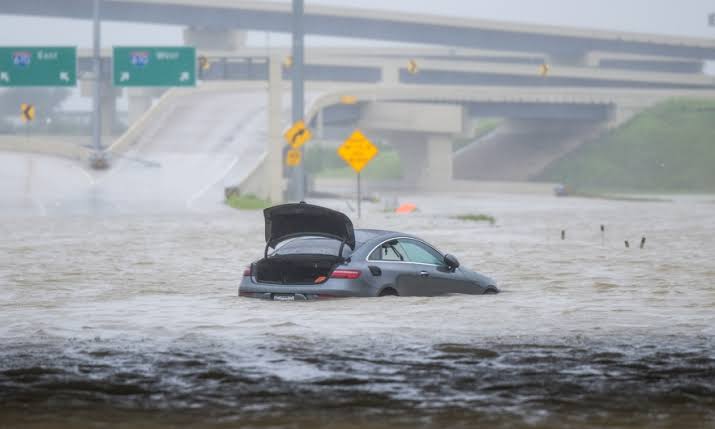
The Federal Government has issued a stark warning that 30 states across the country, along with the Federal Capital Territory (FCT), are currently facing a high risk of flooding, similar to the recent disaster in Mokwa, Niger State, where over 200 lives were lost.
The devastating flood, which occurred last Thursday, also destroyed several homes, displaced thousands of residents, and left more than 500 people unaccounted for.
Raising the alarm during a press briefing in Abuja, the Minister of Water Resources and Sanitation, Engr. Joseph Utsev, emphasised that the tragedy in Mokwa was not linked to any water releases from the Kainji or Jebba dams. Instead, he attributed the disaster to intense rainfall, worsened by the growing impact of climate change.
According to the minister, the severity of the incident was largely due to the failure of local communities to heed early flood warnings and advisories issued by relevant authorities.
The states identified as high-risk include Abia, Adamawa, Akwa Ibom, Anambra, Bauchi, Bayelsa, Benue, Borno, Cross River, Delta, Ebonyi, Edo, Gombe, Imo, Jigawa, Kebbi, Kogi, Kwara, Lagos, Nasarawa, Niger, Ogun, Ondo, Osun, Oyo, Rivers, Sokoto, Taraba, Yobe, and Zamfara, in addition to the FCT.
The federal government urged residents in these areas to remain vigilant, follow safety guidelines, and cooperate with emergency management agencies to prevent further loss of lives and property.
While asking states to put measures in place to stave massive flooding that could destroy lives and properties, the minister said: “The Federal Ministry of Water Resources and Sanitation extends its heartfelt sympathy and solidarity to the government and the good people of Niger State, especially the affected communities in Mokwa, who have experienced losses, deaths and displacements as a result of this natural disaster.
“I like to emphasise that the flood was not caused by water releases from either the Kainji or Jebba dams and that both dams are intact and safe.
“We commend the immediate response efforts of Niger State government, local authorities, and first responders who have been working tirelessly to provide relief and support to the victims.
“The flood in Mokwa town was primarily caused by heavy rainfall due to extreme weather conditions, occasioned by climate change, an emerging global phenomenon, which overwhelmed local drainage systems.
“Additionally, unregulated building and construction activities blocked an ephemeral tributary of River Dingi, a regressive river, a tributary of River Niger, which remains dry almost all year round with flows solely dependent on surface runoff by rainfall.
“The absence of efficient alternative pathways to redirect the excess water further worsened the flood’s impact on the communities.
“Nigerians will recall that the Federal Ministry of Water Resources and Sanitation, through the Nigeria Hydrological Services Agency, NIHSA, in the 2025 Annual Flood Outlook, AFO, on April 10, 2025, predicted flooding in 19 LGAs of Niger State, including Mokwa LGA.”
The Federal Government had disclosed that over 1,200 communities across Nigeria have been identified as high-risk zones for flooding in 2025, according to the latest Annual Flood Outlook (AFO) report.
Speaking at a press briefing, Minister of Water Resources and Sanitation, Engr. Joseph Utsev, cited the 2025 AFO report, which revealed that 1,249 communities located in 176 local government areas (LGAs) across 33 states and the Federal Capital Territory (FCT) are within high flood risk zones.
In addition, the report noted that 2,187 communities in 293 LGAs across 31 states, including the FCT, fall within moderate flood risk areas, signaling widespread vulnerability to severe weather events.
The Nigerian Hydrological Services Agency (NIHSA) listed the high-risk states as Abia, Adamawa, Akwa Ibom, Anambra, Bauchi, Bayelsa, Benue, Borno, Cross River, Delta, Ebonyi, Edo, the FCT, Gombe, Imo, Jigawa, Kebbi, Kogi, Kwara, Lagos, Nasarawa, Niger, Ogun, Ondo, Osun, Oyo, Rivers, Sokoto, Taraba, Yobe, and Zamfara.
Speaking further, the minister said: “Let me take this opportunity to re-echo the key warnings and recommendations from the 2025 Annual Flood Outlook, AFO.
“We had urged and we are still urging states and local governments to act on these early warnings by strengthening drainage infrastructure; relocating vulnerable communities from flood plains; engaging in sustained public awareness campaigns; and enforcing land-use regulations to prevent encroachment into flood-prone areas.
“The AFO provides a comprehensive overview of the flood risks beyond the LGAs to actual communities, the potential flood-prone areas, expected flood levels and recommended adaptation and mitigation measures to minimise flood impact and also highlight how communities can adopt innovative approaches to reduce vulnerability.
“Stakeholders are, therefore, advised to visit the website/dashboard at (https://nihsa.gov.ng/flood-forecast-dashboard) for detailed information to take proactive measures in adaptation and mitigating flood impacts in their domain.
“This flood event, like many others in recent times, is a stark reminder of the increasing impacts of climate change on our environment and water systems.
“Extreme weather events, including intense rainfall and river flooding, are becoming more frequent and severe across the country and globally. These events not only disrupt livelihoods but also challenge the resilience of our infrastructure and environment.
“As a ministry, we remain committed to our mandate of managing the nation’s water resources in a sustainable and climate-resilient manner.
“We call on all stakeholders, government agencies, private sector, civil society organizations, and community leaders, to work together in building safer, more resilient communities.
“Technical personnel from the ministry; Nigeria Hydrological Services Agency, NIHSA, Upper Niger River Basin Development Authority, UNRBDA; and National Water Resources Institute, NWRI, are on ground in Mokwa taking assessments of the cause of the flood in order to come up with an appropriate report.’’
As at yesterday, some states listed by the federal government had started taking measures to prevent the Mokwa experience in their domains.
He said: “We are consolidating on what we did last year. We are preparing to do massive de-siltation and open up the waterways across the three senatorial districts. We are working towards that seriously.
“We have an existing flood management committee; we are very proactive when it comes to flood management in Delta State. IDP camps will be established in Kwale, Bomadi, Patani, Otu-Jeremi, Ozoro and Asaba.’’
He claimed that when it came to matters affecting the people, the state government is very business-oriented, saying “we have started advocacy and orientation, telling the people, especially those living in flood-prone areas, to take charge of their environment; be aware that when we have sea level rise and when the rains are coming, they should move.
“Those farming in the flood plains should harvest their crops when the signs are coming, and those who are fishing should harvest their fish. Those living close to drains should stop the habit of turning the drains into dump sites.”