Fitch upgrades Nigeria’s credit rating, cites President Tinubu’s economic reforms
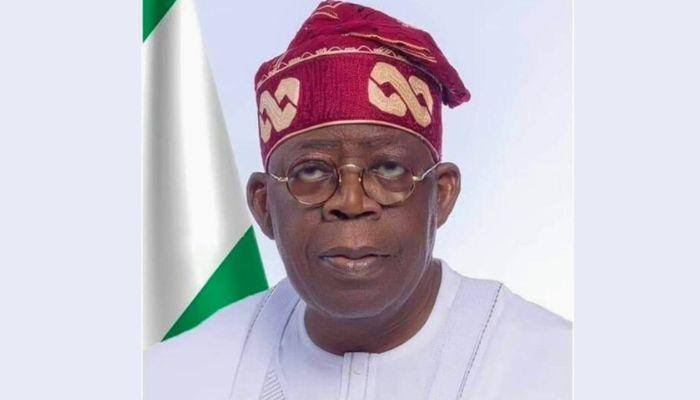

Fitch upgrades Nigeria’s credit rating, cites President Tinubu’s economic reforms
Fitch Ratings, a leading global credit rating agency, has upgraded Nigeria’s credit rating to ‘B’, citing the Tinubu administration’s economic reforms as key drivers behind the improved outlook.
According to Fitch, the reforms have enhanced policy credibility and lowered short-term risks to macroeconomic stability.
The upgrade has been welcomed by economic stakeholders, who believe it will bolster investor confidence and contribute positively to Nigeria’s broader economic outlook.
Adding to the momentum, the World Bank announced a significant financial commitment to Nigeria, pledging over $16 billion across 28 ongoing projects.
The funding is primarily in the form of concessional loans provided through the International Development Association (IDA) and the International Bank for Reconstruction and Development (IBRD).
With Fitch moving Nigeria’s long-term foreign-currency Issuer Default Rating (IDR) from a negative to a stable outlook, the country is now better positioned to attract foreign investment, secure loans on more favorable terms, and strengthen investor sentiment.
“The upgrade reflects increased confidence in the government’s broad commitment to policy reforms implemented since its move to orthodox economic policies in June 2023, including exchange rate liberalisation, monetary policy tightening, and steps to end deficit monetisation and remove fuel subsidies,” Fitch said in a statement on Friday.
“These have improved policy coherence and credibility and reduced economic distortions and near-term risks to macroeconomic stability, enhancing resilience in the context of persistent domestic challenges and heightened external risks.”
Fitch anticipates that Nigeria’s current macroeconomic policies will help drive down inflation and maintain progress in stabilizing the foreign exchange (FX) market, although inflation is expected to remain significantly higher than that of comparable countries.
The agency also projects a gradual reduction in external vulnerabilities, driven by improved access to foreign currency within the domestic market. Additionally, it notes that ongoing reforms in the energy sector could support sustained current account surpluses.
It added: “Greater formalisation of FX activity including the Central Bank of Nigeria’s (CBN) recent introduction of an electronic FX matching platform and a new FX code to enhance transparency and efficiency, along with monetary policy tightening, has led to a greater rise in FX liquidity and general stability in the FX market after a 40% depreciation in 2024, closing the spread between the official and parallel exchange rates.
“Net official FX inflows through the CBN and autonomous sources rose by about 89% in 4Q24, compared to an 8% rise in 4Q23. We expect continued formalisation of FX activity to support the exchange rate, although we anticipate modest depreciation in the short term.
“The CBN has tightened monetary conditions through a combination of policy rate hikes to 27.5% (up 875bp since February 2024) and use of prudential and operational tools such as open market operations (at rates closely aligned to the MPR) to strengthen monetary policy transmission after years of financial repression.”
Nigeria’s oil refining sector is expected to gain momentum this year, according to projections by Fitch Ratings.
The agency forecasts a rise in crude oil production—excluding condensates—averaging 1.43 million barrels per day (mbpd) in 2025–2026, up from 1.34 mbpd in 2024. This increase is anticipated to result from enhanced onshore security and growing investments by indigenous oil firms.
Fitch also downplayed any potential negative impact on Nigeria from recently imposed U.S. tariffs, noting that oil-related exports—Nigeria’s primary export to the U.S.—are not affected.
Nearly a year ago, Fitch upgraded Nigeria’s credit outlook from stable to positive, citing the government’s commitment to restoring economic balance.
While the current “B” rating reflects progress, it still categorizes Nigeria’s credit status as “highly speculative” and below investment grade.
President Bola Tinubu’s sweeping economic reforms—most notably the removal of fuel subsidies and the liberalization of the naira exchange rate—have been central to this shift in perception.
In a further boost to economic optimism, the Central Bank of Nigeria (CBN) announced a Balance of Payments (BOP) surplus of $6.83 billion for the 2024 fiscal year.
This contrasts sharply with the deficits recorded in the previous two years: $3.34 billion in 2023 and $3.32 billion in 2022.
The CBN attributed the turnaround to wide-ranging policy reforms, stronger trade performance, and revived investor confidence.
Meanwhile, U.S. financial powerhouse J.P. Morgan is reported to have applied for a merchant banking license from the CBN, with plans to upgrade its Lagos representative office into a full-service branch.
The expansion would enable the firm to provide dollar-denominated loans to large Nigerian corporations, alongside its current advisory and asset management offerings.