
Donald Trump’s Christians genocide allegation: Clarifying the facts

Donald Trump’s Christians genocide allegation: Clarifying the facts
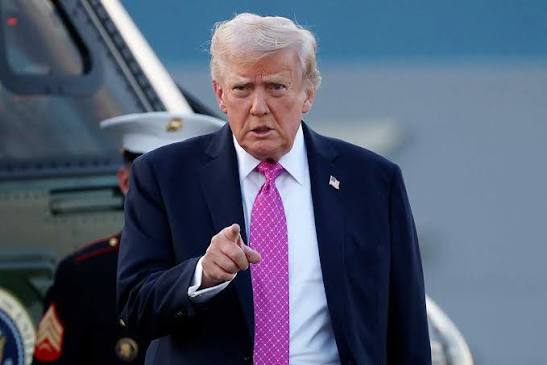
U.S. President Donald Trump recently announced on social media that he was redesignating Nigeria as a Country of Particular Concern as a result of what he called serious violations of religious freedom.
A few days later, he threatened that he would consider potential military action to protect Nigeria’s perceived embattled Christians.
In response, President Bola Tinubu stated that the characterisation of Nigeria as religiously intolerant did not reflect the country’s national reality.
He also said the characterisation failed to account for the government’s “consistent and sincere efforts to safeguard freedom of religion and beliefs for all Nigerians”.
The Ministry of Foreign Affairs also vowed that Nigeria would continue to fight violent extremism, while expressing hope that the U.S. would remain a close ally in the fight.
Other countries and world leaders have risen in defence of Nigeria and cautioned Trump against any direct or indirect military action capable of destabilising the entire West African subregion.
ECOWAS strongly rejected what it called “these false and dangerous claims” that a “Christian genocide” is taking place in Nigeria and the West African region.
It also said terrorist-related violence did not discriminate based on gender, religion, ethnicity, or age.
China explicitly opposed the threat in a statement released by its foreign ministry.
“As Nigeria’s strategic partner, China opposes any attempt by foreign powers to use religion or human rights as a pretext to meddle in another country’s internal affairs or impose sanctions and military threats.’’
The EU Spokesperson for Foreign Affairs and Security Policy, Anouar El Anouni, stated that the union had “taken note” of the statements by the U.S. administration but remained focused on supporting Nigeria’s stability through cooperation.
“We respect Nigeria’s sovereignty and constitutional commitment to religious neutrality. Our position is one of solidarity with Nigeria.
“Solidarity with the victims of violence, with the authorities working to protect citizens, and with the Nigerian people, who overwhelmingly desire peaceful coexistence beyond ethnic and religious divides,” he said.
German Foreign Minister, Johann Wadephul, praised Nigeria’s ongoing efforts in combating terrorism, describing the country as a valued and reliable partner for the European Union in the fight against radical extremism.
“Germany reaffirms its commitment to supporting Nigeria through capacity building, intelligence sharing, and humanitarian assistance aimed at restoring peace and development in affected regions,” he said.
Positive as the show of support appears; however, Trump’s comments had already created and reinforced conspiracy and counter-conspiracy theories.
The International Criminal Court and the United Nations Convention define genocide as acts committed with the intent to destroy, in whole or in part, a national, ethnic, racial, or religious group.
Therefore, security experts are overwhelmingly in agreement that, although violent extremists, bandits, and terrorists have wreaked havoc on Nigerian citizens, the challenge does not constitute genocide.
One report suggests that, since 2009, Nigeria has not experienced a single, monolithic conflict but rather a “polycrisis” characterised by multiple, overlapping, and distinct forms of violence.
According to the report, the terms “terrorists”, “insurgents”, and “bandits” are not interchangeable, but represent distinct actors with different origins, motivations, and, most critically, different targeting strategies.
For perspective, Boko Haram targets Christians viewed as “infidels” just as it targets Muslims viewed as “apostates” if not aligned with its doctrines.
Bandits target both Christians and Muslims for ransom and pillage, including in villages, on roads, at mosques and churches.
Ansaru targets both Christians and Muslims for kidnapping and ideological violence, while communal militias’ violence is targeted along ethno-religious; for example farmer vs herder.
The Council on Foreign Relations (CFR), an independent, nonpartisan organisation, think tank, and publisher, argues that while Christians are definite victims of these groups, most victims are actually Muslims who are considered apostates or collaborators.
“Insurgents attack mosques and Muslim civilians whom they believe are collaborators with the government or do not adhere to their extreme ideology.
“Multiple reports conclude that Muslims, being the majority population in the North-East, have borne the brunt of the violence and constitute the majority of Boko Haram’s victims,” CFR said.
The CFR’s Nigeria Security Tracker (NST) cataloged political violence from June 2011 to July 1, 2023, based on a weekly survey of Nigerian and international press.
Before it was discontinued, the NST had documented more than 34,000 deaths from political violence, though its dashboard shows a cumulative toll approaching 100,000.
Its data was valuable for showing the conflict’s spread from Borno State across “every state in the North”.
The 2024 Global Terrorism Index (GTI) also noted that in 2023, Nigeria experienced its first increase in terrorism-related deaths in three years.
The GTI said the surge in terrorism-related deaths was “principally due to a surge in the conflict between ISIS-WA and Boko Haram”.
Experts say the report highlights the severity of the intra-violent extremist war.
They also noted that the Sahel region, which includes Nigeria, is now described as the “epicentre” of global terrorism, accounting for over half of all global terrorism deaths.
A report suggests that the alleged religious persecution viewpoint held by Trump and some members of his government might have come from a false assumption about Nigeria’s security challenges.
To the Trump administration, Nigeria’s security challenges have either become a pretext for, or have morphed into, a targeted campaign of religious and ethnic cleansing.
Therefore, some security analysts say the government at all levels should intensify efforts and collaborate vertically and horizontally to tackle insecurity.
“The trends visible in 2024 and 2025 suggest that Nigeria’s security crises (insurgency, terrorism, and banditry) are feeding each other…
“Without a comprehensive strategy that addresses the distinct root drivers of each conflict – ideology, economic collapse, and resource scarcity – the aggregate severity and the targeted killing along whatever lines are projected to continue,” an analyst said.
The generally accepted verdict is that Nigeria’s security situation is a complex crisis, not a simple two-sided religious conflict.
It is stakeholders’ submission that Christian and Muslim communities are equally significant targets for insurgents, bandits and terrorists, and ending the trend should be the priority, not labelling it.(NANFeatures)

News
Two men docked for allegedly defiling underaged girl
Two men docked for allegedly defiling underaged girl
The police in Lagos on Friday, charged two men before an Ikeja Chief Magistrates’ Court for allegedly defiling an 11- year-old girl.
The defendants are: Prince Tomnyie, 40, a businessman, who resides at Agege, and Micheal Adenuga, 24, a furniture maker, who resides at Atere Street in Lekki.
They are standing trial on charges of defilement, and had each pleaded not guilty to the charges.
The prosecutor, ASP Adegoke Ademigbuji told the court that they committed the offence sometimes in December 2024, and September 2025, at Langbasa Ajah and Igbara Lekki, Lagos .
The prosecutor alleged that the victim’s father, had taken his daughter for medical check and it was discovered that the minor had been defiled.
The prosecution alleged that the victim had told her father that his friend, Tomnyie, defiled her sometimes ago.
Ademigbuji alleged that the victim also mentioned the second defendant’s name who lives in their neigbourhood.
The offence contravenes the provisons of section 137 of the Criminal Law of Lagos, 2015.
The Chief Magistrate, Mr L. A Owolabi, granted the defendants bail in the sum of of N600,000 each, with two sureties each in like sum.
He adjourned the case until March 5, for mention. (NAN)
News
Report any officer asking for money for release of suspect as Police insist bail is free
Report any officer asking for money for release of suspect as Police insist bail is free
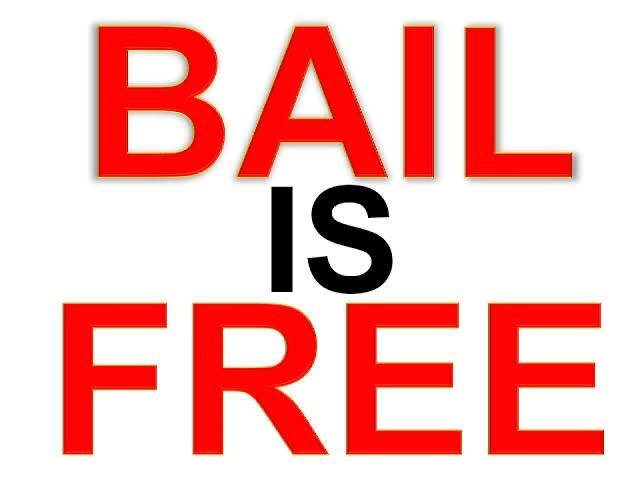
The Police Command in the Federal Capital Territory (FCT) has insisted that bail is free, and called on the public to report any officer asking for money to release a suspect on bail.
The Police Public Relations Officer in the FCT, SP Josephine Adeh, said this in an interview with the News Agency of Nigeria (NAN) on Friday in Abuja.
Adeh spoke in reaction to public outcry that some police officers were demanding money to release suspects on bail in the territory.
She said the report of the erring officers would serve as a deterrent to others, adding that it was fraudulent to demand for money to release a suspect on bail.
Adeh blamed the yielding to such fraudulent demand on ignorance on the part of the victims who refused to stand on their rights.
“A similar case was reported where an officer demanded money to release a suspect on bail and when the matter was reported, we requested for evidence from the victim.
“The evidence was provided because the money was transferred to the officer’s account and actions are being taken on the issue.
“So, I encourage the public to take advantage of the FCT Police Complaint Response Unit (CRU) lines on 08107314192 to report such misconduct with evidence,” she said.
Adeh urged the public to always insist on their rights and refuse any form of payment to release a suspect on bail.(NAN)
News
Former President sentenced to five years in prison by Court
Former President sentenced to five years in prison by Court
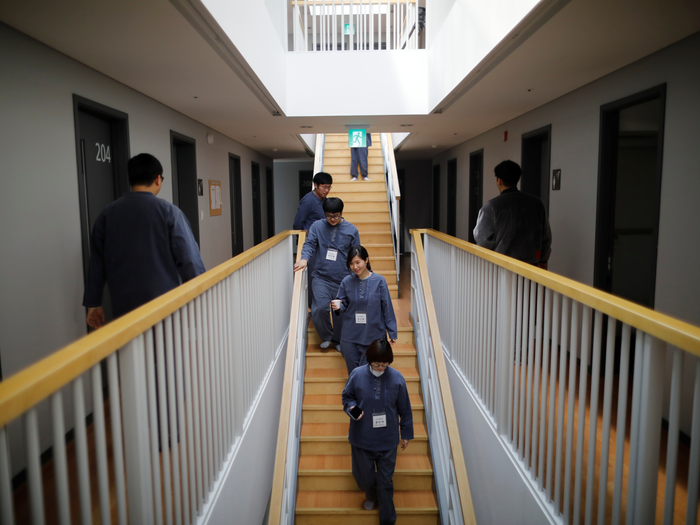
South Korea’s former president Yoon Suk Yeol was on Friday sentenced to five years in prison for obstruction of justice.
The Seoul Central District Court found that the 65-year-old conservative, with the help of the presidential security service, had tried to prevent his own arrest and deleted multiple documents related to the investigation against him.
Yoon shocked the nation by imposing martial law on December 3, 2024, amid a budget dispute with the opposition, plunging the country into a political crisis.
He justified the drastic measure as necessary to protect South Korea’s democratic order and accused the left-leaning opposition of being infiltrated by communists with ties to China and North Korea, though he provided no evidence for these claims.
In a separate trial, prosecutors have sought the death penalty for Yoon on charges of incitement, with a verdict expected on February 19.
While the death penalty remains legally in force in South Korea, it has not been carried out for nearly 30 years.
Yoon’s actions previously alarmed international investors and led to withheld investments, damaging the reputation of South Korea as a political and economic model for the region.
Since last summer, South Korea has been led by President Lee Jae Myung, a left-leaning centrist and long-time political rival of Yoon. (dpa/NAN)
-
6 years ago
Our situation in Kano terrible – Gov Ganduje cries out
-

 News11 months ago
FG pledges commitment to enhance Police officers Welfare, implement Tinubu’s 8-point agenda for NPF
-
 News11 months ago
BREAKING; NSCDC gets approval to commence 2025 recruitment exercise
-
 News9 months ago
Alleged cocaine deal: Court issues orders in suspended DCP Abba Kyari’s case
-
 News12 months ago
DPO under investigation for allegedly taking teenage girl to his home while in police custody
-

 News12 months ago
JUST IN; Commissioner of Police bows out of Service
-
 News9 months ago
JUST IN; Police Inspector dies watching Arsenal match
-

 News12 months ago
BREAKING; NLC declare nationwide protest