
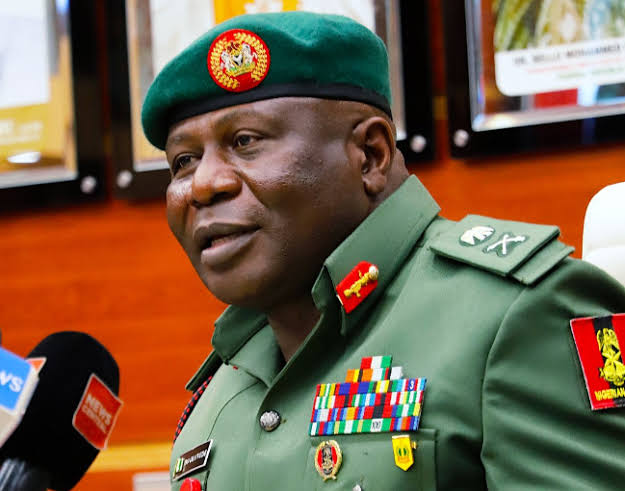
Chief of Army Staff (COAS) charges warrant officers to bridge leadership gap

Chief of Army Staff (COAS) charges warrant officers to bridge leadership gap
The Chief of Army Staff (COAS), Lt.-Gen. Olufemi Oluyede, has charged Warrant Officers to bridge the gap between commissioned officers and the enlisted cadre.
Oluyede gave the charge at the graduation ceremony of the Warrant Officer’s Academy Course 44 on Friday at the Jaji Military Cantonment, Kaduna State.
The News Agency of Nigeria (NAN) reports that the COAS was represented by the Commandant, Nigerian Army School of Infantry (NASI), Maj.-Gen. Oluyemi Olatoye .
Oluyede congratulated the graduands for successfully completing their 22-week training.
He emphasized the importance of the academy in developing the capacity of Warrant Officers and Senior Non-Commissioned Officers (SNCOs).
The COAS also acknowledged the participation of students from the Republic of Liberia and the Gambia, which would strengthen inter-service collaboration and diplomatic ties.
Oluyede said, “Indeed, the Nigerian Armed Forces have identified that Warrant Officers and SNCOS have very critical roles to play in command and leadership positions.
“Consequently, the establishment of the Warrant Officers’ Academy was deliberate to address the challenges of junior leadership.
”This is crucial for the overall decision making of a unit or formation especially at this period when the country faces diverse security challenges.”
He charged the graduates to employ the knowledge and skills acquired during the course to project their leadership and managerial capabilities for the benefit of the Nigerian Army and the Armed Forces.
The COAS commended the commandant and instructors of the academy for their commitment to the successful conduct of the course.
Oluyede expressed gratitude to President Bola Tinubu for his support to the Nigerian Army and by extension the Armed Forces.
He said, “This has been morally reinvigorating to our resolve to reposition the military for effective service delivery.”
Earlier in his remarks, the Commandant of the Academy, Brig.-Gen. Auwal Mahmuda, said the course had 79 students.
They included 75 Nigerian Army personnel, 2 Nigerian Air Force personnel, and 2 allied students from Liberia and the Gambia.
Muhmuda, however, said one student was withdrawn due to disciplinary issues.
He said the graduating students have been equipped with skills to effectively carry out leadership roles in the Armed Forces.
Mahmuda encouraged them to continue developing themselves and make beneficial use of the skills acquired.
He said, “The academy aims to continually improve its instructional and training curriculum to address junior leadership challenges and security issues in Nigeria.”
The commandant thanked the Commanders and Commandants of Nigerian Army Units and Schools for their support and the staffers of the academy for their immense contributions throughout the course.(NAN)

Military
Middle East war: Switzerland rejects US requests to use its airspace for military operations
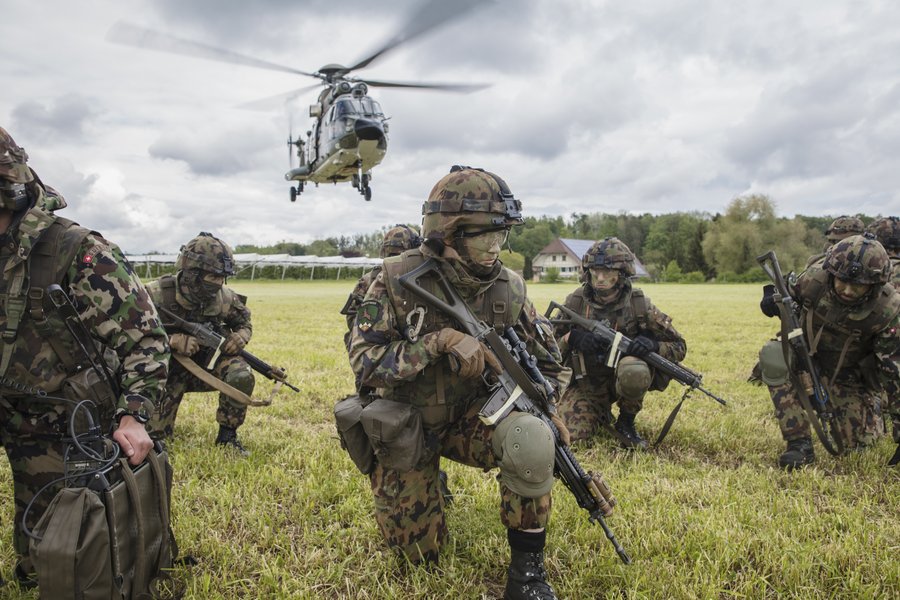
Middle East war: Switzerland rejects US requests to use its airspace for military operations
Switzerland has declined requests from the United States to allow military-related flights through its airspace in connection with the ongoing conflict involving Iran, citing its obligations under international neutrality laws.
The Swiss government disclosed on Saturday that two requests tied to the war were rejected after being reviewed under the country’s neutrality policy.
“In total, two requests linked to the war in Iran were refused, while a maintenance flight and two requests for transport aircraft were approved,” the government said in a statement.
According to authorities, the rejected requests involved reconnaissance flights scheduled for March 15.
Explaining the decision, the Swiss government said its neutrality laws prohibit the use of its territory for military activities related to armed conflicts.
“The law of neutrality prohibits overflights by parties to a conflict for military purposes related to that conflict,” the statement said, referencing the war involving the United States, Israel and Iran.
However, the government noted that certain categories of flights are still allowed under international rules.
Flights for humanitarian or medical purposes, including the transport of injured persons, as well as flights not connected to the conflict, remain permitted.
The development comes amid heightened diplomatic tensions among Western allies over access to military facilities and airspace following the escalation of hostilities in the Middle East.
At the start of the war, US President Donald Trump publicly criticised the United Kingdom for initially hesitating to allow American forces to use its bases, and later threatened Spain with trade measures after Madrid declined a similar request.
Military
Military compensates victims of Sokoto airstrike, reaffirms commitment to civilian protection
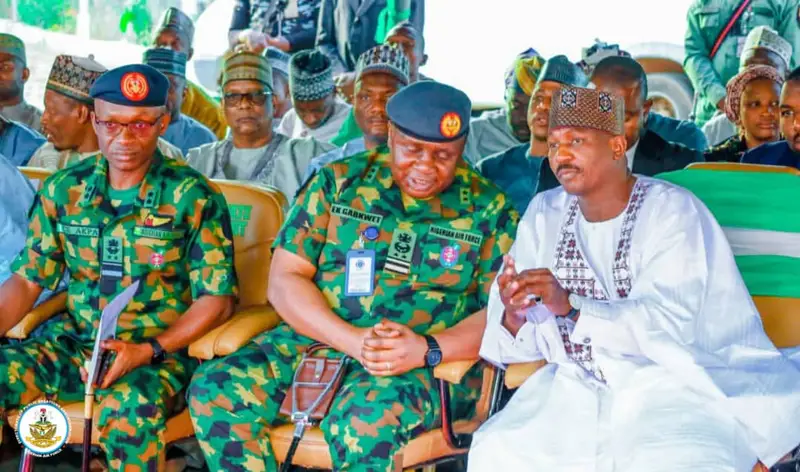
Military compensates victims of Sokoto airstrike, reaffirms commitment to civilian protection
The Nigerian Air Force (NAF) has paid compensation to victims and families affected by the accidental air strike that occurred on Dec. 25, 2024 in Sokoto State.
The victims are residents of Gidan Bisa and Rumtuwa villages of Silame Local Government Area of the state.
This is contained in a statement by the Director, Public Relations and Information, NAF, Air Commodore Ehimen Ejodame, on Sunday in Abuja.
In his remarks, the Chief of the Air Staff (CAS), Air Marshal Sunday Kelvin Aneke, represented by the Chief of Civil Military Relations, AVM Edward Gabkwet, expressed gratitude to the state government for the ensuring relationship between the NAF and the people.
He commended Gov. Ahmed Aliyu for inclusive development policies and security initiatives under the 9-Point Smart Agenda, particularly the establishment of the Sokoto State Community Guards Corps.
The CAS noted that the Governor’s proactive and localised security measures have complemented federal efforts in curbing the activities of terrorists and bandits, contributing to improved safety across parts of the State and reinforcing the importance of strong civil military cooperation.
He explained that the said air strikes were conducted under Operation Fasan Yamma following intelligence reports of suspected armed terrorists transiting through the affected communities.
According to him, although multiple intelligence checks informed the mission, a petition received in April 2025 alleged civilian casualties.
“A thorough fact-finding investigation confirmed that 13 civilians were unintentionally killed and eight others sustained various degrees of injuries.
“The findings deeply saddened the Service and necessitated urgent steps to make amends,” he said.
Aneke emphasised that since assuming office on Oct. 24, Civilian Harm Mitigation had remained at the forefront of his Command Philosophy.
According to him, the NAF exists primarily to protect the lives and property of Nigerians, adding that no professional military deliberately harms the very people it is sworn to defend.
He explained that the compensation exercise was intended to commiserate with the victims, promote accountability and transparency, calm tensions, and bring closure, while enabling the service to draw critical lessons to further reduce the likelihood of similar incidents in the future.
The CAS disclosed that the NAF had continued to institutionalise measures aimed at preventing and responding to civilian harm, including the development of the NAF Civilian Harm Mitigation and Response Action Plan (NAF CHMR-AP).
According to him, the framework is designed to strengthen operational planning, improve assessments and investigations, enhance continuous learning, and ensure effective response whenever civilian harm occurs.
He added that the plan’s scalability makes it applicable across both kinetic and non-kinetic operations, with the protection and restoration of the civilian environment treated as a critical operational consideration.
The air chief reaffirmed NAF’s resolve to apply purposeful and precise lethality in neutralising terrorists and other criminal elements.
“We want to use this medium to appeal to citizens to desist from mingling or cohabiting with terrorists and bandits within their enclaves as such associations significantly increase the risk of collateral damage during military operations.
“Public cooperation remains vital to safeguarding innocent lives as security forces intensify operations nationwide.
“The Nigerian Air Force, in concert with other security agencies, remains fully committed to ending terrorism, banditry, cattle rustling, and kidnapping across Sokoto State, the wider North-West region and the nation at large,” he added.
In his response, the governor expressed appreciation to the NAF for its unwavering commitment to protecting and caring for citizens, as well as its resolute role in safeguarding the nation’s security and territorial integrity. (NAN)
Military
NAF airstrikes destroy terror hideouts in Katsina, thwart ISWAP fresh attack
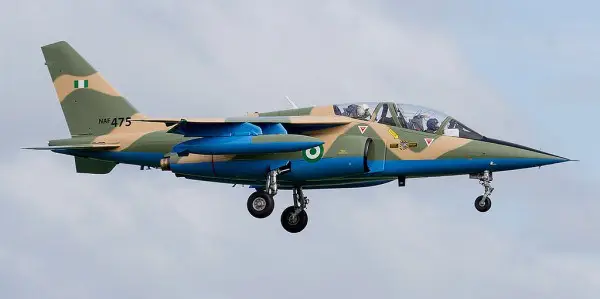
NAF airstrikes destroy terror hideouts in Katsina, thwart ISWAP fresh attack
The Nigerian Air Force (NAF) has recorded major operational gains with a series of precision airstrikes that crushed terror cells in Katsina State and halted a coordinated ISWAP/Boko Haram offensive in Chibok, Borno.
This is contained in a statement by the Director, Public Relations and Information, NAF, Air Commodore Ehimen Ejodame, on Sunday in Abuja.
Ejodame said the NAF’s latest successes, carried out under Operation FANSAN YAMMA and Operation HADIN KAI, followed intelligence-led surveillance that enabled fighter aircraft to strike with accuracy and disrupt multiple hostile movements across both theatres.
In Katsina, he said the air interdictions conducted on Nov. 27, targeted the fortified base of a notorious terrorist leader behind kidnappings, attacks and cattle rustling across Kankara, Faskari and Malumfashi areas.
According to him, the first strike at about 6:30 a.m destroyed key structures and neutralised fighters attempting to flee after surveillance aircraft tracked their movements.
“A second strike later in the evening hit another major hideout in Danfako, Faskari Local Government Area, destroying logistics centres and operational facilities used by the criminals.
“Several terrorists were killed, further weakening their network and denying them freedom of operation in the North-West,” he said.
In the North-East, Ejodame said the NAF aircraft provided decisive support to troops of the 28 Task Force Brigade when ISWAP/Boko Haram fighters launched a multi-directional assault on Chibok.
According to him, four airstrikes were delivered on regrouping and retreating terrorists, inflicting heavy casualties and preventing the insurgents from reorganising.
He said the integrated air–ground response ensured the attackers were overwhelmed, safeguarding residents and averting what could have been a major setback for security in the area.
Ejodame said the operations reflect its commitment to precision strikes aimed at degrading terrorist capabilities and restoring peace across the country, adding that coordination with ground forces would remain a priority. (NAN)
-
6 years ago
Our situation in Kano terrible – Gov Ganduje cries out
-

 News1 year ago
FG pledges commitment to enhance Police officers Welfare, implement Tinubu’s 8-point agenda for NPF
-
 News1 year ago
BREAKING; NSCDC gets approval to commence 2025 recruitment exercise
-

 News1 year ago
Alleged cocaine deal: Court issues orders in suspended DCP Abba Kyari’s case
-

 News1 year ago
DPO under investigation for allegedly taking teenage girl to his home while in police custody
-
6 years ago
COVID 19: 6 Steps all Countries must take now – WHO
-

 News1 year ago
JUST IN; Commissioner of Police bows out of Service
-

 News1 year ago
JUST IN; Police Inspector dies watching Arsenal match