Can a fragile two-week ceasefire prevent a wider Middle East war?

Can a fragile two-week ceasefire prevent a wider Middle East war?
By Emmanuel Yashim, News Agency of Nigeria (NAN)
A hastily brokered two-week ceasefire between the U.S. and Iran on April 7, following diplomatic mediation by Pakistan, has offered the world a momentary sigh of relief.
Nonetheless, analysts warn that the truce may be little more than a pause in an increasingly volatile confrontation.
The deal is aimed at halting U.S.-Israeli attacks against Iran in exchange for Tehran reopening the Strait of Hormuz and ending retaliatory actions.
The agreement, reached after days of heightened military tension and threats of direct confrontation, is widely seen as a tactical de-escalation rather than a pathway to lasting peace.
President of the European Commission, Ursula von der Leyen, provided insights.
“We welcome the two-week ceasefire concluded between the U.S and Iran.
“We thank Pakistan and all partners involved for facilitating this important agreement.
“The goal must now be to negotiate a swift and lasting end to the war within the coming days; this can only be achieved through diplomatic means.’’
She said the commission strongly encouraged quick progress towards a substantive negotiated settlement, which she emphasised would be crucial to protecting the civilian population of Iran, ensuring regional security, and averting a severe global energy crisis.
“We support these diplomatic efforts. To this end, we are in close contact with the U.S. and other partners.
“We call upon all sides to implement the ceasefire, including in Lebanon; our governments will contribute to ensuring freedom of navigation in the Strait of Hormuz,” she added.
But security experts say the brevity of the ceasefire underscores its fragility.
For instance, U.S. Vice President JD Vance himself labelled the ceasefire a “fragile truce,” warning that Iran must negotiate in “good faith” or face escalated economic pressure.
However, Iran’s foreign minister, Abbas Araghchi, suggested the deal might be undermined by Israel’s leadership trying to avoid domestic judicial issues.
At the heart of the crisis are long-standing hostilities between Washington and Tehran, exacerbated by disputes over regional influence, military presence, and strategic waterways.
The ceasefire is believed to include conditions tied to de-escalation in critical zones, particularly maritime routes that are vital to global energy supply.
However, observers note that such conditional arrangements are historically prone to breakdowns.
A Turkish analyst, Oytun Orhan, associated with the Centre for Middle Eastern Studies, noted that the goal was to prevent further escalation, with limited confidence-building steps predicted rather than a resolution of fundamental disputes.
Analysts further stress that hastily negotiated ceasefires often fail because they do not address the structural drivers of conflict.
History is replete with examples where temporary truces collapsed after failing to tackle core grievances such as security guarantees, territorial disputes, and ideological rivalries.
Analysis suggests that Iran might continue to harass shipping in the region even with the truce.
A day after scoring strong gains following the sealing of the two-week ceasefire, European stocks weakened as Tehran halted the passage of oil tankers through the Strait of Hormuz after accusing the U.S. of violating the agreement.
The German news outlet dpa reported that Iran had closed the Strait of Hormuz and threatened to walk away from the agreement as Israel continued to strike Lebanon.
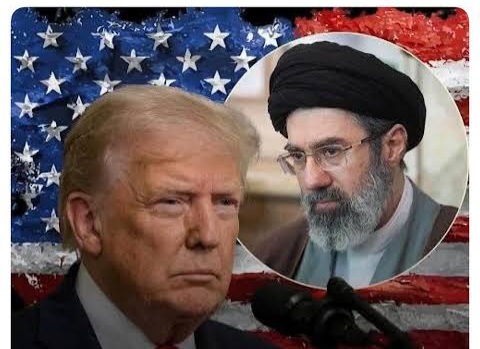
U.S. President Donald Trump warned of renewed escalation in the event of Iran not attempting to reach a broader deal.
Security analysts have pointed out that without clear enforcement mechanisms, verification frameworks, and mutually agreed end goals, such agreements tend to create a false sense of stability.
“When the guns fall silent without a roadmap for resolution, tensions simply go underground; they resurface, often more violently,” one said.
Complicating the situation is the broader regional dynamic. Iran’s network of allied non-state actors across the Middle East – including groups in Lebanon, Iraq and Yemen — adds multiple layers of unpredictability to the ceasefire.
Any action by these groups, whether coordinated or independent, could trigger a rapid return to hostilities.
Similarly, Israel’s ongoing security operations and its long-standing opposition to Iranian influence in the region present an additional flashpoint.
Analysts warn that even if Washington and Tehran hold their fire, the risk of a proxy-triggered escalation remains high.
This is especially so as Israel continued to strike at Lebanon after Prime Minister Benjamin Netanyahu said the ceasefire deal between the U.S. and Iran did not include Lebanon.
The economic dimension also looms large. Tensions surrounding key oil transit routes have already rattled global markets, highlighting how closely geopolitical stability is tied to energy security.
For countries heavily dependent on oil imports, prolonged instability has already translated into rising costs and inflationary pressures.
In Nigeria, economists say the situation presents a mixed outlook.
While higher global oil prices could boost government revenues, volatility in the international market could also disrupt planning and worsen domestic economic challenges.
Mele Kyari, the former Group Chief Executive Officer of NNPC Ltd, and a key authority on Nigeria’s oil production and global supply issues, had previously warned that instability in major oil transit routes could significantly impact supply chains.
Similarly, Bismarck Rewane, a highly respected Nigerian economist, financial strategist, said higher oil prices might boost revenues, but volatility complicates fiscal planning.
Analysts are of the opinion that diplomatic efforts in the coming days are expected to focus on transforming the temporary ceasefire into a more durable framework for dialogue.
However, they point to the erosion of trust between both sides and the fact that previous attempts at negotiation have often collapsed under mutual suspicion.
Meanwhile, observers say the next two weeks will be critical, as for now, the ceasefire stands as a fragile buffer against a wider war – one that offers hope, but no guarantees.
As the region watches and waits, the question remains whether this pause will mark the beginning of diplomacy or merely a prelude to a more devastating confrontation.(NANFeatures)