
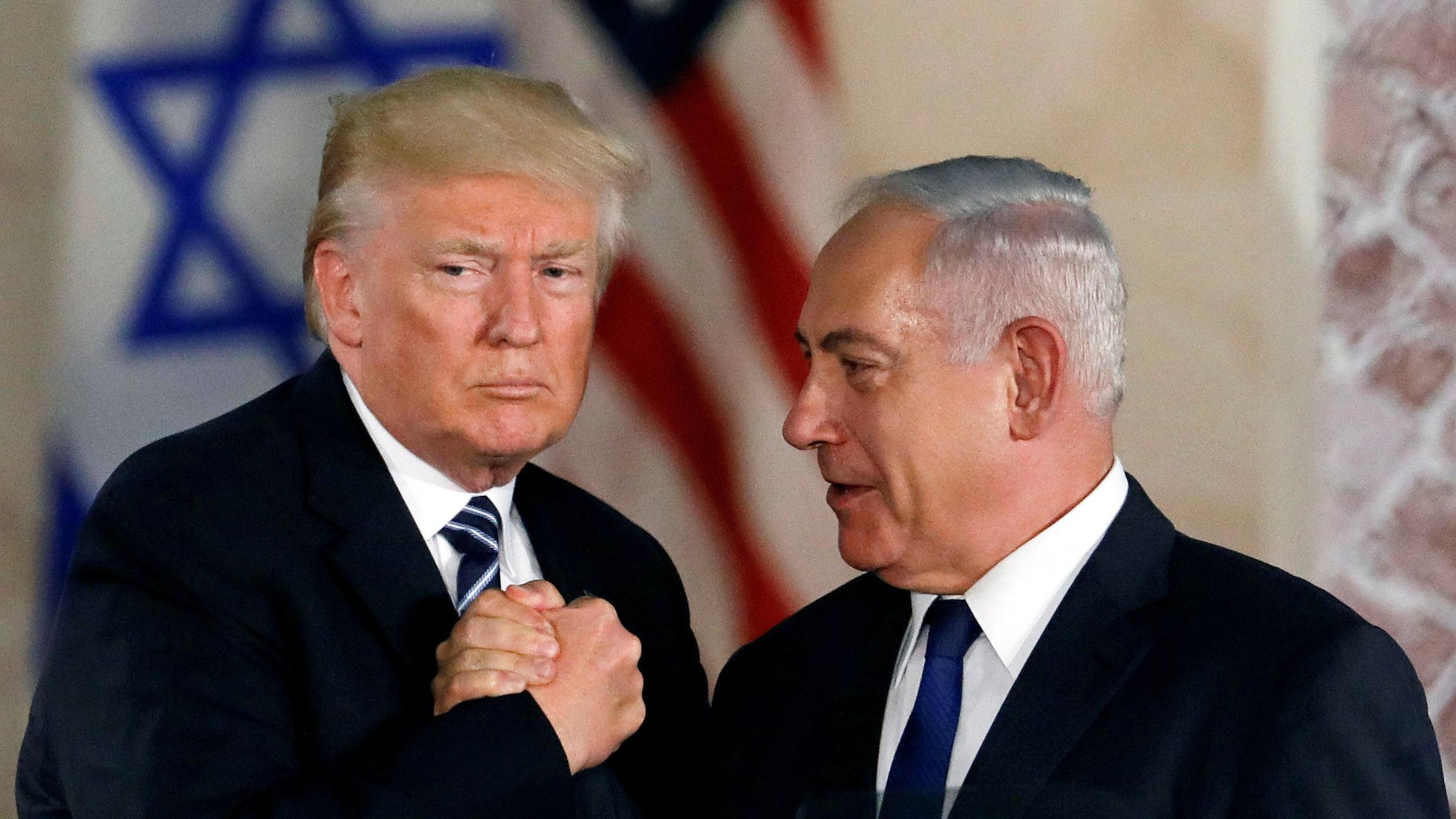
EXPLAINER: What you need to know about latest U.S.-Israeli strike on Iran

EXPLAINER: What you need to know about latest U.S.-Israeli strike on Iran
Iran’s state media on Sunday confirmed that its Supreme Leader Ayatollah Ali Khamenei was killed in a joint U.S.-Israeli attack on Saturday, prompting Iranian missile strikes on Israel and U.S. targets across the region.
What happened in the past 24 hours, Why did the United States and Israel take action now, How will Iran retaliate, Will this conflict escalate.
Israel had announced a “preemptive” strike on Saturday morning, sending about 200 fighter jets in simultaneous airstrikes on missile and defense systems in western and central Iran.
Shortly after the Israeli announcement, U.S. President Donald Trump said on his social media platform Truth Social that U.S. forces are “undertaking a massive and ongoing operation” targeting Iran’s missile industry.
Iran retaliated swiftly, declaring all U.S. military bases in the region legitimate targets and striking Israel and U.S. assets across the Gulf, with explosions reported in Bahrain, Qatar, Kuwait, Jordan, the United Arab Emirates (UAE) and Saudi Arabia, among other countries.
Iranian media had reported that the Islamic Revolution Guards Corps had closed the Strait of Hormuz to shipping, declaring the vital oil and gas waterway unsafe due to U.S. and Israeli attacks.
The Iranian Red Crescent Society said that the strikes hit at least 24 of Iran’s 31 provinces, with 201 deaths and 747 injuries reported so far.
Up to 160 people could have been killed as airstrikes struck a school in southern Iran, said Iranian Foreign Ministry spokesman Esmaeil Baghaei.
Iran’s president condemned the incident as “inhumane.”
In Tehran, missiles struck near the offices of Khamenei and President Masoud Pezeshkian.
Trump on Saturday said that Khamenei was killed in the strikes, a claim later confirmed on Sunday by Iran’s state media, after which the government announced a 40-day mourning period.
Trump said in an eight-minute video that the objective “is to defend the American people by eliminating imminent threats” from Iran.
Echoing his remarks, the Israeli Defence Ministry said the action aims to “remove threats to Israel.”
Analysts suggest the rhetoric indicates a broader objective: government change in Iran through military force.
Unlike the June 2025 strikes targeting underground nuclear facilities away from civilian zones, this operation hit multiple cities and leadership sites.
The timing was chosen to maximise chances of eliminating top Iranian leaders while they were at their command posts, Syrian international relations researcher Mohammad Nader al-Omari said, adding that both the United States and Israel sought a swift, decisive outcome with minimal losses.
The Pentagon has named the operation “Operation Epic Fury,” and U.S. officials told news outlets that it could continue for days or weeks.
According to Israeli media, planning had been underway for months, with the final date set weeks ago.
Before launching the strikes, the Trump administration built up the U.S. military presence in the Middle East to its largest level since the 2003 invasion of Iraq.
Meanwhile, Israel operates around 300 advanced fighter jets and maintains a multi-layered air defence system designed to counter short-range rockets, medium-range threats and ballistic missiles.
Liu Chang, an expert at the China Institute of International Studies, said that the strikes aim to paralyse Iran’s high-level command structure and weaken domestic resistance while using military pressure as leverage in potential negotiations.
There are no “red lines” for Iran after the U.S.-Israeli strikes, Al Jazeera reported, citing an unnamed Iranian official. Anything is possible, the report said, including scenarios never before considered.
“We are not surprised by this aggression. Our response will be full and open-ended, without time limits,” the official said.
While the United States and Israel maintain a significant military advantage, Iran retains potent retaliatory options, particularly its ballistic missile arsenal.
According to Al Jazeera, the exact size of Iran’s ballistic missile arsenal is unclear. Still, it is widely considered one of the largest and most advanced in the Middle East, with some missile types capable of reaching Israel in roughly 12 minutes.
Diplomatically, Iran called on the United Nations to act against the strikes. Foreign Minister Seyed Abbas Araghchi, in letters to the UN secretary general and Security Council, reaffirmed Iran’s right to self-defense, vowing to respond “decisively and immediately” until the aggression “completely and unconditionally stops.”
Experts warned that continued U.S. and Israeli escalation could prompt Iran to coordinate with regional allies — including Yemen’s Houthis, Lebanon’s Hezbollah and Iraqi Shiite militias — to strike U.S. and Israeli targets across the Middle East.
After announcing Khamenei’s death, Trump said that the heavy and pinpoint bombing, however, will continue, uninterrupted throughout the week or, as long as necessary to achieve our objective of PEACE THROUGHOUT THE MIDDLE EAST AND, INDEED, THE WORLD
Analysts cautioned that what begins as a calculated military action could spiral into an uncontrollable regional conflagration.
Adel al-Ghurairi, an Iraqi political analyst and professor at Baghdad University said, “The diplomatic track had already failed,” adding that the strike “is an admission that they believe the military option is the only remaining tool to roll back Iran’s nuclear progress.”
Gulf countries may face pressure to take sides, “exacerbating existing rivalries or triggering new security dilemmas,” said Palestinian political analyst Hussam al-Dajani.
Syrian researcher in international relations Mohammad Nader al-Omari noted the timing of the strikes reflects domestic political considerations.
A rapid resolution, whether through systemic collapse in Tehran or its significant weakening, would benefit Trump ahead of the U.S. midterm congressional elections and bolster Benjamin Netanyahu’s prime ministerial bid, creating incentives for escalation, he said.
William Jackson, chief emerging markets economist at Capital Economics, warned that prolonged conflict could push Brent crude to 100 U.S. dollars per barrel, adding up to 0.7 percentage points to global inflation.
Iran’s closure of the Strait of Hormuz, which handles 20 per cent of world oil, risks immediate supply disruptions.
Meanwhile, the Organisation of the Petroleum Exporting Countries and its allies may face pressure to raise production, he added. (Xinhua/NAN)

News
BREAKING; Police rescue Adelabu’s sister, twin sons alive, kill two kidnappers
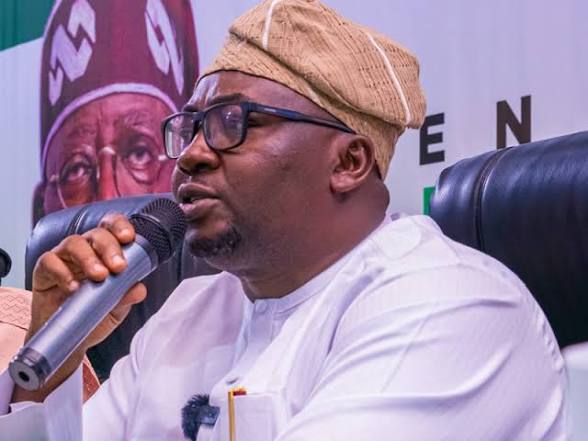
BREAKING; Police rescue Adelabu’s sister, twin sons alive, kill two kidnappers
Operatives of the Nigeria Police Force have rescued Mrs. Olaide Busayo Adegoke John-Paul and her 12-year-old twin sons, Peter and Paul, during a rescue operation conducted on Saturday evening, three days after they were abducted in Oyo State.
The victims, including the younger sister of former Minister of Power, Chief Adebayo Adelabu, were freed at about 7:30 p.m. following sustained intelligence-led operations by security personnel.
Police sources said two suspected kidnappers were killed during a gun battle with operatives, while two firearms were recovered from the gang.
Mrs. John-Paul and her children were reportedly kidnapped at about 7:30 a.m. on June 3 while on their way to school.
According to security sources, intelligence gathering and continuous tactical pressure mounted on the kidnappers forced the criminals into a confrontation with police operatives, leading to the successful rescue of the victims.
The victims were rescued unharmed and have since been reunited with their family.
Meanwhile, security operatives have launched a manhunt for other members of the kidnapping syndicate who escaped during the operation.
News
Senator Ndume hails President Tinubu saysNorth would reward him with votes
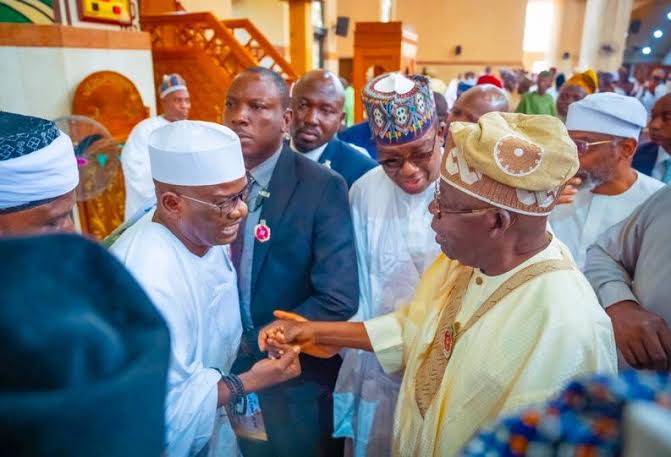
Senator Ndume hails President Tinubu saysNorth would reward him with votes
Senator Ali Ndume, who represents Borno South in the National Assembly, has commended President Bola Ahmed Tinubu for approving the reconstruction and dualisation of the Gombe–Biu highway, describing it as a strategic intervention that will transform connectivity and economic activity in the North-East.
The federal government had on Thursday flagged off the 125-kilometre Gombe–Biu road project at a cost of N1.245 trillion under a major infrastructure renewal programme.
In a statement on Saturday, Ndume said the project would significantly improve regional integration, boost commerce, and strengthen security operations across affected corridors in the North-East.
He noted that he had consistently advocated for the rehabilitation of the highway under successive administrations, citing repeated engagements with key government officials over the years.
“In 2019, during a high-level engagement with the then Minister of Works and Housing, Babatunde Raji Fashola, which I initiated, I expressed concerns regarding the deplorable condition of the Biu–Gombe Road, emphasizing its strategic significance to economic integration, inter-state mobility, security operations, and regional development within the North-East subregion,” he said.
The senator added that he renewed his advocacy in 2021 during discussions on national infrastructure financing, where he again pushed for the inclusion of the corridor in federal priority projects.
“Also in July 2021, during an engagement with the Ministry of Works, during deliberations connected to national infrastructure financing frameworks, including projects tied to African Development Bank-supported facilities, I also made presentation on the urgent need to include the Biu–Gombe corridor within federal rehabilitation priorities, strategic funding windows, and long-term infrastructure development frameworks,” he said.
Ndume further disclosed that a letter he sent to the Minister of Works, David Umahi, on February 11, 2026, helped reinforce the case for the project’s approval.
“It is heart warming to note that my interaction with the present Minister of Works, Engineer Dave Umahi in a letter dated February 11, 2026, in which I drew his attention to the exclusion of the Biu/Damboa/Maiduguri all in Borno state in the 2026 Budget Four Legacy Projects of the present administration finally paid off as the Federal Executive Council (FEC) eventually approved the Biu–Gombe Road project under the federal tax credit and infrastructure intervention framework,” he said.
“The project was subsequently captured among strategic national road interventions financed through the Nigerian National Petroleum Corporation (NNPC) tax liabilities arrangement.”
Ndume described the highway as a “strategic” economic and security corridor linking the North-East with other parts of Nigeria and neighbouring countries, adding that its rehabilitation would also help curb insurgency by improving mobility for security agencies.
While expressing appreciation to President Tinubu for the approval, the senator urged the Federal Government to extend the project beyond Biu to Maiduguri, Monguno, Ngala, and down to Yola.
“I want to appreciate Mr. President for listening to my calls. It is a laudable project that will unlock economic opportunities and improve the quality of life for Nigerians,” he said.
“Like Oliver Twist, we want to appeal to President Tinubu to extend the road network not only to Biu, but to Maiduguri and up to Monguno and Ngala, and then down to Yola.”
“Those are very critical roads that go down to the border that will also promote inter-country trade and also help in the fight against insurgency because they always take advantage of the bad road to block people and kidnap travelers on that road.
“I am sure that the people of the North East will appreciate this gesture of Mr. President and reward him with their votes in the forthcoming general elections.”
News
Tension in Political circles as INEC voids late Primarily elections

Tension in Political circles as INEC voids late Primarily elections
The firm stance of the Independent National Electoral Commission (INEC) on its May 30 deadline for the conduct of party primaries ahead of the 2027 general elections has triggered anxiety within several political parties, especially those considering fresh or rerun exercises.
INEC National Commissioner and Chairman of the Information and Voter Education Committee, Mohammed Kudu Haruna, warned that parties that conduct primaries outside the approved timeline risk having their candidates rejected, pending the outcome of ongoing legal disputes.
“Any primary held outside INEC’s May 30 deadline will be invalid unless the Court of Appeal overturns the Federal High Court judgment,” Haruna said.
The commission is currently challenging a Federal High Court judgment in Abuja which nullified parts of INEC’s timetable for pre-election activities, including the schedule for party primaries, on the grounds that the electoral body acted beyond its statutory powers under the Electoral Act 2026.
Although some political parties welcomed the court ruling, they have largely continued to operate within INEC’s original timetable to avoid jeopardising their candidates’ eligibility in the event that appellate courts rule in favour of the commission.
However, concerns have grown that compliance pressure may undermine internal party dispute resolution processes, particularly where rerun primaries are being considered.
In Kaduna State, members of the African Democratic Congress (ADC) are already facing uncertainty following the party’s appeals committee order for fresh primaries in several constituencies over alleged irregularities, exclusion of aspirants and procedural breaches.
The committee, chaired by Dr. Muhammed Fagge, ordered reruns in Ikara/Kubau, Kaduna South and other state constituencies—an action that now risks clashing with INEC’s deadline.
Observers warn that unless the Court of Appeal intervenes, any primaries conducted after May 30 could trigger disqualification disputes capable of weakening opposition parties ahead of the 2027 elections.
Within the ADC, internal tensions have also intensified over leadership and candidate legitimacy. The party is currently divided into factions, with competing claims over its presidential nomination process.
At a convention held on Sunday, a faction led by Abdulkadir Mohammed Bashir adopted former presidential candidate Dumebi Kachikwu as its consensus flag bearer for the 2027 election.
This development comes after former Vice President Atiku Abubakar emerged as the presidential candidate of the David Mark-led National Executive Committee following its primary election.
Party sources said that after the May 25 primary, the Mark-led leadership adopted a dual strategy of managing grievances while processing nominations for submission to INEC, including activating appeal mechanisms established before the exercise.
The party had constituted a Presidential Appeals Committee chaired by Dr. Suleiman Usman (SAN) to handle complaints arising from the primaries.
However, despite public objections to the outcome, there is no indication that former Minister of Transportation, Rotimi Amaechi, formally submitted a petition to the committee.
Similarly, while businessman Mohammed Hayatu-Deen raised concerns about the process, party officials say there is no record of a formal appeal being filed.
Amaechi had alleged widespread disenfranchisement during the exercise, while Hayatu-Deen boycotted the collation and declaration of results, citing irregularities. Amaechi was also absent at the final announcement of results.
The absence of formal petitions has raised concerns within party circles, particularly as the appeals committee was set up specifically to address such grievances.
Party officials insist reconciliation efforts are ongoing, with internal mechanisms being deployed to resolve disputes across presidential and legislative contests.
At its 101st National Executive Committee (NEC) meeting in Abuja on May 30, 2026, the Mark-led ADC ratified the outcomes of its state, National Assembly, governorship and presidential primaries, except where appeals were still pending or processes had not been concluded as of May 29.
The NEC also approved a 12-month extension of the National Working Committee’s tenure and affirmed the emergence of Atiku Abubakar as the party’s presidential candidate for 2027.
However, the crisis is further complicated by the rival faction loyal to Bashir, which insists its own convention and nomination process followed the ADC constitution.
Announcing Kachikwu’s emergence, chairman of the faction’s convention electoral committee, Hon. Elias Adikwu, said delegates adopted him through a consensus arrangement reached by voice vote.
Although Atiku has appealed for unity among party stakeholders, analysts say unresolved disputes and parallel structures within the ADC may continue to test the party’s cohesion as preparations for the 2027 elections intensify.
-
6 years ago
Our situation in Kano terrible – Gov Ganduje cries out
-

 News1 year ago
FG pledges commitment to enhance Police officers Welfare, implement Tinubu’s 8-point agenda for NPF
-
 News1 year ago
BREAKING; NSCDC gets approval to commence 2025 recruitment exercise
-

 News1 year ago
Alleged cocaine deal: Court issues orders in suspended DCP Abba Kyari’s case
-
 News1 year ago
DPO under investigation for allegedly taking teenage girl to his home while in police custody
-

 News1 year ago
JUST IN; Commissioner of Police bows out of Service
-
 News1 year ago
JUST IN; Police Inspector dies watching Arsenal match
-

 News1 year ago
BREAKING; NLC declare nationwide protest