
JUST IN; EFCC recovers ₦566 billion, $411 million 1,502 stolen assets

JUST IN; EFCC recovers ₦566 billion, $411 million 1,502 stolen assets
The Economic and Financial Crimes Commission (EFCC) has recovered over ₦566 billion, 411 million dollars, and 1,502 properties in the last two years under the leadership of its chairman Ola Olukoyede.
The EFCC boss, represented by Wilson Uwujaren, the Director of Public Affairs, made the disclosure in Abuja on Thursday, at a press conference marking his second anniversary in office.
Olukoyede, who was appointed on Oct. 18, 2023, and confirmed by the Senate the following day, said the commission had made “unprecedented progress” in its fight against economic and financial crimes across all fronts.
According to him, the commission between October 2023 and September 2025, received over 19,000 petitions, conducted 29,240 investigations, filed 10,525 cases in court, and secured 7,503 convictions.
“The commission in the same period recovered ₦566,319,820,343.40, $411,566,192.32, £71,306.25, €182,877.10, and other foreign currencies from proceeds of financial and economic crimes.
“It also recovered 1,502 non-monetary assets, comprising 402 properties in 2023, 975 in 2024, and 125 so far in 2025.
“Among these recovered assets are two notable landmarks: the final forfeiture of 753 units of duplexes in Lokogoma, Abuja, and the forfeiture of Nok University, now the Federal University of Applied Sciences, Kachia, Kaduna State,” he said.
Olukoyede listed several major cases prosecuted within the period, involving former governors Willie Obiano, Abdulfatah Ahmed, Darius Ishaku, Theodore Orji, and Yahaya Bello.
Other high profile cases he said included former ministers Olu Agunloye, Mamman Saleh, Hadi Sirika, and Charles Ugwu, and former Central Bank Governor, Godwin Emefiele.
He said that the EFCC also revived longstanding corruption cases involving prominent figures such as Fred Ajudua, former PDP Chairman Haliru Bello Mohammed, ex-National Security Adviser Sambo Dasuki, and former NSITF boss, Ngozi Olojeme.
Olukoyede noted that in December 2024, the commission arrested 792 suspects in connection with investment and cryptocurrency fraud in Lagos, including 192 foreign nationals who were later prosecuted and deported.
“This development sent a strong message that Nigeria will not allow its territory to be turned into a safe haven for cybercriminals,” Olukoyede stated.
The EFCC chairman disclosed that part of the recovered funds had been channeled into key national programmes, including the Students Loan Scheme and Consumer Credit Scheme, with a total of ₦100 billion invested.
He said other agencies such as the Niger Delta Development Commission (NDDC), Asset Management Corporation of Nigeria (AMCON), Federal Inland Revenue Service (FIRS), and National Health Insurance Authority (NHIA) — also benefited from returned funds.
According to him, some recovered properties were allocated to government agencies for use as offices “in line with the Commission’s policy of ensuring that recovered assets are put to productive use”.
Olukoyede highlighted the creation of a Task Force on Naira Abuse and Dollarisation of the Economy, noting that the initiative has helped sanitize currency operations and reduce speculative pressure on the naira.
He emphasised the Commission’s dual approach to fighting cybercrime through enforcement and prevention, recalling the National Cybercrime Dialogue held in January 2024, and the National Cybercrime Summit in October 2024, where First Lady Sen. Oluremi Tinubu unveiled the Cybercrime Response Centre.
According to him, the EFCC has deepened international partnerships with agencies such as the FBI, UK’s National Crime Agency (NCA), INTERPOL, and Japan’s JICA, resulting in joint investigations and repatriation of stolen assets to victims in Spain, Canada, and the United States.
“In 2024, we had the honour of hosting Christopher Wray, former FBI Director, and the Director General of the NCA, Graeme Biggar, a testament to the global respect the EFCC commands today,” he said.
At the regional level, Olukoyede’s leadership as President of the Network of National Anti-Corruption Institutions in West Africa (NACIWA) led to the establishment of a permanent secretariat in Abuja.
He detailed a series of internal reforms, including the creation of the Directorate of Fraud Risk Assessment and Control (FRAC) to enhance corruption prevention.
Olukoyede reaffirmed his commitment to integrity and professionalism within the Commission, saying, “You cannot fight corruption with corruption.”
He noted that all staff were directed to declare their assets upon his assumption of office.
“Those who breached ethical standards were sanctioned in line with due process; 55 officers have been dismissed over misconduct, including one currently facing prosecution for tampering with exhibits.”
He added that while errant staff have been disciplined, hardworking officers have been rewarded through regular promotions, provision of CNG buses, and payment of allowances.
The EFCC Chairman reiterated that corruption prevention remains a cornerstone of his administration.
“Prevention is a more cost-effective approach than enforcement. That is why we established FRAC to deploy risk-based strategies in monitoring the budget performance of Ministries, Departments, and Agencies,” he said.(NAN)

News
Anthony Joshua returns to gym for ‘Mental Strength Therapy’ after fatal crash

Anthony Joshua returns to gym for ‘Mental Strength Therapy’ after fatal crash
Anthony Joshua has shared signs of a tentative return to the gym, revealing he has resumed light training as part of what he called “mental strength therapy” following a fatal car crash in Nigeria.
The former world heavyweight champion survived the accident on December 29 while travelling as a passenger in a Lexus SUV on the Lagos–Ibadan expressway.
The vehicle collided with a stationary truck, killing two of Joshua’s close associates and members of his backroom team, Latif Ayodele and Sina Ghami.
Joshua suffered only minor injuries.
In the days after the crash, uncertainty surrounded the 36-year-old’s future in boxing, with suggestions that the emotional impact could keep him out of the ring for a prolonged period.
That uncertainty eased slightly on Thursday when Joshua posted footage on Instagram showing himself hitting pads with a trainer inside a gym.
The short clip, captioned “Mental Strength Therapy”, indicated the session was focused on recovery and wellbeing rather than a full return to competition.
Promoter Eddie Hearn has since urged patience, insisting there is no rush for Joshua to make decisions about his career.
Speaking earlier this week, Hearn said the boxer would be given all the time he needs to process the loss of Ayodele and Ghami, as speculation continues over whether and when he will fight again.
“I think AJ, as we have seen in the past on boxing-related stuff, is always a brave-face guy, a very positive guy,” Hearn told Sky Sports.
“This is very different to that and I know he will take his time.
“He will need his time physically, mentally, emotionally, spiritually before he makes a decision on his future. I do think he will want to return to boxing, but that will be his decision when the time is right.”
The accident occurred while the boxer was on holiday in Nigeria following his win against YouTuber-turned-boxer Jake Paul in Miami, the United States, on December 19.
News
Tinubu mourns Abubakar’s passing, the Imam who shielded over 200 Christians in his mosque during communal riot
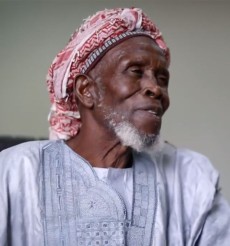
Tinubu mourns Abubakar’s passing, the Imam who shielded over 200 Christians in his mosque during communal riot
President Bola Tinubu has expressed deep sorrow over the death of Imam Abdullahi Abubakar, Chief Imam of Nghar village, Barkin Ladi Local Government Area of Plateau, who passed away at 92.
This is contained in a statement issued by Presidential Spokesperson, Mr Bayo Onanuga, on Friday in Abuja.
The late cleric gained national and international recognition in 2018 for sheltering more than 200 Christians during communal violence in Plateau.
Tinubu described Abubakar as an extraordinary religious leader whose life exemplified faith, courage and a deep reverence for the sanctity of human life.
“At such a time when tribal and religious tendencies seemed to overwhelm reason, Imam Abubakar stood firmly on the side of peace, benevolence and conscience.
“Mindless of the enormous risk to his own life, the noble cleric chose humanity over division, love as opposed to hatred and embrace rather than rejection,” the President said.
He said the Imam’s actions embodied the true essence of faith and delivered a powerful message beyond sermons.
The President noted that the cleric’s uncommon bravery earned him local and international honours celebrating peaceful coexistence.
“I urge religious and community leaders to imbibe and preach the spirit of tolerance, mutual respect and peaceful togetherness as expounded in the life of Imam Abubakar,” Tinubu said.
He prayed that God grants the late Imam eternal rest and rewards him for his courage and good deeds. (NAN)
News
Govt. introduces solar installation, garment making, GSM repairs in jss curriculum
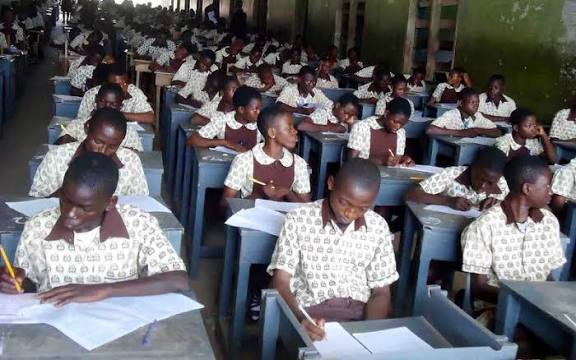
Govt. introduces solar installation, garment making, GSM repairs in jss curriculum
The Anambra Government has introduced 15 entrepreneurial subjects into the Junior Secondary School (JSS) curriculum to enhance students’ practical skills and foster an entrepreneurial mindset.
The News Agency of Nigeria (NAN) reports that the new subjects include solar installation, garment making, GSM repairs, agriculture and processing, plumbing, tiling, POP installation and event management.
Others are bakery, hairstyling, make-up, interior design, CCTV/intercom installation, digital literacy, information technology and robotics.
Prof. Nkechi Ikediugwu, Chairperson ,Post Primary Schools Service Commission (PPSSC), while speaking at the occasion in Awka on Friday, said the initiative was aimed at repositioning education to meet contemporary needs.
Ikediugwu noted that in a rapidly changing world, education should go beyond theory and examinations to equip students with practical skills, creativity, innovation and an entrepreneurial mindset.
“The goal of the programme is to prepare learners, not only to seek jobs but to create value, generate employment and contribute meaningfully to the economic development of the state,”she said.
Mr Cyril Nwuche of Nnamdi Azikiwe University, Awka, delivered a paper titled “Building Entrepreneurial Secondary Schools: Why Every School Needs an Entrepreneurship Club”.
Nwuche said the introduction of entrepreneurial subjects showed that the government was on the path to transforming the state’s economy.
“Traditional academic instruction alone is no longer sufficient to prepare children for the future.
“There is the need for schools to embrace practical and skill-based learning to enable students to thrive in a dynamic global environment, ” he said. (NAN)
-
6 years ago
Our situation in Kano terrible – Gov Ganduje cries out
-

 News11 months ago
FG pledges commitment to enhance Police officers Welfare, implement Tinubu’s 8-point agenda for NPF
-
 News11 months ago
BREAKING; NSCDC gets approval to commence 2025 recruitment exercise
-
 News9 months ago
Alleged cocaine deal: Court issues orders in suspended DCP Abba Kyari’s case
-

 News12 months ago
DPO under investigation for allegedly taking teenage girl to his home while in police custody
-

 News12 months ago
JUST IN; Commissioner of Police bows out of Service
-
 News9 months ago
JUST IN; Police Inspector dies watching Arsenal match
-

 News12 months ago
BREAKING; NLC declare nationwide protest