
FIFA faces global pressure after US President Donald Trump’s World Cup threat

FIFA faces global pressure after US President Donald Trump’s World Cup threat
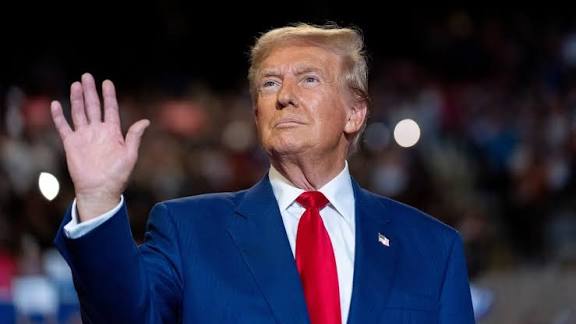
President Donald Trump has thrown FIFA into the political spotlight, warning he could strip World Cup matches from American host cities he considers unsafe ahead of 2026.
The sitting U.S. leader’s threat has raised questions about FIFA’s independence, the tournament’s stability, and whether global football can withstand political interference from the world’s most powerful office.
The 2026 World Cup will be historic, the first tournament expanded to 48 teams and jointly hosted by the United States, Canada, and Mexico.
Eleven American cities have been confirmed hosts, chosen after a competitive bidding process balancing stadium infrastructure, international accessibility, and regional diversity across the vast United States.
Changing venues at this stage would create chaos, disrupting logistics, ticket allocations, sponsorships, and television contracts, all meticulously structured around the confirmed match calendar.
FIFA is unlikely to welcome political uncertainty, especially when commercial partners and broadcasters demand guarantees that fixtures will proceed as announced without disruption.
For Seattle, San Francisco, and Los Angeles, Trump’s remarks threaten reputational damage at a time when preparations are reaching critical stages and resources are being deployed.
Cities spend millions upgrading stadiums, transport networks, and accommodation facilities to meet FIFA’s stringent requirements for hosting global matches.
Being stripped of fixtures would represent not only financial loss but also a blow to civic pride, particularly after years of lobbying to secure selection.
Los Angeles’ involvement is especially pivotal. Its SoFi Stadium is scheduled to host high-profile matches, potentially including knockout rounds, and is central to FIFA’s American vision.
Seattle’s Lumen Field and San Francisco’s Levi’s Stadium were chosen partly for their technology, fan bases, and West Coast positioning, offering time-zone variety for global audiences.
Losing these fixtures would significantly weaken the geographic spread that FIFA and organisers carefully designed to showcase America’s diversity and vast reach.
Trump’s warning hinges on safety. Yet, experts debate whether his concerns reflect genuine risk assessments or political posturing shaped by America’s deeply polarised politics.
American cities have struggled with crime and homelessness, particularly on the West Coast, but large-scale sporting events typically trigger enhanced security measures backed by federal resources.
For instance, the 1994 World Cup in the United States was staged without major safety incidents, despite similar concerns about crime in host cities like Los Angeles.
The forthcoming 2028 Olympics in Los Angeles already involve robust policing plans, international cooperation, and investments in urban security infrastructure.
Security analysts argue these measures will be sufficient for 2026, making Trump’s language appear exaggerated and politically motivated.
Yet Trump’s comments reverberate across the footballing world, unsettling fans, governments, and corporations who rely on stability when investing in global tournaments.
International supporters already mapping their journeys will now closely monitor developments, seeking assurance that their travel, investment, and safety will not be disrupted.
Sponsors, too, will demand stability. Multinational companies pour billions into FIFA tournaments, and unpredictability could jeopardise carefully crafted marketing campaigns built around specific host cities.
Broadcasters face similar dilemmas. Television schedules and promotional materials often feature iconic stadium backdrops. Relocating games at short notice would be a logistical nightmare for networks.
FIFA must therefore tread carefully, balancing its relationship with American authorities while reassuring global stakeholders of the tournament’s integrity.
History shows sport is never immune to politics. Trump’s comments highlight the recurring theme of political power intersecting with sporting spectacle on the biggest stages.
From boycotts at Olympic Games to World Cups staged in authoritarian states, sport has repeatedly been used as a platform for political messages.
In America, the 2026 World Cup is more than football. It is a demonstration of the nation’s ability to host the world, blending sport with soft power.
Trump’s intervention, therefore, cannot be separated from wider debates about American governance, urban policy, and the international perception of the United States.
Former players and pundits have weighed in, urging organisers to shield football from political distractions and keep focus on the sport.
Many insist fans care less about partisan battles and more about enjoying the world’s most beloved tournament in safe, welcoming atmospheres.
Footballers, particularly those with global profiles, will expect assurances that politics does not undermine preparations or jeopardise their experience at the sport’s highest stage.
Supporter groups, both domestic and international, have also demanded clarity. Travel planning is already under way, and uncertainty about host cities complicates logistics and financial commitments.
For FIFA, the episode is a reminder of the immense scrutiny surrounding its decisions. The governing body thrives on image as much as competition.
What happens next depends on whether Trump’s comments remain rhetorical or escalate into policy pressure backed by federal security or immigration agencies.
If American authorities actively challenge FIFA’s choices, a diplomatic tug-of-war could unfold, risking delays, costly disputes, and potential venue changes under duress.
However, FIFA may quietly trust its security planning, betting that political rhetoric will subside once preparations move closer to completion.
The precedent is that World Cup hosts resist political turbulence by emphasising global unity, avoiding dramatic late changes to match venues that destabilise stakeholders.
FIFA’s own history is instructive. The organisation has consistently punished countries where governments interfere with football administration, even threatening suspensions of Nigeria, Spain, and Kuwait in recent years.
These interventions were triggered by political meddling in domestic federations — far smaller matters than a U.S. President threatening to reshape the World Cup schedule.
If FIFA bends here, critics will say it has abandoned principle in its most lucrative market, setting a dangerous precedent for future host nations.
Conversely, standing firm against the White House risks open confrontation with the most powerful political office in the world, a challenge FIFA has never truly faced.
This makes the 2026 situation unique: a global governing body that usually dominates weaker football nations now faces a direct test from Washington.
For now, the official match schedule remains unchanged, but Trump’s words will linger, fuelling debate and speculation until FIFA offers a firm response.
The 2026 World Cup is intended to celebrate football’s growth, diversity, and global reach, showcasing North America as a united stage for sport’s greatest spectacle.
Instead, political uncertainty has entered the script, with Trump’s remarks casting shadows over carefully laid plans and intensifying scrutiny on American host cities.
Internationally, the issue is also being framed as a test of FIFA’s independence and its ability to resist political interference from host nations.
If FIFA yields to political pressure, critics will argue that football has surrendered its autonomy to partisan battles in Washington.
Conversely, if FIFA stands firm, it risks public confrontation with the sitting American President, a scenario with unpredictable diplomatic repercussions.
The stakes are unusually high, not just for the sport but for global governance of major events that promise unity beyond politics.
FIFA has survived scandals, corruption investigations, and criticism over host nation choices, but political volatility in its strongest commercial market is a uniquely dangerous challenge.
The central question persists: will the world’s most powerful sporting body bend to Trump’s threat, or prove that football can still rise above politics? (NAN)

News
Anthony Joshua returns to gym for ‘Mental Strength Therapy’ after fatal crash

Anthony Joshua returns to gym for ‘Mental Strength Therapy’ after fatal crash
Anthony Joshua has shared signs of a tentative return to the gym, revealing he has resumed light training as part of what he called “mental strength therapy” following a fatal car crash in Nigeria.
The former world heavyweight champion survived the accident on December 29 while travelling as a passenger in a Lexus SUV on the Lagos–Ibadan expressway.
The vehicle collided with a stationary truck, killing two of Joshua’s close associates and members of his backroom team, Latif Ayodele and Sina Ghami.
Joshua suffered only minor injuries.
In the days after the crash, uncertainty surrounded the 36-year-old’s future in boxing, with suggestions that the emotional impact could keep him out of the ring for a prolonged period.
That uncertainty eased slightly on Thursday when Joshua posted footage on Instagram showing himself hitting pads with a trainer inside a gym.
The short clip, captioned “Mental Strength Therapy”, indicated the session was focused on recovery and wellbeing rather than a full return to competition.
Promoter Eddie Hearn has since urged patience, insisting there is no rush for Joshua to make decisions about his career.
Speaking earlier this week, Hearn said the boxer would be given all the time he needs to process the loss of Ayodele and Ghami, as speculation continues over whether and when he will fight again.
“I think AJ, as we have seen in the past on boxing-related stuff, is always a brave-face guy, a very positive guy,” Hearn told Sky Sports.
“This is very different to that and I know he will take his time.
“He will need his time physically, mentally, emotionally, spiritually before he makes a decision on his future. I do think he will want to return to boxing, but that will be his decision when the time is right.”
The accident occurred while the boxer was on holiday in Nigeria following his win against YouTuber-turned-boxer Jake Paul in Miami, the United States, on December 19.
News
Tinubu mourns Abubakar’s passing, the Imam who shielded over 200 Christians in his mosque during communal riot
Tinubu mourns Abubakar’s passing, the Imam who shielded over 200 Christians in his mosque during communal riot
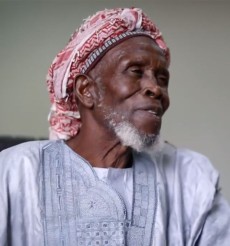
President Bola Tinubu has expressed deep sorrow over the death of Imam Abdullahi Abubakar, Chief Imam of Nghar village, Barkin Ladi Local Government Area of Plateau, who passed away at 92.
This is contained in a statement issued by Presidential Spokesperson, Mr Bayo Onanuga, on Friday in Abuja.
The late cleric gained national and international recognition in 2018 for sheltering more than 200 Christians during communal violence in Plateau.
Tinubu described Abubakar as an extraordinary religious leader whose life exemplified faith, courage and a deep reverence for the sanctity of human life.
“At such a time when tribal and religious tendencies seemed to overwhelm reason, Imam Abubakar stood firmly on the side of peace, benevolence and conscience.
“Mindless of the enormous risk to his own life, the noble cleric chose humanity over division, love as opposed to hatred and embrace rather than rejection,” the President said.
He said the Imam’s actions embodied the true essence of faith and delivered a powerful message beyond sermons.
The President noted that the cleric’s uncommon bravery earned him local and international honours celebrating peaceful coexistence.
“I urge religious and community leaders to imbibe and preach the spirit of tolerance, mutual respect and peaceful togetherness as expounded in the life of Imam Abubakar,” Tinubu said.
He prayed that God grants the late Imam eternal rest and rewards him for his courage and good deeds. (NAN)
News
Govt. introduces solar installation, garment making, GSM repairs in jss curriculum
Govt. introduces solar installation, garment making, GSM repairs in jss curriculum
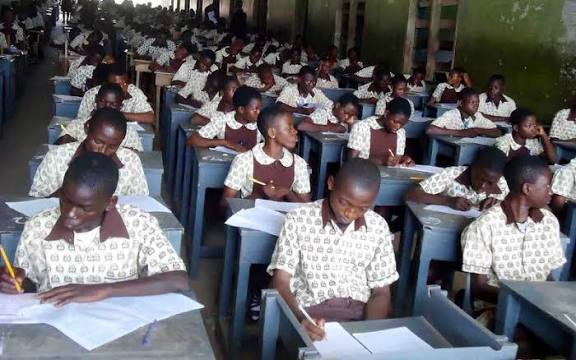
The Anambra Government has introduced 15 entrepreneurial subjects into the Junior Secondary School (JSS) curriculum to enhance students’ practical skills and foster an entrepreneurial mindset.
The News Agency of Nigeria (NAN) reports that the new subjects include solar installation, garment making, GSM repairs, agriculture and processing, plumbing, tiling, POP installation and event management.
Others are bakery, hairstyling, make-up, interior design, CCTV/intercom installation, digital literacy, information technology and robotics.
Prof. Nkechi Ikediugwu, Chairperson ,Post Primary Schools Service Commission (PPSSC), while speaking at the occasion in Awka on Friday, said the initiative was aimed at repositioning education to meet contemporary needs.
Ikediugwu noted that in a rapidly changing world, education should go beyond theory and examinations to equip students with practical skills, creativity, innovation and an entrepreneurial mindset.
“The goal of the programme is to prepare learners, not only to seek jobs but to create value, generate employment and contribute meaningfully to the economic development of the state,”she said.
Mr Cyril Nwuche of Nnamdi Azikiwe University, Awka, delivered a paper titled “Building Entrepreneurial Secondary Schools: Why Every School Needs an Entrepreneurship Club”.
Nwuche said the introduction of entrepreneurial subjects showed that the government was on the path to transforming the state’s economy.
“Traditional academic instruction alone is no longer sufficient to prepare children for the future.
“There is the need for schools to embrace practical and skill-based learning to enable students to thrive in a dynamic global environment, ” he said. (NAN)
-
6 years ago
Our situation in Kano terrible – Gov Ganduje cries out
-

 News11 months ago
FG pledges commitment to enhance Police officers Welfare, implement Tinubu’s 8-point agenda for NPF
-
 News11 months ago
BREAKING; NSCDC gets approval to commence 2025 recruitment exercise
-
 News9 months ago
Alleged cocaine deal: Court issues orders in suspended DCP Abba Kyari’s case
-
 News12 months ago
DPO under investigation for allegedly taking teenage girl to his home while in police custody
-

 News12 months ago
JUST IN; Commissioner of Police bows out of Service
-
 News9 months ago
JUST IN; Police Inspector dies watching Arsenal match
-

 News12 months ago
BREAKING; NLC declare nationwide protest