
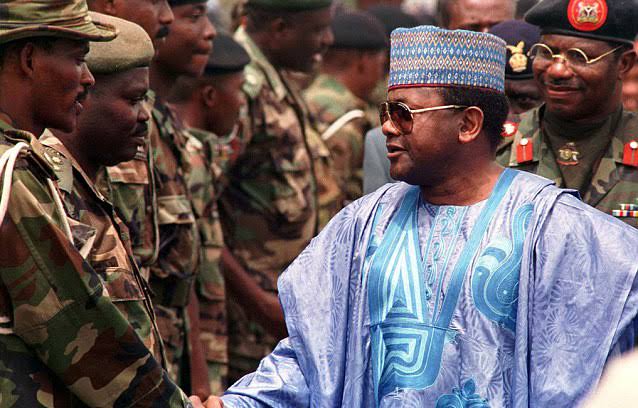
How I pleaded with Abacha not to kill Obasanjo – Ex–Head of State Gowon gives revelation

How I pleaded with Abacha not to kill Obasanjo – Ex–Head of State Gowon gives revelation
Former Head of State, Gen. Yakubu Gowan says he pleaded with late Gen. Sani Abacha not to execute former President Olusegun Obasanjo for alleged coup plot in 1995.
Gowon said this at the maiden edition of the Interdenominational Unity Christmas Carol and Praise Festival organised by the Plateau Government.
The News Agency of Nigeria (NAN)reports that Obasanjo was arrested in 1995 by Gen. Sani Abacha and convicted of being part of planned coup to overthrow his government.
Obasanjo, in spite of pleading innocent to the coup, was sentenced to death.
He spent three years in prison before he was released in 1998 following the death of Gen. Abacha on June 8 of that year.
While Gowon was the Special Guest of Honour at the event, Obasanjo was the Guest of Honour, respectively.
“I wrote a letter to Abacha, I pleaded with him that God made him a leader to do good and not evil.
“I sent my wife with the letter in the middle of the night to Abacha in Abuja; I pleaded with him that such a thing should not happen.
“I’m glad that soon after that, things changed, and not only that Obasanjo left prison, he became our president in 1999.
“This is something that only prayers and sincerity can do; I’m happy that today myself and Obasanjo are here to celebrate the unity of Plateau,”he said.
Gowon also thanked the state government for organising the carol, adding that it would further unite the citizens of the state.
The head of state said that the state had gone through myriad of security challenges, hence the carol provided suitable avenue for the people to commune.
He commended Gov. Caleb Mutfwang for the various initiatives aimed at promoting peaceful coexistence among the people.(NAN)

News
Insecurity: CAN declares 3-day national mourning period to honour victims
Insecurity: CAN declares 3-day national mourning to honour victims
The Christian Association of Nigeria (CAN) has declared a three-day national mourning period, from June 12, to June 14 to honour the victims of violent attacks, mass abductions, and banditry across the country.
The apex Christian body also designated June 14 as “Black Sunday” across all Churches as a mark of solidarity with families affected by the lingering security crisis.
The President of CAN, Archbishop Daniel Okoh, made the announcement on Tuesday in Abuja while reading a communiqué issued at the end of the National Church Denominational Leaders Summit. .
The summit, held at the National Christian Centre and themed “The State of the Nation and the Way Forward,” brought together top Church leaders, block leaders, and delegates to prayerfully review the country’s challenges.
Okoh expressed deep concern over the escalating wave of violence, citing recent incidents of killings, kidnappings, and destruction of communities in states such as Oyo, Ogun, Borno, Kwara, and Kogi.
He urged the Federal Government to immediately declare a state of emergency on national security to halt the ongoing bloodshed.
”Communities are under attack; citizens are kidnapped from their homes and places of work, travelers are abducted on highways, and farmers are driven from their lands.
”Innocent men, women, and children are killed, maimed, displaced, and, in some cases, brutally beheaded by criminal and terrorist elements,” Okoh said.
The CAN President criticised the “recurring resort to conciliatory and pacifist rhetoric by senior government officials” in response to grave security threats, calling instead, for a proactive, result-oriented approach.
He reminded the government that the primary responsibility of any administration remains the protection of lives and property.
Consequently, the Cleric demanded a comprehensive review of the nation’s security architecture, improved intelligence gathering, stronger inter-agency cooperation, and greater operational accountability.
He also threw his weight behind decentralising security operations, calling for the immediate acceleration of constitutional and legislative processes for the establishment of state police.
The CAN President further demanded the immediate and unconditional release of all abducted school children, teachers, and other citizens currently held captive by criminal elements.
On the humanitarian front, Okoh called for the establishment of a comprehensive compensation, rehabilitation, and resettlement programme for victims of terrorism and families who have lost livelihoods or loved ones.
He also tasked individual Churches across the federation to strengthen internal support systems by providing humanitarian assistance, trauma care, and peace-building initiatives for displaced persons within their localities.
Okoh lamented that premature electioneering, political calculations, and party defections were taking center stage among the political class while many communities remained under siege.
He advised political leaders and parties to shun divisive distractions and prioritise national security.
The Cleric called on organised labour groups, civil society organisations and traditional institutions to collaborate in holding the government accountable.
Okoh reaffirmed the commitment of the Church to national unity, peace, and justice.
He stressed that, while prayers would be intensified, they must be matched with sustained civic engagement and advocacy.(NAN)
News
Weapons looted during Libyan conflict found with Terrorists groups in Nigeria – UN
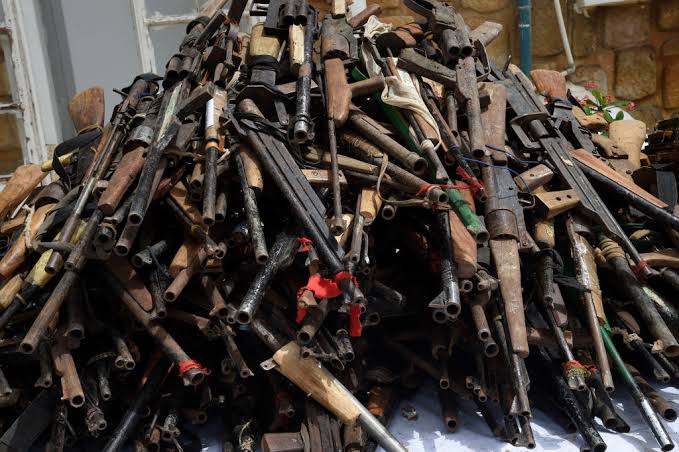
Weapons looted during Libyan conflict found with extremist groups in Nigeria – UN
The United Nations says some weapons looted during the Libyan conflict in 2011 have ended up in the hands of extremist groups in Nigeria.
Izumi Nakamitsu, the UN Under-Secretary-General and High Representative for Disarmament Affairs, stated this at the UN Headquarters in New York on Tuesday as delegates gathered to tackle the global spread of illicit firearms.
The UN’s top disarmament official expressed regret that weapons continue to fuel violence in communities long after wars end, causing devastation across one-time peaceful communities.
She cited “Libya, where weapons looted or diverted during and after the 2011 conflict which ended the rule of Muammar Gadaffi later surfaced across the wider Sahel region, including in Niger, Burkina Faso, and Nigeria.”
“Some were subsequently found in the hands of extremist groups, illustrating how arms from one conflict can destabilise neighbouring countries years later.
“The end of the conflict does not mean the end of the circulation of those weapons; it stays and it continues to harm people,” Nakamitsu said.
In parts of sub-Saharan Africa, the UN says proliferation of small arms can undermine peacebuilding efforts long after fighting subsides.
Weapons retained by armed groups, militias or communities for self-protection can contribute to renewed violence and instability, she stressed.
According to her, illicit weapons are also linked to human rights abuses, terrorism and sexual and gender-based violence.
“It is not just a security issue. It is also about peacebuilding. It is about human rights. It is also about development,” Nakamitsu said.
She said years after conflicts fade from the headlines, the weapons used to fight them often continue to circulate, crossing borders, fuelling crime and undermining an often-fragile peace.
“Wars end, but unfortunately, the weapons that are used in that particular conflict would not be under full control,” Nakamitsu said.
“They continue to circulate. They are sometimes hidden. They are brought across borders.”
She expressed concerns that the emergence of ghost guns, 3D-printed firearms and increasingly sophisticated trafficking networks are creating new challenges for governments worldwide.
“Those weapons or weapon parts, if they are disassembled and then trafficked, are more difficult to trace,” Nakamitsu said.
UN member states adopted an action programme in 2001, committing to strengthen national legislation, improve stockpile security, combat illicit trafficking, and expand international cooperation.
A major milestone followed in 2005 with the adoption of the International Tracing Instrument, which established global standards for marking, recording, and tracing the illegal weaponry.
The framework helps investigators identify where illicit weapons originated and how they entered illegal markets, while reducing the risk of diversion from legal stockpiles.
The UN supports implementation through technical assistance, policy guidance, and capacity-building programmes aimed at helping governments secure weapons stockpiles, improve tracing systems and strengthen border controls. (NAN)
News
Federal Govt intensifies Ebola preparedness, strengthens surveillance measures
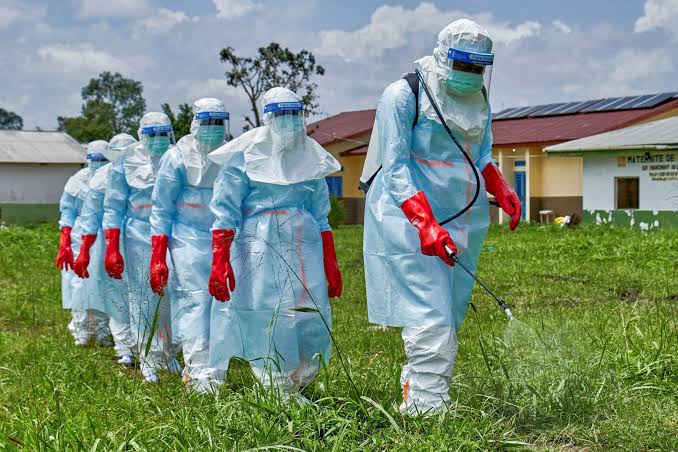
Federal Govt intensifies Ebola preparedness, strengthens surveillance measures
The Federal Government has intensified national preparedness and response measures against the possible introduction of the Bundibugyo Ebola Virus Disease (BEBOV), currently reported in parts of East and Central Africa.
This is vontained in a statement issued by Mr Ado Bako, Assistant Director of Press and Public Relations in the ministry, on Wednesday in Abuja.
According to him, the move is aimed at safeguarding Nigeria from cross-border disease transmission and strengthening the country’s overall health security architecture against emerging threats.
Bako reassured Nigerians that there was presently no confirmed case of Ebola Virus Disease in the country.
“However, in line with the Federal Government’s commitment to strengthening national health security and preventing cross-border disease transmission, heightened preparedness measures have been activated nationwide.
“As part of ongoing response readiness efforts, official preparedness protocols, advisories, and technical guidance documents have been uploaded to the Ministry’s website to support public awareness, stakeholder sensitisation, and institutional compliance,” he said.
According to him, strict border control and Point of Entry protocols are already operational across the country to strengthen surveillance and early detection of suspected cases.
He said the measures included universal temperature screening using infrared thermal scanners and handheld thermometers, mandatory health declaration forms and travel history assessments for arriving passengers.
Bako added that enhanced traveller risk assessments, secondary screening, isolation and referral mechanisms for symptomatic individuals, as well as strengthened coordination with border management agencies, had also been activated.
The spokesman said surveillance activities had equally been intensified through the Integrated Disease Surveillance and Response system, alongside strengthened community-based and event-based monitoring mechanisms nationwide.
He said public health authorities were actively monitoring, verifying and investigating alerts and rumours while conducting continuous national risk assessments and epidemiological surveillance.
Bako further said laboratory readiness, specimen collection and transportation systems for viral haemorrhhagic diseases had been strengthened to ensure prompt diagnosis and response when necessary.
He noted that Public Health Emergency Operation Centers had been placed on alert, while Rapid Response Teams at national and sub-national levels remained deployment-ready for any eventuality.
According to him, infection prevention and control measures have also been reinforced in health facilities, with ongoing preparedness training and sensitisation programmes for healthcare workers and frontline personnel.
He said healthcare facilities nationwide had been advised to maintain a high index of suspicion for viral haemorrhagic fevers, strengthen triage systems and promptly isolate suspected cases.
Bako said health institutions were also directed to adhere strictly to established reporting protocols to facilitate rapid response and containment should any suspected case emerge.
He urged Nigerians to remain calm, avoid misinformation and unverified rumours, and rely solely on official information issued by recognised public health authorities.
The spokesman advised members of the public to maintain regular hand hygiene, avoid direct contact with bodily fluids of symptomatic persons and promptly report unusual illnesses or deaths.
He also cautioned against contact with dead animals or bushmeat from unknown sources, describing such exposures as potential public health risks requiring vigilance.
Bako said the ministry would continue to monitor developments closely and provide timely updates, while all Ebola preparedness advisories and technical guidance remained accessible on the ministry’s website: www.health.gov.ng
The News Agency of Nigeria (NAN) reports that Nigeria has previously recorded and successfully contained Ebola outbreaks through rapid surveillance, contact tracing and coordinated emergency responses, earning global recognition for its disease containment efforts. (NAN)
-
6 years ago
Our situation in Kano terrible – Gov Ganduje cries out
-

 News1 year ago
FG pledges commitment to enhance Police officers Welfare, implement Tinubu’s 8-point agenda for NPF
-
 News1 year ago
BREAKING; NSCDC gets approval to commence 2025 recruitment exercise
-
 News1 year ago
Alleged cocaine deal: Court issues orders in suspended DCP Abba Kyari’s case
-
 News1 year ago
DPO under investigation for allegedly taking teenage girl to his home while in police custody
-

 News1 year ago
JUST IN; Commissioner of Police bows out of Service
-

 News1 year ago
JUST IN; Police Inspector dies watching Arsenal match
-

 News1 year ago
BREAKING; NLC declare nationwide protest