

Cholera outbreak on the increase as FG releases new figures of suspected cases, deaths

Cholera outbreak on the increase as Federal Govt releases new figures of suspected cases, deaths
The Nigeria Centre for Disease Control (NCDC) says the cholera outbreak in Nigeria has seen a sharp increase in 2024, with suspected cases rising by an alarming 220 per cent.
The NCDC, on its official website, said that this was according to the latest epidemiological report.
The News Agency of Nigeria (NAN), reports that Cholera is an acute intestinal infection spread through contaminated food and water. Communities with limited access to sanitation are most affected.
Conflict, climate change, inadequate safe water and sanitation, poverty, underdevelopment, and population displacement due to emerging and re-emerging conflicts and disasters from natural hazards all contribute to the rise in cholera outbreaks.
The Nigerian Public Health Agency said that by the end of epidemiological week 39, the country had recorded 10,837 suspected cases and 359 deaths.
It said that the figure represented 239 per cent increase in fatalities compared to 2023.
It said that the Case Fatality Rate (CFR) for the year stood at 3.3 per cent, slightly higher than the 3.1 per cent recorded in the previous year.
“In the past week alone, 198 new suspected cases were reported across five states, leading to 15 deaths and a weekly CFR of 7.6 per cent.
“The states most affected by the outbreak during week 39 include Adamawa (131 cases), Ebonyi (30 cases), Borno (29 cases), Kano (7 cases), and Jigawa (1 case).
“Adamawa continues to be a hotspot, with 535 suspected cases reported in the past month,” it said.
The agency said that since the beginning of 2024, Lagos state had reported the highest number of suspected cholera cases, contributing 43 per cent of the national total.
It said that Lagos Island Local Government Area (LGA) accounted for five per cent of the country’s overall cases.
“Lagos Island LGA is particularly hard-hit, contributing five per cent of all suspected cases nationwide.
“Stool cultures have been employed to monitor the situation, with 254 Rapid Diagnostic Tests (RDTs) conducted, yielding 175 positive results, and 149 stool cultures, of which 103 tested positive,” it said.
It said that other states, including Jigawa, Kano, Borno, and Katsina, had also reported significant case numbers, highlighting the widespread nature of the outbreak.
“Jigawa recorded 870 cases, Kano recorded cases, and Borno recorded588 cases,” it said.
The NCDC disclosed that children under five years old were most affected, followed by those aged between five and 14.
It said that the male population represented 52 per cent of the total suspected cases, with females making up 48 per cent.
The NCDC report underscores the need for continued vigilance and response efforts, as theoutbreak shows no signs of slowing.
The Agency has activated a national multi-sectoral Cholera Technical Working Group to monitor and respond to outbreaks across states.
It stressed the importance of improving sanitation, access to clean water, and public health education to curb the spread of the disease.
“Efforts are ongoing to strengthen health systems and enhance surveillance in high-risk areas,” it said.
The agency urged the public to report suspected cholera cases and adhere to preventive measures, including proper handwashing and safe food handling, to reduce transmission.
Meanwhile, according to the NCDC, in communities affected by the outbreak of the infectious disease, open defecation is a common practice.
It said that the practice continued to pose a challenge to the country’s effort at curbing the spread of cholera.
The agency also highlighted the poor access to potable water, sanitation and WASH supplies.
It said that lack of drinking water in some rural areas and urban slums; water shortage leading to reliance on people selling water in Jerry cans were also responsible for the spread,
“There is also nadequate WASH infrastructure and supplies including wastewater management facilities,” it said
The NCDC also said that the shortage of skilled personnel in states impeded efforts to ensure effective case management.
As part of the challenges affecting the effort to curb the spread, the agency highlighted the absence of Information, Education, and Communication (IEC) materials at the community level.
It also cited the poor access to consumables and supplies for case management.
“No IEC materials at the community level, inadequate consumables and supplies for case management, inadequate logistics for active case search, thus insufficient active case search in the communities,” the report reads.
NAN recalls that with cholera cases already far exceeding last year’s numbers, there is a growing concern that the outbreak could worsen if immediate action was not taken.
Public health experts are calling for enhanced intervention strategies and continuous community engagement to combat this deadly disease.
For more information and updates on the cholera situation, the public is encouraged to visit the NCDC website or contact the toll-free helpline.
Meanwhile, cholera outbreaks in the Middle East, South Asia, and sub-Saharan Africa are spreading globally and becoming more deadly.
According to a new analysis by the World Health Organization, deaths from diarrheal disease soared last year, far outpacing the rise in cases.
Although cholera is easy to prevent and costs little to treat, large outbreaks have overwhelmed even well-prepared health systems in countries that had not faced the disease in years.
Globally, the number of cholera deaths reported last year increased by 71 per cent compared to 2022, while reported cases rose by 13 per cent.
The WHO report attributed much of the increase to conflict and climate change(NAN)

News
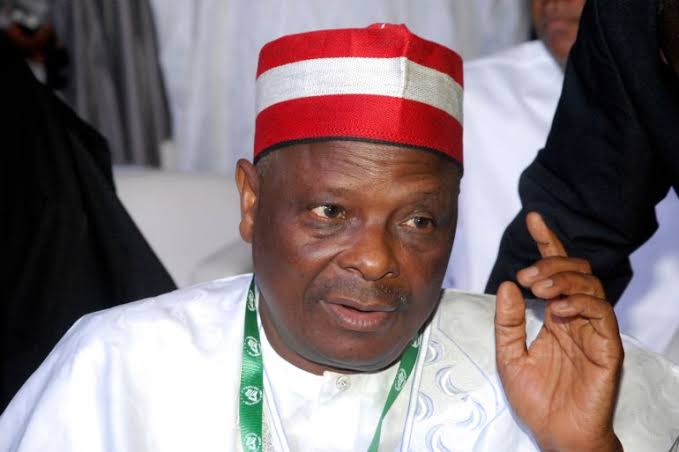
Kwankwaso sets tough conditions for possible APC defection
Kwankwaso sets tough conditions for possible APC defection
Former Kano State Governor and National Leader of the New Nigeria Peoples Party (NNPP), Senator Rabiu Musa Kwankwaso, has indicated that any move toward the All Progressives Congress (APC) would depend on firm guarantees regarding political control in Kano and the protection of his supporters.
He made this known on Wednesday at his Miller Road home in Kano while receiving party leaders and loyalists from Rano and Dawakin Tofa Local Government Areas, as well as members of various Kwankwasiyya groups who used the visit to restate their allegiance to the NNPP.
“I didn’t say I won’t join APC, but we must first be clearly assured of the future of the Kano State government before we join the APC. What will be the fate of our lawmakers and other supporters before we agree to defect?” Kwankwaso said.
Reflecting on previous political alliances, the former governor warned against repeating past mistakes, recalling how his political bloc once helped to build a government but was later marginalized.
“In the past, we joined and contributed to forming the government, but later we were abandoned. That was why we left the party. Have they now changed their position toward us? Everyone knows the role we played at that time,” he added.
Kwankwaso emphasised that discussions about defection remain premature, insisting that no concrete commitments have been offered to safeguard the NNPP’s hold on power or its organizational framework in the state.
“Up till now, no one has given me a clear assurance that we will be allowed to retain our government and continue with our political structure. I need to know where I stand,” he said.
The gathering drew several senior government and party figures, including Deputy Governor Comrade Aminu Abdussalam Gwarzo, Commissioner for Science and Technology Yusuf Kofar Mata, NNPP state chairman Hon. Hashim Sulaiman Dungurawa, and other prominent officials. All openly reaffirmed their loyalty to Kwankwaso and the Kwankwasiyya Movement.
Political watchers noted that the visible solidarity from top officials points to growing internal tensions and further underscores Kwankwaso’s strong grip on the party, especially amid rumors surrounding a possible defection of Governor Abba Kabir Yusuf to the APC.
Analysts believe Kwankwaso’s measured position reflects a broader strategy to secure political structures and protect loyalists as preparations gradually shift toward the 2027 general elections.
News
Suspected notorious kidnapper linked to multiple kidnappings arrested by Police

Suspected notorious kidnapper linked to multiple kidnappings arrested by Police
The Police Command in Rivers on Wednesday, said it has arrested an alleged notorious kidnapper linked to multiple kidnapping incidents in the state.
The Command’s spokesperson, CSP Grace Iringe-Koko, disclosed this to journalists in Port Harcourt, stating that the suspect was arrested on Jan. 10.
She said that the suspect aged 30, was identified as the ringleader of a notorious kidnapping syndicate, that coordinated several abductions for ransom across the state.
According to her, the suspect who is responsible for multiple kidnappings along the Port Harcourt International Airport Road, Omagwa, was apprehended by operatives of the Command’s Anti-Cultism Unit.
“The suspect was planning to relocate his operational armoury and camp to Agbonchia/Oyigbo Road in Eleme Local Government Area before his arrest,” she said.
She said that the recovered items include an AK-47 rifle with breach number 2125 and two magazines loaded with 36 rounds of 7.62 x 39mm live ammunition.
The spokesperson said that during preliminary investigations, the suspect voluntarily confessed to being the ringleader of the kidnapping syndicate.
According to her, the suspect and exhibits are currently in police custody, while efforts are ongoing to apprehend other fleeing members of the gang. (NAN)
News
Govt suspend Doctors for leaving scissors in patient’s stomach after operation
Govt suspend Doctors for leaving scissors in patient’s stomach after operation
The Kano State Hospitals Management Board has acknowledged that the death of Aishatu Umar, a five-time mother, resulted from professional lapses at the Abubakar Imam Urology Centre, a government health facility in Kano.
According to a statement issued by the Board’s Public Relations Officer, Samira Suleiman, an internal probe initiated by the Executive Secretary, Dr. Mansur Mudi Nagoda, revealed that medical staff failed to remove surgical scissors from the patient’s body after an operation, a mistake that proved fatal.
Following the findings, the Board ordered the suspension of three staff members connected to the procedure, barring them from all clinical responsibilities with immediate effect.
The case has also been handed over to the Kano State Medical Ethics Committee, which will conduct a more detailed inquiry and determine appropriate sanctions in accordance with existing regulations and ethical guidelines.
“The Board extends its deepest condolences to the family of the late Aishatu Umar and sympathizes with them over this painful loss. We reassure the public that negligence will not be condoned in any form,” the statement read.
Aishatu Umar reportedly died after complications arising from a surgery in which surgical scissors were allegedly left in her abdomen.
Her husband, Abubakar Muhammad, said she repeatedly complained of worsening health conditions after the operation, but her concerns were not adequately addressed before her death.
The tragedy has triggered widespread anger among Kano residents, drawing attention to systemic weaknesses in supervision and accountability within public hospitals.
-
6 years ago
Our situation in Kano terrible – Gov Ganduje cries out
-

 News11 months ago
FG pledges commitment to enhance Police officers Welfare, implement Tinubu’s 8-point agenda for NPF
-

 News11 months ago
BREAKING; NSCDC gets approval to commence 2025 recruitment exercise
-

 News9 months ago
Alleged cocaine deal: Court issues orders in suspended DCP Abba Kyari’s case
-

 News12 months ago
DPO under investigation for allegedly taking teenage girl to his home while in police custody
-

 News12 months ago
JUST IN; Commissioner of Police bows out of Service
-

 News9 months ago
JUST IN; Police Inspector dies watching Arsenal match
-

 News12 months ago
BREAKING; NLC declare nationwide protest