

Nigerians decry arbitrary increase in house rents, seek urgent Govt. intervention

Nigerians decry arbitrary increase in house rents, seek urgent Govt. intervention
Nigerians have raised the alarm over what they describe as incessant and arbitrary increase in rents by landlords and their agents across the country.
A cross section of the citizens, who spoke in separate interviews with the News Agency of Nigeria (NAN) from across the country, said the skyrocketing rent was making life unbearable for them.
Consequently, they have urged federal and state governments to, as a matter of urgency, intervene in what they called the situation in virtually all the states of the federation, which they described as unfortunate.
The respondents particularly called for implementation of extant rent laws by state governments to rescue tenants from those they called shylock landlords and their agents.
They also stressed the need for governments at all levels to build affordable homes for low income earners and put a benchmark on rents in order to help the tenants.
NAN checks showed that house rents had shot up by about 150 per cent in the last two years in Bauchi, Dutse and Gombe, thus forcing many residents to move out of town to enable them to get affordable accommodation.
In Kano State, some of the residents, who spoke with NAN, said that paying rent in the capital city had now become very hard, as landlords increased rents at will.
A survey conducted by NAN in different areas within Kano metropolis showed that some landlords had increased rents on their properties.
For instance, in highbrow areas like Nasarawa GRA, Bompai and Badawa layout, a two-bedroom flat and a three-bedroom apartment have risen from N600,000 and N700,000 to N800,000 N1 million, respectively.
The rent for a duplex of four rooms and above presently stand at between N1.5 million and N3 million per annum, depending on the landlord.
The Vice Chairman, Kano Property Agent Development Association (KAPADA), Sabiu Ado, attributed the increase to the high cost of building materials, which he said had tripled, thereby forcing landlords to increase rents.
According to him, it requires more than N10 million to build a bungalow with good finishing, saying that this affects how much they rent out such buildings.
“The cost drivers such as land, rods, cements, roofs, paint, louvers, woods and others determine the cost and rent of a building,” Ado said.
A landlord, Musa Sani, also said that the increment had become necessary to enable them have value for their investments.
Malam Abba Yusuf, a federal worker transferred from Kaduna to Katsina, said it was unfortunate that most of the landlords or caretakers did not have respect for their tenants.
According to him, about a year ago, his landlord sent him out of the house, because he rejected rent increase, which he said, doubled what he used to pay.
He, therefore, urged government to, as a matter of urgency, address the way and manner house owners behave to their tenants, in spite of the existing rent laws.
A landlord, Malam Sanusi Charanchi, said he had no other choice than to increase house rent because of the current economic hardship.
Charanchi said as a retired civil servant, he only relied on the incomes from his houses, stating: “every day you go to the market, the prices of foodstuffs keep going up.
“Therefore, as my only source of income, I also have to increase the rent to meet up with the gap created by the economic situation in the country,” he said.
Mr Joe Yaji, a tenant in Jalingo, told NAN that his landlord just woke up one day and increased house rent from N200,000 to N300,000, citing high cost of living in the country.
Yaji appealed to Taraba government to come up with laws that would protect tenants from arbitrary increases in house rent by the landlords, saying that the cost of living was negatively affecting everyone, including tenants.
Mrs Joy Manu, another tenant in Jalingo noted that the rent in every house in Magami Area of Jalingo, where she was residing, had been increased by more than 50 per cent.
Manu expressed frustration, noting that the situation had further increased the economic hardship being experienced in the country.
Alhaji Yahuza Magaji, the Executive Director of Initiative for Community and Human Development in Taraba, said landlords in the state were charging whatever they wanted because there was no regulation of the sector.
Magaji noted that some landlords, especially shop owners often insisted on payment of two to three years rent.
He said that his organisation would take up the responsibility of pushing for the establishment of an agency in the state that would ensure that landlords were fair in their dealings with tenants.
In Plateau, the state Commissioner for Housing and Urban Development, Mr Ubandoma Laven, blamed the general hike in rent on the recent spike in cost of living.
Laven, who noted that though there could be legitimate reasons on the part of house owners in jerking up the prices of renting houses, said some of the landlords were just being insensitive to the plight of tenants.
“For a fact, it is an obvious reality that the recent hike in housing in major cities of Nigeria today has become alarming.
“If you look at the cost of housing two years ago in Jos and what is obtainable today, you would be alarmed at the transition, but the truth is even the blind is not oblivious of the general changes in the economy of this nation.
“I mean, even tomatoes has skyrocketed to a point where almost only the elites could afford it at some point, how much more housing.
“We can’t rule out the fact that there are bad eggs in every business venture who give the craft a bad name, but the reality is that landlords are also experiencing hike in living conditions across the country,” he said.
On what government was doing to forestall and protect the interest of individuals from property agents and landlords, the commissioner said that there were regulatory bodies saddled with the responsibility of ensuring conformity within the sector.
He stressed that government would do everything within its powers to ensure that the rights of citizens were protected.
Similarly, Mr Emmanuel Solomon, Chairman of Nigerian Institute of Estate Surveyors (NIESV) in Plateau, reiterated the need for sanity in the sector as it had become a marketplace for miscreants and pilferers.
Solomon said that in order to forestall the irregularities within the sector, government needed to enforce certain rules to protect the citizens from pilferers masking as property agents in the country.
“As an institute, we are working to ensure that all relevant stakeholders in the housing sector rise up to the challenges confronting us; we’re also putting hands together to ensure that the average Nigerian tenant is protected.
“We also want to call on government to provide alternative means of housing for the common man, which will reduce the impact these wolves have on the public.
The situation is not different in Makurdi, as Mr Terseer Jenkwe, a real estate agent, blamed the rising cost of housing on lack of laws guiding rent in Benue.
Jenkwe, the Chief Executive Officer (CEO) of Jenkwe Properties, also attributed the soaring cost of rent in the state to the prevalent economic conditions, such as inflation and currency fluctuations.
A cross section of tenants in Maiduguri, Damaturu and Yola, mostly affected by insurgency, told NAN that the gradual return of peace in the states had led to growing population and demand for houses.
NAN reports that in Maiduguri which recently experienced flooding that affected almost half of the town, house rents have doubled in some areas, such as New GRA, Old GRA, Damboa Road, Moduganari bypass, 202 estates, 303 estates, Bulumkutu, and Polo areas.
A two-bedroom apartment that once cost between N200,000 and N300,000 per year now goes for as much as N700,000 to N800,000.
In more developed neighborhoods like New GRA, Old GRA and Damboa Road, the rents are even higher, going between N1 million and N2 million, depending on the locations.
To Mr Daniel Clement, an artisan, it is inhuman to increase rent on a house built many years ago owing to the current economic situation.
“As a tenant, I have received terrible treatment from my landlord who does whatever he likes.
“Government should build affordable homes for low income earners and also regulate the arbitrary increase in house rents. If government can put a benchmark on rents, it will greatly help the residents,” he said.
In Abeokuta, Ogun capital, the residents urged the state government to check what they described as indiscriminate increase in house rents by landlords across the state.
They lamented that tenants had been groaning under the burden of the “cut-throat” rent being charged by landlords and their agents.
Mr Stephen Agwu, a civil servant, said his landlord had continued to increase rent at will, with threats of eviction if he could not pay.
Ahmed.Akintunde, a transporter, told NAN that he had continued to tolerate insults and ill-treatment from his landlord who often used rent increase to “settle scores” whenever they had disagreement.
Another tenant, Adebowale Akinsanya, said she moved into a two-bedroom flat In Ijeja area of Abeokuta in December 2023 with an annual rent of N500,000.
Akinsanya lamented that since the announcement of a new minimum wage, his landlord had told him to prepare to pay an additional N150,000 when renewing his rent in December.
Reacting to the trend, Mary Johnson, an interior decorator, attributed the arbitrary increase in rent to influx of people from Lagos to the state, particularly Abeokuta, the state capital.
“Ogun has become an extension of Lagos state because of the proximity and this has led to migration into the state with the attendant hike in house rent.
“Landlords have continued to take undue advantage of the situation as the demand for houses increase,” she said.
In his contribution, an Abeokuta-based legal practitioner, Abdul-razak Adeyemi, said issues concerning tenancy and rentage of apartment were purely within the purview of state governments.
Adeyemi noted, however, that the law regulating tenancy and relationship with landlords in the state was enacted since the creation of the state in 1976.
“There has not been any new law which will regulate the hike of rent in the state.
“Unfortunately the law was made during the military government and the highest rent then was N20 and till today the law has not been amended.
“So, it cannot be implemented because the law is not in line with the current situation in the state,” he said.
Adeyemi, therefore, called for an urgent amendment of the tenancy law to reflect current economic realities.
Mr Folarin Olayinka, National Vice-President, Committee for the Defence of Human Rights (CDHR), corroborated
Adeyemi on the need for an enabling law guiding landlord/tenant relationship in the state.
Olayinka noted that tenants were usually at the receiving end during negotiations, either as fresh or existing tenants, because of lack of an existing law or implementation of the same.
He said however that the general increase in prices of goods and services across the nation had contributed to the hike in rent.
An Ijebu Ode-based property manager, Mr Music Alayaki, urged the government to address the huge housing deficit in the state and build affordable houses for the masses.
He also stressed the need to encourage real estate investors to build rent-to-own and affordable houses to turn tenants into landlords.
Alayaki further urged the Federal Government to work on the economy to bring down the general increase in prices of goods and services, including prices of building materials.
Mr Uche Anthony, a tenant at the State Low-Cost Houses in Gombe, said the rate at which the rent in Gombe were being hiked had worsened the poverty index among residents.
“Many cannot feed well because they need to pay high rent; the state government should find a way to make rent increment periodic and not yearly,” he said.
Recounting his ordeal, Sadik Iliyasu, a tenant in Takur area of Dutse, said he paid N185,000 as agent fee to enable him to rent a three-bed room house in the area.
Ilyasu said that some agents were requesting for two years payment from tenants, lamenting that the high commission being demanded by the agents had made the situation unbearable.
Mrs Foluke Akinpelu, the Chief Executive Officer of Narrator Global International, a landlady around Alakia area of Ibadan, said since it was a reality that would occur, it was prudent to understand how best to handle the issue when faced with it.
She described hikes in house rent by house owners and their agents without complying with the laws guiding rent charges as illegal, saying that the rent acts frowned at this.
Akinpelu also said it was illegal for landlords to increase rents without following proper procedure, such as giving adequate notice or adhering to maximum allowable rent increase.
She, however, said that house owners had various reasons for taking such steps, adding: “but the commonest of it is inflation and the cost of maintaining or repairing the property which has gone up significantly.
“The forces of demand and supply often determine the rent if there are more tenants seeking to rent property; the agents often leverage that pressure to push for the highest rent possible, which may later form the benchmark for other landlords.
“But it is wrong, especially when the current lease of the tenant is about to expire.
“This is a strategic time that most landlords use to exert pressure on the tenant, with the intention that if the tenant does not comply with their demand they will be given a notice to quit,” she explained.
Akinpelu, a retired teacher, identified massive housing shortage as giving property owners more advantages than tenants.
A Director in the Oyo State Ministry of Lands, Housing, Survey and Urban Development, Mr Raphael Ogunjobi, confirmed the existence of the State Tenancy Law guiding house rent in the state.
According to Ogunjobi, the tenancy law provides checks and balances for both tenants and landlords, and also as a control measure on the excesses of both.
In his own view, an Ibadan-based legal practitioner, Mr Olutunde Fatola, described the menace of frequent hikes particularly in the city of Ibadan as unacceptable.
Fatola insisted that the state had no legal framework to protect existing or would-be tenants against the exploitative tendencies of landlords and estate agents.
He said that tenants were presently at the mercy of estate agents and landlords because of the arbitrary fixing of house rents due to absence of relevant laws to protect them.
“That is why a room and parlour self-contained costs as much as between N350,000 and N400,000, as against the N200,000 that had been the situation in Ibadan before,” he said.
However, an estate agent, Mr Shakir Ogunseesin, contended that the bad state of the economy occasioned by high cost of buying materials was responsible for hikes in house rents.
“We too have to live; we buy our things from the same market.
“How does a landlord, who has invested a huge sum in purchasing building materials and providing necessary things, makes his profit?
“We all should also consider the cost of cement, roofing sheets and borehole,” Ogunseesin said.
In Damaturu, the Yobe capital, a lawyer, Mr Sadik Usman, described the practice by some landlords asking for two years rent as illegal.
Usman said the demand was in violation of Yobe State Rent Control Law 1977.
He noted that although the law needed to be reviewed long before now, it still remained a substantive law.
“Landlords are not allowed to impose advance rent payable for two or more years.
“Section 4 of the law states that no person shall demand or impose rent for a special home for a period of more than 12 months,” Usman said.
The legal practitioner also said that N5,500 was the highest amount a landlord was allowed to charge as rent per annum for any kind of accommodation under the law.
The residents of Nasarawa, Niger and Kogi, appealed to the federal and state governments to enforce laws that would protect tenants from exploitation by landlords.
They said that enforcement of the laws guiding tenancy would check the excesses of landlords and protect tenants from exploitation.
Mallam Yusuf Adamu, a resident of Keffi, called for aggressive sensitisation on tenancy laws so that tenants would know their rights and seek justice when cheated by landlords.
“Full implementation is not the only issue here. As we speak, most Nigerians don’t even know those laws or whether they are in existence .
“So there is the need for a nationwide sensitisation so that tenants can know their rights and what to do if the rights are being infringed on,” he added.
Mr Bukus Thomas, a tenant in Akwanga, Nasarawa State, appealed to landlords to consider the present economic hardship being faced by Nigerians.
“Things are hard in the country now; landlords should be considerate in their charges,” he said.
Mr Joseph Adele, an Estate Manager in Shetima area of Lokoja, said it had become necessary for Kogi government to come up with a policy to checkmate the excesses of house owners, before the situation got out of hand.
Adele lamented the attitudes of some landlords who, he said, were in the habit of collecting two years rent from their tenants at entry point, thereby making life difficult for them.
He said that some landlords preferred Yahoo boys as tenants because they would be to pay whatever rent increases without complaining.
Also speaking, a retired civil servant, Mr Micheal Obaje, cited positive change in any particular society and market demands as possible reasons for rent increase.
“A critical look at Lokoja metropolis presently shows that the town is developing and attracting more people, hence the likelihood of having rent increase,” he stated.
Meanwhile, Mr Maurice Magaji, Commissioner for Land and Survey in Nigeria, said the soaring house rents might not be unconnected to economic factors.
Magaji cited increased maintenance costs, building materials, and economic activities as contributors to the hike.
He noted that Niger State lacked specific laws guiding house rent, this relying on national laws.
The commissioner, however, said that two-year advance payments from new tenants were not common in the state, except by personal agreement.
NAN reports that the respondents were unanimous in their opinions that government must intervene in order to put sanity in the housing sector and rescue the masses from the shackles of the landlords and their agents. (NAN)

News
Man fakes his own Kidnapping, forces Brother to sell property for N12 million ransom

Man fakes his own Kidnapping, forces Brother to sell property for N12 million ransom
The Edo State Police Command has uncovered a staged kidnapping in Ekpoma, where a man allegedly faked his own abduction, forcing his brother to sell property to raise a ransom.
The incident was reported to the police on January 10, according to a statement issued by the state Police Public Relations Officer, SP Eno Ikoedem.
Investigations revealed that the supposed victim, identified as Idris Isiaka, a vulcanizer based on Balogun Street in the Emaudo community of Ekpoma, conspired with two accomplices to orchestrate the fake kidnap.
Police said Isiaka arranged for news of his “abduction” to be circulated on social media through a blogger and subsequently demanded a ransom of ₦12 million from his family.
Believing the story to be genuine, his brother reportedly sold a personal property in a desperate bid to secure his release.
However, detectives later uncovered the deception and arrested Isiaka along with his collaborators.
The police described the act as criminal and deceitful, warning members of the public against engaging in similar schemes.
The suspects are currently in custody and are expected to face prosecution once investigations are concluded.
The PPRO explained that the suspect “immediately engineered the circulation of his kidnap on social media through a blogger and demanded a ransom of Twelve Million Naira.
“His family in Kogi State was further contacted, threatening that he would be killed if the ransom was not paid”.
He said the brother, however, “sold his property and paid part of the ransom money which was shared with his accomplices, one Mohammed Saliu and Godwin Mohammed, both of whom are currently at large.
“The suspect has confessed to the crime. He will be arraigned in court after investigation”.
News
Kwankwaso sets tough conditions for possible APC defection
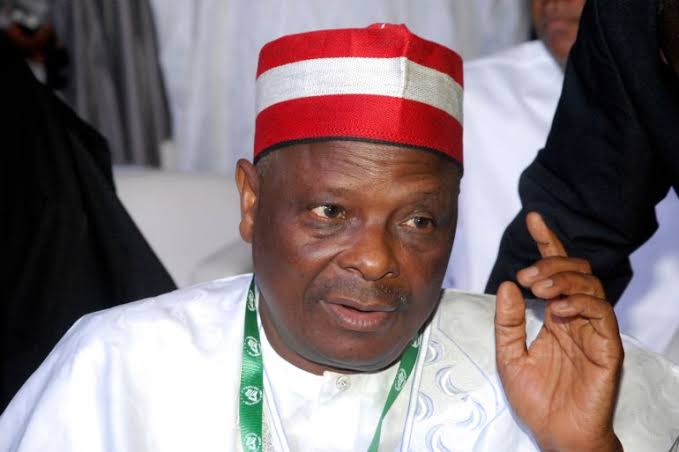
Kwankwaso sets tough conditions for possible APC defection
Former Kano State Governor and National Leader of the New Nigeria Peoples Party (NNPP), Senator Rabiu Musa Kwankwaso, has indicated that any move toward the All Progressives Congress (APC) would depend on firm guarantees regarding political control in Kano and the protection of his supporters.
He made this known on Wednesday at his Miller Road home in Kano while receiving party leaders and loyalists from Rano and Dawakin Tofa Local Government Areas, as well as members of various Kwankwasiyya groups who used the visit to restate their allegiance to the NNPP.
“I didn’t say I won’t join APC, but we must first be clearly assured of the future of the Kano State government before we join the APC. What will be the fate of our lawmakers and other supporters before we agree to defect?” Kwankwaso said.
Reflecting on previous political alliances, the former governor warned against repeating past mistakes, recalling how his political bloc once helped to build a government but was later marginalized.
“In the past, we joined and contributed to forming the government, but later we were abandoned. That was why we left the party. Have they now changed their position toward us? Everyone knows the role we played at that time,” he added.
Kwankwaso emphasised that discussions about defection remain premature, insisting that no concrete commitments have been offered to safeguard the NNPP’s hold on power or its organizational framework in the state.
“Up till now, no one has given me a clear assurance that we will be allowed to retain our government and continue with our political structure. I need to know where I stand,” he said.
The gathering drew several senior government and party figures, including Deputy Governor Comrade Aminu Abdussalam Gwarzo, Commissioner for Science and Technology Yusuf Kofar Mata, NNPP state chairman Hon. Hashim Sulaiman Dungurawa, and other prominent officials. All openly reaffirmed their loyalty to Kwankwaso and the Kwankwasiyya Movement.
Political watchers noted that the visible solidarity from top officials points to growing internal tensions and further underscores Kwankwaso’s strong grip on the party, especially amid rumors surrounding a possible defection of Governor Abba Kabir Yusuf to the APC.
Analysts believe Kwankwaso’s measured position reflects a broader strategy to secure political structures and protect loyalists as preparations gradually shift toward the 2027 general elections.
News
Suspected notorious kidnapper linked to multiple kidnappings arrested by Police

Suspected notorious kidnapper linked to multiple kidnappings arrested by Police
The Police Command in Rivers on Wednesday, said it has arrested an alleged notorious kidnapper linked to multiple kidnapping incidents in the state.
The Command’s spokesperson, CSP Grace Iringe-Koko, disclosed this to journalists in Port Harcourt, stating that the suspect was arrested on Jan. 10.
She said that the suspect aged 30, was identified as the ringleader of a notorious kidnapping syndicate, that coordinated several abductions for ransom across the state.
According to her, the suspect who is responsible for multiple kidnappings along the Port Harcourt International Airport Road, Omagwa, was apprehended by operatives of the Command’s Anti-Cultism Unit.
“The suspect was planning to relocate his operational armoury and camp to Agbonchia/Oyigbo Road in Eleme Local Government Area before his arrest,” she said.
She said that the recovered items include an AK-47 rifle with breach number 2125 and two magazines loaded with 36 rounds of 7.62 x 39mm live ammunition.
The spokesperson said that during preliminary investigations, the suspect voluntarily confessed to being the ringleader of the kidnapping syndicate.
According to her, the suspect and exhibits are currently in police custody, while efforts are ongoing to apprehend other fleeing members of the gang. (NAN)
-
6 years ago
Our situation in Kano terrible – Gov Ganduje cries out
-

 News11 months ago
FG pledges commitment to enhance Police officers Welfare, implement Tinubu’s 8-point agenda for NPF
-

 News11 months ago
BREAKING; NSCDC gets approval to commence 2025 recruitment exercise
-

 News9 months ago
Alleged cocaine deal: Court issues orders in suspended DCP Abba Kyari’s case
-

 News12 months ago
DPO under investigation for allegedly taking teenage girl to his home while in police custody
-

 News12 months ago
JUST IN; Commissioner of Police bows out of Service
-

 News9 months ago
JUST IN; Police Inspector dies watching Arsenal match
-

 News12 months ago
BREAKING; NLC declare nationwide protest