You favour the South, abandon the North – Kwankwaso slams Tinubu’s administration

You favour the South, abandon the North – Kwankwaso slams Tinubu’s administration
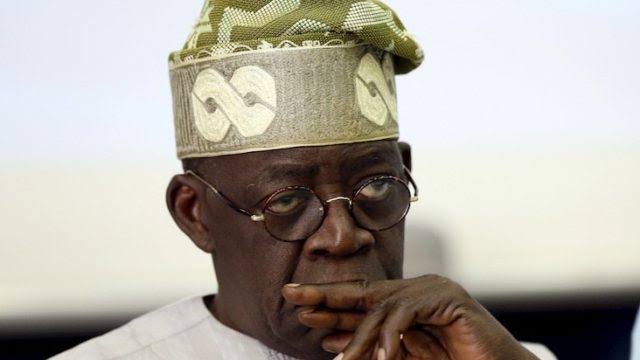
Senator Rabiu Musa Kwankwaso, former presidential candidate of the New Nigeria People’s Party (NNPP), has accused President Bola Tinubu’s administration of sidelining northern Nigeria in the allocation of national resources.
Speaking during the Kano State Stakeholders’ Dialogue on the 2025 Constitutional Amendment, Kwankwaso expressed concern over what he described as a growing imbalance in federal projects, alleging that the South has received disproportionate attention while the North is left behind.
Citing his recent journey from Abuja to Kano, the former governor lamented the deteriorating condition of federal roads, which he said reflects the broader neglect of infrastructure in the region.
“Yesterday, I was to come by air. Unfortunately, my airline decided to shift our take-off from 3 to 8 p.m. I had to come by road. From Abuja to Kaduna to Kano was a hell — terrible, very bad road,” he said.
“And this is a road that was started many years ago, right from the beginning of the leadership of the APC. Now we are told that there is a road now from the South to East.”
While acknowledging the importance of infrastructure development across the country, Kwankwaso insisted on equity and fairness.
“Let me say at this point that we support infrastructure anywhere in this country. In fact, I was telling myself that I wish that road was done before the 2023 election, because I was the only aspirant or candidate who travelled to all nooks and corners across this country. I would have used that road,” he said.
“So, we support roads everywhere, and any other thing that is good for the people, especially for the masses. But a situation where government is taking our resources and dumping it in one part of the country, and other parts of the country are left just like that — I don’t believe that is the right thing to do by the government itself. And this is the time for the government to change, to convince our people that the government is not just on one side of the country.”
On the constitutional amendment, Kwankwaso called on lawmakers from Kano State to form a united front in defence of the state’s interests.
“We have seen what has happened in the past, and I think it’s important for you and all of us to consider the mistakes of others while we have an opportunity to do our jobs now,” he said.
“I remember especially 1999 to 2003, and of course right through to this National Assembly. We have seen a situation where our members were given the opportunity to really represent their constituents, but unfortunately, on many occasions, they were compromised.
“We have seen a situation whereby the rich in the country worked so hard to raise a lot of money to bribe members of the National Assembly, especially those who are representatives. And as a result of that, we now have a tilted arrangement in terms of resource sharing in the country.
“Many people will think that they have won. I don’t believe so. Because I believe the issues that we have today in this country, especially in this part of the country, have to do with mismanagement of resources by leaders at the national level, state level, and even at the local government level. And of course, it has to do with the little that had to be given to those concerned.”
He urged lawmakers to resist external influence and remain committed to the people.
“Now we have an opportunity again, and we are very much aware that the rich once more is working so hard to take from the poor. Even though what is going to happen is a bipartisan arrangement, people representing us — whether in our party (NNPP) or any other party for that matter — must stand firm and do the right thing,” he said.
Kano State Governor Abba Kabir Yusuf has said that the ongoing stakeholders’ dialogue is designed to help the state form a unified position that genuinely represents the values and aspirations of its citizens.
Describing the initiative as both timely and essential, the governor stressed its importance in amplifying the voices and lived experiences of the people of Kano.
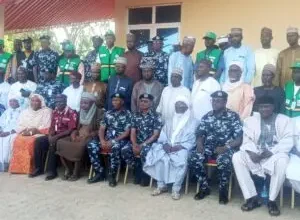
The event drew participation from a broad spectrum of society, including members of the National and State Assemblies, traditional rulers such as the Emirs of Kano, Gaya, and Karaye, senior government officials, opinion leaders, and other key stakeholders.