IGP Egbetokun reveals what will happen if Nigerian citizens are allowed to bear arms

IGP Egbetokun reveals what will happen if Nigerian citizens are allowed to bear arms
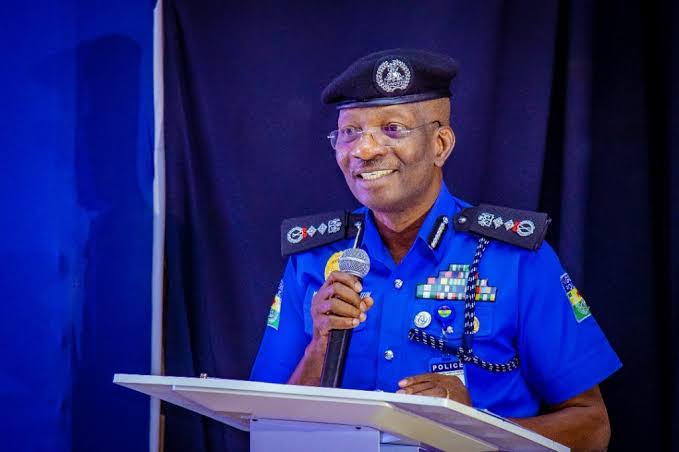
The Inspector-General of Police (IGP), Kayode Egbetokun, has strongly opposed growing demands for Nigerians to bear arms in response to the country’s escalating insecurity, warning that such a move would only worsen the situation.
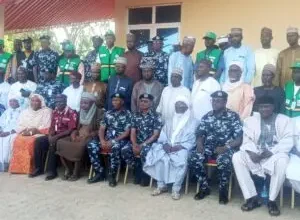
Speaking at the Second Nigeria Democracy Week in Abuja, organised by the National Democracy Stakeholders Group (NDSG) in collaboration with the office of the Secretary to the Government of the Federation, Egbetokun, who was represented by the Commissioner of Police, FCT Command, CP Ajao Adewale, said granting widespread access to firearms would escalate violence rather than curb it.
“We need to learn from countries that have gone down that path. To what extent has it solved their problems?” the IGP cautioned.
“You cannot solve violence with more violence. The path forward is peace, dialogue, tolerance, and mutual understanding—not weapons.”
Egbetokun stressed that Nigeria’s security challenges require holistic and peaceful solutions, not the arming of civilians.
He added that such a policy could deepen instability and undermine national security efforts.
Addressing claims that the police play a role in election rigging, the IGP dismissed the accusations as unfounded and baseless.
He reiterated that the police’s role during elections is strictly to provide security and ensure the peaceful conduct of the electoral process.
“We are not partisans. We are like umpires. The duty of police is limited and restricted to the profession of security during election year. As much as we remain on that, we can’t vote. People vote. INEC count. We monitor.
“And that is our situation and the way forward is that there has been a renewed synergy, inter-agency collaboration, involving even the state government, the INEC, the civil societies, including training and retraining of officers to ensure that they stay on their mandate,” he said.
For his part, SGF Akume said the reforms introduced by the President Bola Tinubu-led administration were laying the groundwork for long-term national stability and inclusive economic growth.
Represented by the Permanent Secretary, Political and Economic Affairs in the Office of the SGF, Nadungu Gagare, Akume said mid-term reviews must serve as instruments of democratic accountability, not ceremonial events.
The SGF noted that Tinubu took office at a time of global economic volatility and domestic fiscal strain, yet within two years, the administration has embarked on bold structural reforms in key sectors.
“The Office of the Secretary to the Government of the Federation is a nerve centre for cross-sectoral coordination. In the last two years, we have intensified efforts in synchronising policy of government and aligning them with national development priorities; facilitating partnerships with the National Assembly, civil society organisations, development partners, and subnational governments as well as support the design of frameworks that track and report progress on key performance indicators, including components of the Renewed Hope Agenda.
“Through these mechanisms, institutional collaboration is no longer a matter of convenience, it is now a national imperative. Permit me to state that governance, however, cannot thrive without democratic resilience.
“Democratic resilience refers to the capacity of our institutions, processes, and people to withstand internal and external shocks while upholding democratic values,” he said.