President Tinubu approves establishment of 8,800 Primary Healthcare centres, across Nigeria


President Tinubu approves establishment of 8,800 Primary Healthcare centres, across Nigeria
President Bola Tinubu has approved the creation of over 8,800 new Primary Healthcare Centres (PHCs) across Nigeria, as part of a sweeping initiative to overhaul the country’s health sector.
This ambitious move also includes the upgrade of existing tertiary institutions to handle trauma care, oncology, and infectious disease control.
The announcement was made on Saturday by Vice President Senator Kashim Shettima during the commissioning of the Sulaiman Adebola Adegunwa Trauma Centre at Olabisi Onabanjo University Teaching Hospital in Sagamu, Ogun State.
Shettima emphasized the importance of private sector involvement in driving Nigeria’s healthcare transformation, calling on businesses and philanthropists to play a larger role in improving the sector.
He stressed that the government cannot shoulder the burden alone, but through strategic partnerships and investments, Nigeria’s health system could be drastically improved.
“The health sector is a critical area where we must all unite to address the challenges we face,” Shettima said.
“The creation of these healthcare facilities, alongside the upgrading of tertiary institutions, is a vital step toward ensuring Nigerians have access to better emergency care, trauma treatment, and disease management.”
Highlighting the significance of the newly commissioned trauma centre, Shettima noted that trauma care has become essential given Nigeria’s growing urbanization, motorization, and industrial risks.
The Sulaiman Adebola Adegunwa Trauma Centre, built by the Adegunwa family foundation, is a key addition to the nation’s emergency care infrastructure, symbolizing the government’s commitment to improving health services across the country.
“The facility is more than just a building; it’s a lifeline, a sanctuary for those in need, and a beacon of hope for families in crisis,” Shettima added.
“It’s a perfect example of how private sector philanthropy can directly benefit public health.”
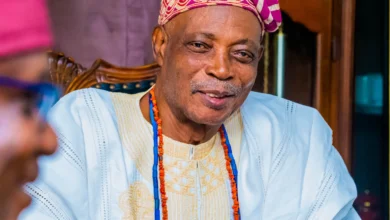
The trauma centre, which was donated by Alhaji Sulaiman Adebola Adegunwa, a prominent philanthropist and entrepreneur, was constructed at a cost that exceeded initial budget estimates.
The donation, made to mark Adegunwa’s 80th birthday, is part of his long-standing commitment to giving back to his community and the nation.
Governor Dapo Abiodun of Ogun State, who was also present at the event, praised Adegunwa for his contributions to both the business and philanthropic sectors.
He reflected on the remarkable transformation of Olabisi Onabanjo University and the hospital, which, just a few years ago, was struggling to provide medical services to the community.
“Today, we celebrate not just a man, but a legacy—a model of philanthropy that will benefit generations to come,” Governor Abiodun said, highlighting how the trauma centre would elevate the quality of healthcare services in Ogun State.
The commissioning event also marked a historic milestone for the university, with Adegunwa recalling his earlier contributions, including a donation in 1995 to support the institution’s health initiatives.
Dr. Kunle Hassan, Chairman of the Board of Management at Olabisi Onabanjo University Teaching Hospital, commended Adegunwa’s extraordinary generosity, noting that the trauma centre’s cost had far surpassed its initial budget due to the donor’s commitment to ensuring the best facilities were provided.
“Chief Adegunwa didn’t just build a trauma centre; he built a lifeline for our people,” Hassan said.
In his address, Oba Babatunde Adéwálé Àjàyí, the Akarigbo of Remoland, also praised Adegunwa for his selflessness and dedication to improving the lives of others.
However, he appealed for greater federal investment in the region, particularly in the form of federal universities and polytechnics.
As the ceremony unfolded, the Vice President reaffirmed the government’s commitment to further transforming Nigeria’s healthcare system, including the ongoing establishment of a National Health Insurance Scheme and a comprehensive Digital Health Information Management System.
“We are taking steps to ensure that no Nigerian is left behind in accessing healthcare,” Shettima said, underscoring the importance of these reforms in building a more inclusive and efficient healthcare system.