Legal quagmire looms as emergence of Mark, Aregbesola as Chair, Sec. of ADC violates Party’s constitution

Legal quagmire looms as emergence of Aregbesola, Mark as Chair, Sec. of ADC violates Party’s constitution
The recent change of leadership within the African Democratic Congress (ADC), which saw former Senate President David Mark assume the interim chairmanship, is drawing criticism for allegedly bypassing the party’s constitutional procedures.
This development follows the resignation of immediate past National Chairman Ralph Nwosu last Thursday.
In an elaborate ceremony attended by prominent coalition members, including former Vice President Atiku Abubakar, ex-governors, and former ministers, David Mark was announced as the new interim chairman.
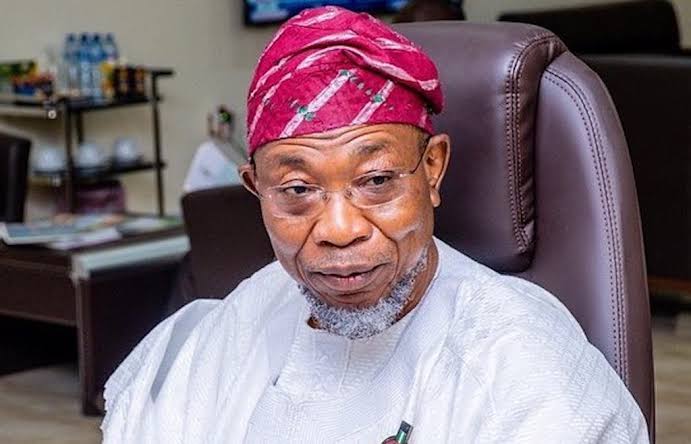
Former Interior Minister Rauf Aregbesola was named interim National Secretary, and former Sports Minister Bolaji Abdullahi became the interim National Publicity Secretary.
However, these appointments appear to contravene several provisions of the ADC Constitution.
Article 23, Clause 4, of the ADC Constitution clearly states that any vacancy in a party office requires the appropriate Executive Committee to appoint a replacement from the same zone or constituency as the outgoing office holder, with the appointment remaining in effect until a new election at the next congress or convention.
Notably, Mark hails from the Northcentral, while Nwosu is from the Southeast.
Similarly, Aregbesola is from the South, while the outgoing National Secretary, Sa’id Baba Abdullahi, is from the North.
Furthermore, there was no public record of a National Executive Committee (NEC) meeting where these interim officers were elected.
Both Nwosu and Mark announced their respective resignations at the event itself, with Mark stating he had just resigned from the Peoples Democratic Party (PDP).
Another significant constitutional hurdle is the party’s requirement for members to have spent a minimum of two years in the party before holding executive office.
Nwosu himself confirmed this, stating that a key clause adopted at the October 12, 2022, convention mandates new members to spend at least two years in the party before contesting elections or holding office.
Article 23 of the constitution explicitly provides that “To be eligible to hold any party position, a member must be in the party for at least two years for National and Zonal offices, and at least one year for State, Local Government and Ward positions.”
It also adds that “Such eligible member must not be in arrears of membership dues.”
Article 17 of the ADC Constitution is also explicit regarding the emergence and tenure of national and state officers.
Subsection 1(a) stipulates that “All National and state officers of the party shall hold office for a period of four years at the first instance and thereafter be eligible for re-election for a second term of four years.”
Additionally, Subsection 1(c) states that “All elections into the national and state offices shall be done at the appropriate convention and congresses of the party.”
Regarding resignation, Article 23, Clause 3, mandates that any officer elected into the Executive Committee at any level must resign by submitting a 30-day written notice to the appropriate executive body, with specific timelines for those seeking elective office.
Despite the high-profile announcement of the interim officers, sources within the party indicate that the Independent National Electoral Commission (INEC) is not yet aware of any formal leadership change in the ADC.
It was learned that Nwosu and former Secretary Abdullahi sent two correspondences to INEC on Friday, July 4, 2025, informing the commission of a planned National Executive Committee (NEC) meeting slated for July 29, 2025, and an August 16, 2025, primary election for upcoming by-elections.
Nwosu, however, has defended the decision to bring in coalition members as national officers, asserting that there have been amendments to the party’s constitution that permit such actions.
The full details of these alleged amendments and their implications for the current leadership remain unclear.