
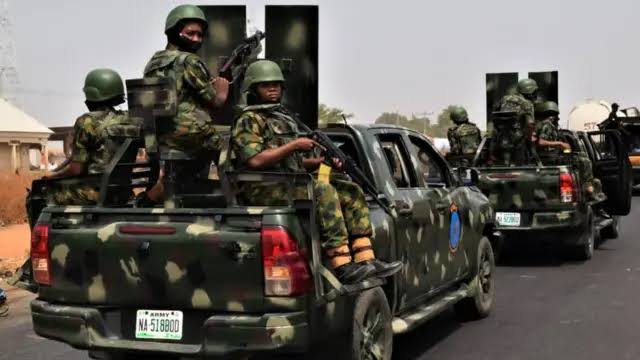
JUST IN; Over 200,000 repentant Terrorists Surrender weapons to Military says CDS

JUST IN; Over 200,000 repentant Terrorists Surrender weapons to Military – CDS
General Christopher Musa, the Chief of Defence Staff (CDS), revealed that approximately 200,000 repentant terrorists have voluntarily surrendered their weapons to the military in the North East.
He credited this significant achievement to the successful combination of kinetic and non-kinetic operations deployed by the armed forces.
Speaking at the Security and Justice Symposium held at the National Counterterrorism Centre in Abuja on Tuesday, Musa emphasised the importance of the event, which was organized by the Office of the National Security Adviser (ONSA) in collaboration with the British High Commission.
The theme of the symposium, “Securing Peace, Ensuring Justice, Protection, Conduct, and Accountability,” reflects the complex security challenges currently facing Nigeria’s armed forces and security agencies.
He said: “All the challenges we are facing today have to do with fairness, equity, justice, and accountability.
“There will not be peace without justice, equity, fairness, and accountability. In our operations, we are conducting both kinetic and non-kinetic strategies, which have to a large extent yielded significant successes, and we want to particularly thank the National Security Adviser for his great support in this regard.
“Nigeria is going through so many challenges, and we feel we’re able to address this, and everybody has a sense of belonging. A lot of the security challenges we are having, we are sure, will go down. I want to thank the National Security Advisor for all the support he’s given us, both the kinetic and the non-kinetic.
“We have said it; the kinetic aspect is just less than 30%. The non-kinetic has a lot to play. The non-kinetic, because when you have democracy, people must have the evidence of democracy. As long as it tells people to sleep well and be peaceful, and they are hungry, their children cannot eat, and all this creates more problems.
“The issue of informants. We have to look at how we tackle this issue of informants. Because these are the people who have created the issue.
“Those supporting the terrorists by giving them logistics, we have to look for the oxygen. Where is the funding coming from? How are they getting the logistics across?
“For us in the Armed Forces during our operations, one of the challenges is IEDs. IEDs have been the major challenge since the beginning of the insurgency. So we are looking at aspects of how we handle this, what solutions, and what new things we can do.
“Because you have to be creative. To fight this insurgency, you have to be creative and innovative every day. Because they are not relenting.
“As the theatre commander in the Northeast, we found out that if we are able to deny them this logistics, this oxygen, they will not survive. We did that, and that’s why you have almost 200,000 that have surrendered.
“But through enhanced communications and non-kinetic activities, many of the terrorists are realising the fruitlessness of what they are doing and retracing their steps.
“I’ve observed that with the asymmetrical challenges we are facing if you don’t communicate, you might be doing the right thing, but the perception might be different. And the enemy is working on that. So it’s important that we get that part right.
“And then you cannot work in isolation as a country. We need our international partners working together with us. Our neighbours are very, very relevant to us. Nigeria, as we are all aware, is surrounded by Francophone countries. And so the challenges are there.
The National Security Adviser, Mallam Nuhu Ribadu, while reacting said, “The objective of the Security and Justice Symposium, a vital platform for dialogue and collaboration among our security and justice institutions, is clearly to delve into the successes, challenges, and opportunities for growth within the realms of security and justice.
“As we embark on this journey of critical analysis and discussion, let us keep in mind the noble goals set before us, from analysing and strengthening the intricate relationship between military operations and law enforcement, to enhancing the protection of civilians, very important, and fostering a culture of justice and accountability, to promoting a unified approach in countering improvised explosive devices.
“Each objective is poised to make a significant impact. Our intended achievements are ambitious, of course, yet entirely within our reach.
“As we review and map existing frameworks, evaluate institutional practices, and establish collaborative mechanisms, our collective efforts will chart a course towards a safer and more just society for all.
“I am honoured to see such an esteemed gathering of key stakeholders from various sectors, including representatives from the military, law enforcement agencies, legal authorities, human rights organisations, and civil society groups. Your presence here today underscores the importance of our shared commitment to security, justice, and the well-being of our communities.
The British High Commissioner to Nigeria, Mr Richard Montgomery, on his part, said, “Both Nigeria and Britain have had a good dialogue on the fact that we all face really complex security challenges in many parts of the world, certainly in the West Africa region and even in Nigeria itself, and these complex challenges require a multifaceted approach.
“At the heart of all this is a recognition of the importance of upholding the rule of law, human rights, humanitarian law, and international humanitarian law. The importance of these principles for the way in which we tackle security challenges, and our lawyers keep telling us, and we have lawyers in the British High Commission as well as the Nigerian government.
“We need to consider the different legal principles and frameworks that apply to criminal violence or to violent conflicts and how we deal with them in protracted conflict zones, and I think that there’s already been a productive dialogue in our security defence partnership.
“The UK knows only too well from our own experience, our own involvement in armed conflict, that incorporating human rights doctrine is quite challenging. The strategies needed are not without complexity, but we do. The UK strongly believes that our commitment to these legal principles and doctrines is because of the experience we’ve had.”

Military
Military compensates victims of Sokoto airstrike, reaffirms commitment to civilian protection
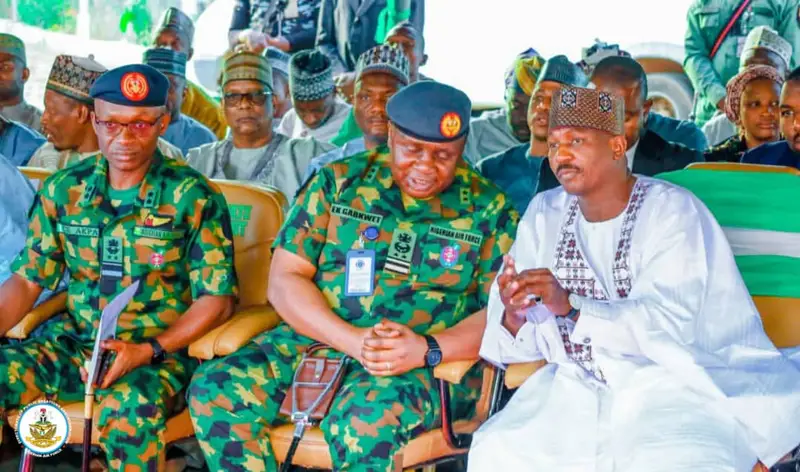
Military compensates victims of Sokoto airstrike, reaffirms commitment to civilian protection
The Nigerian Air Force (NAF) has paid compensation to victims and families affected by the accidental air strike that occurred on Dec. 25, 2024 in Sokoto State.
The victims are residents of Gidan Bisa and Rumtuwa villages of Silame Local Government Area of the state.
This is contained in a statement by the Director, Public Relations and Information, NAF, Air Commodore Ehimen Ejodame, on Sunday in Abuja.
In his remarks, the Chief of the Air Staff (CAS), Air Marshal Sunday Kelvin Aneke, represented by the Chief of Civil Military Relations, AVM Edward Gabkwet, expressed gratitude to the state government for the ensuring relationship between the NAF and the people.
He commended Gov. Ahmed Aliyu for inclusive development policies and security initiatives under the 9-Point Smart Agenda, particularly the establishment of the Sokoto State Community Guards Corps.
The CAS noted that the Governor’s proactive and localised security measures have complemented federal efforts in curbing the activities of terrorists and bandits, contributing to improved safety across parts of the State and reinforcing the importance of strong civil military cooperation.
He explained that the said air strikes were conducted under Operation Fasan Yamma following intelligence reports of suspected armed terrorists transiting through the affected communities.
According to him, although multiple intelligence checks informed the mission, a petition received in April 2025 alleged civilian casualties.
“A thorough fact-finding investigation confirmed that 13 civilians were unintentionally killed and eight others sustained various degrees of injuries.
“The findings deeply saddened the Service and necessitated urgent steps to make amends,” he said.
Aneke emphasised that since assuming office on Oct. 24, Civilian Harm Mitigation had remained at the forefront of his Command Philosophy.
According to him, the NAF exists primarily to protect the lives and property of Nigerians, adding that no professional military deliberately harms the very people it is sworn to defend.
He explained that the compensation exercise was intended to commiserate with the victims, promote accountability and transparency, calm tensions, and bring closure, while enabling the service to draw critical lessons to further reduce the likelihood of similar incidents in the future.
The CAS disclosed that the NAF had continued to institutionalise measures aimed at preventing and responding to civilian harm, including the development of the NAF Civilian Harm Mitigation and Response Action Plan (NAF CHMR-AP).
According to him, the framework is designed to strengthen operational planning, improve assessments and investigations, enhance continuous learning, and ensure effective response whenever civilian harm occurs.
He added that the plan’s scalability makes it applicable across both kinetic and non-kinetic operations, with the protection and restoration of the civilian environment treated as a critical operational consideration.
The air chief reaffirmed NAF’s resolve to apply purposeful and precise lethality in neutralising terrorists and other criminal elements.
“We want to use this medium to appeal to citizens to desist from mingling or cohabiting with terrorists and bandits within their enclaves as such associations significantly increase the risk of collateral damage during military operations.
“Public cooperation remains vital to safeguarding innocent lives as security forces intensify operations nationwide.
“The Nigerian Air Force, in concert with other security agencies, remains fully committed to ending terrorism, banditry, cattle rustling, and kidnapping across Sokoto State, the wider North-West region and the nation at large,” he added.
In his response, the governor expressed appreciation to the NAF for its unwavering commitment to protecting and caring for citizens, as well as its resolute role in safeguarding the nation’s security and territorial integrity. (NAN)
Military
NAF airstrikes destroy terror hideouts in Katsina, thwart ISWAP fresh attack
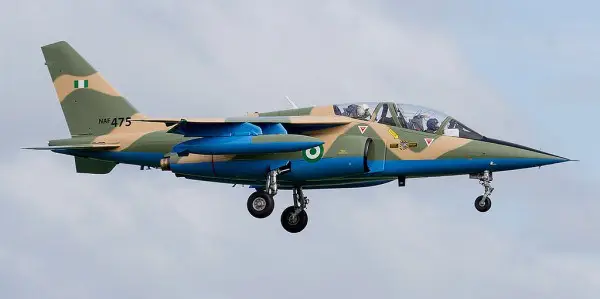
NAF airstrikes destroy terror hideouts in Katsina, thwart ISWAP fresh attack
The Nigerian Air Force (NAF) has recorded major operational gains with a series of precision airstrikes that crushed terror cells in Katsina State and halted a coordinated ISWAP/Boko Haram offensive in Chibok, Borno.
This is contained in a statement by the Director, Public Relations and Information, NAF, Air Commodore Ehimen Ejodame, on Sunday in Abuja.
Ejodame said the NAF’s latest successes, carried out under Operation FANSAN YAMMA and Operation HADIN KAI, followed intelligence-led surveillance that enabled fighter aircraft to strike with accuracy and disrupt multiple hostile movements across both theatres.
In Katsina, he said the air interdictions conducted on Nov. 27, targeted the fortified base of a notorious terrorist leader behind kidnappings, attacks and cattle rustling across Kankara, Faskari and Malumfashi areas.
According to him, the first strike at about 6:30 a.m destroyed key structures and neutralised fighters attempting to flee after surveillance aircraft tracked their movements.
“A second strike later in the evening hit another major hideout in Danfako, Faskari Local Government Area, destroying logistics centres and operational facilities used by the criminals.
“Several terrorists were killed, further weakening their network and denying them freedom of operation in the North-West,” he said.
In the North-East, Ejodame said the NAF aircraft provided decisive support to troops of the 28 Task Force Brigade when ISWAP/Boko Haram fighters launched a multi-directional assault on Chibok.
According to him, four airstrikes were delivered on regrouping and retreating terrorists, inflicting heavy casualties and preventing the insurgents from reorganising.
He said the integrated air–ground response ensured the attackers were overwhelmed, safeguarding residents and averting what could have been a major setback for security in the area.
Ejodame said the operations reflect its commitment to precision strikes aimed at degrading terrorist capabilities and restoring peace across the country, adding that coordination with ground forces would remain a priority. (NAN)
Military
Nigerian Army promotes 105 senior officers to Major, Brigadier General ranks
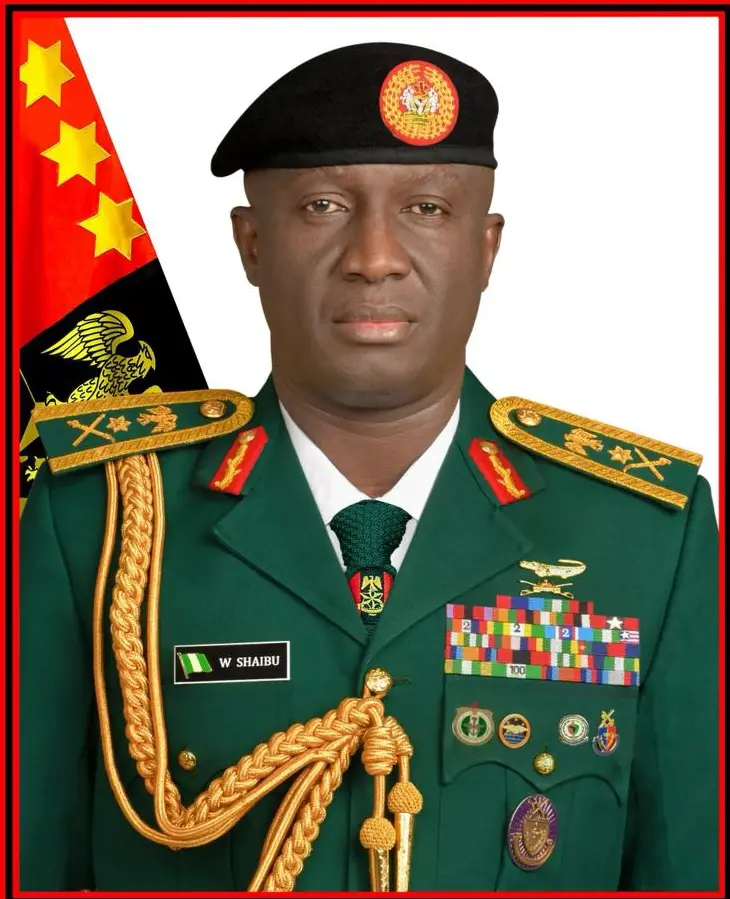
Nigerian Army promotes 105 senior officers to Major, Brigadier General ranks
The Army Council has approved the promotion of 105 senior officers to the ranks of Major General and Brigadier General respectively.
This, is in a bid to strengthening leadership capacity and enhancing ongoing military operations across the country.
The Acting Director of Army Public Relations, Lt.-Col. Appolonia Anele, made this known in a statement on Friday in Abuja.
Anele said that 28 Brigadier Generals were promoted to Major General, while 77 Colonels were elevated to the rank of Brigadier General.
According to her, those promoted to Major General include Brig.-Gen. Ojogbane Adegbe of the Defence Intelligence Agency; Brig.-Gen. Samaila Uba, Director Defence Information; and Brig.-Gen. R.E. Hedima, Acting Chief of Military Intelligence (Army).
“Others are Brig.-Gen. R.T. Utsaha, Deputy Director Defence Operations; and Brig.-Gen. A.M. Umar, Commandant Warrant Officers Academy.
“They also include Brig.-Gen. S. Sulaiman, Deputy Military Secretary; Brig.-Gen. I.O. Bassey, Director Army Operations Centre; Brig.-Gen. C.A. Ekeator of the Nigerian Army School of Electrical and Mechanical Engineering; Brig.-Gen. S.Y. Yakasai, Acting Director Procurement, and Brig.-Gen. W.L. Nzidee of Army Logistics Department, among others.
“Brig.-Gen. Z.A. Saidu was promoted posthumously,” she said.
Anele listed those promoted to Brigadier General as Colonels Y. Ibrahim; N.N. Gambo; A. Saidu; A. Ali; I. Waziri; M.M. Sani; A.A. Alkali; A.O. Ndah; I.B. Sheriff; K.R. Apata; and several others across formations and units nationwide.
The Chief of Army Staff (COAS), Lt.-Gen. Waidi Shaibu, congratulated the newly promoted officers and urged them to justify the confidence reposed in them through enhanced professionalism, leadership and commitment to duty.
Shaibu charged them to provide bold, innovative and decisive solutions to Nigeria’s evolving security challenges, while maintaining absolute loyalty to the Constitution and the defence of the nation’s territorial integrity. (NAN)
-
6 years ago
Our situation in Kano terrible – Gov Ganduje cries out
-

 News11 months ago
FG pledges commitment to enhance Police officers Welfare, implement Tinubu’s 8-point agenda for NPF
-
 News11 months ago
BREAKING; NSCDC gets approval to commence 2025 recruitment exercise
-
 News9 months ago
Alleged cocaine deal: Court issues orders in suspended DCP Abba Kyari’s case
-

 News12 months ago
DPO under investigation for allegedly taking teenage girl to his home while in police custody
-

 News12 months ago
JUST IN; Commissioner of Police bows out of Service
-

 News9 months ago
JUST IN; Police Inspector dies watching Arsenal match
-

 News12 months ago
BREAKING; NLC declare nationwide protest