
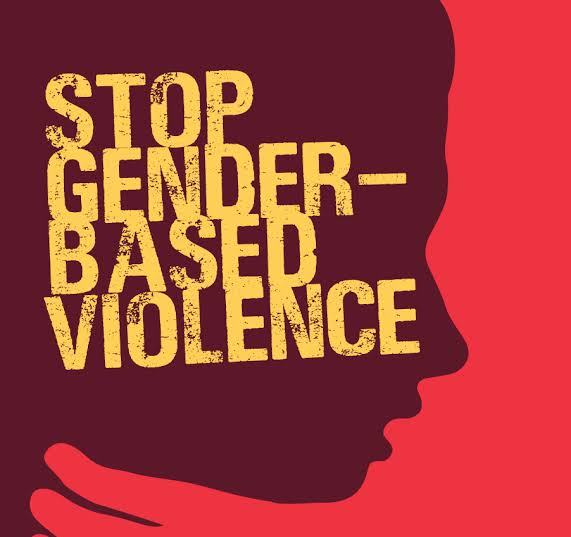
Gender-based Violence: Who will speak for men?

Gender-based Violence: Who will speak for men?
By Abiemwense Moru, News Agency of Nigeria (NAN)
Gender-Based Violence (GBV) is often viewed as a women’s issue, with many organisations and initiatives focusing on supporting female survivors.
However, men too are victims of GBV, and their experiences are often overlooked.
Mr Rex Aiku, a 55-year-old father of two, endured an abusive relationship for over five years.
His wife regularly subjected him to physical and emotional abuse, leaving him feeling trapped and helpless after losing his job and being unable to provide for his family.
“I was ashamed to admit that I was being abused by a woman. I felt like I was supposed to be the strong one, the protector, but I was the one being hurt,” Aiku said.
His wife often used his masculinity against him, telling him that he was weak and that no one would believe him if he reported the abuse.
This left Aiku feeling isolated and unsure of where to seek help.
Similarly, Ade Michael, a 48-year-old entrepreneur, was sexually assaulted by a male colleague at a party.
The experience left him feeling shaken and confused, unsure of how to process his emotions.
“I didn’t know how to react. I felt like I had been emasculated, like I had lost my manhood. I didn’t know who to turn to or how to talk about it,” Michael said.
Michael struggled to come to terms with his experience, feeling failed by societal expectations of masculinity.
He eventually found support through a men’s support group, where he connected with others who had experienced similar trauma.
Experts argue that Aiku and Michael’s stories reflect the need for support and resources tailored specifically for men affected by GBV.
While gender-based violence in Nigeria affects both men and women, men are often overlooked in discussions around support and intervention.
Although the focus has largely been on female victims, a growing awareness is emerging about the challenges faced by male survivors.
Studies show that men experience various forms of GBV, including physical, sexual, and emotional abuse, but these cases are often underreported due to societal stigma and expectations of masculinity.
For instance, a WHO report on violence and health revealed that male survivors of sexual and domestic violence face barriers in accessing support, as societal norms discourage them from reporting abuse.
It is common for male victims to be dismissed or not taken seriously, which only exacerbates their trauma.
However, organisations such as the Women at Risk International Foundation (WARIF) and the Mirabel Centre in Lagos have begun offering services to men, providing them with counselling and legal support.
Although data on male victims of GBV in Nigeria remains limited, initiatives are underway to improve reporting and response systems.
These efforts include strengthening the capacities of Sexual Assault Referral Centres (SARCs), which provide medical and psychosocial support to survivors of violence, and ensuring these services are inclusive of men.
“While numerous organisations focus on helping female survivors, men often fall through the cracks.
“Men are socialised to be strong and stoic, to not show emotion or vulnerability,” explained Dr Emmanuel Oke, a psychologist specialising in male survivors of GBV.
According to Oke, this social conditioning makes it difficult for men to seek help or discuss their experiences.
Oke stressed the importance of more resources and support services designed to meet the unique needs of men.
This includes counselling, support groups, and advocacy initiatives that acknowledge the specific challenges and barriers men face in seeking help.
In response to these challenges, the Life After Abuse Foundation (LAAF), a non-governmental organisation, has called for the establishment of Nigeria’s first Ministry of Men’s Affairs to address the pressing needs of men.
LAAF’s President, Ms Halima Layeni, believes that such a ministry would advance gender equality by ensuring that men receive the same level of support, opportunities, and empowerment as other demographics.
“This ministry would be a fundamental step towards rectifying the persistent neglect of men’s unique challenges in society,” Layeni said.
She noted that men in Nigeria face numerous overlooked issues, including violence, domestic abuse, and assault, all of which remain underreported due to entrenched societal stigmas.
Moreover, men in Nigeria are dealing with alarmingly high rates of depression and suicide, exacerbated by societal expectations and a lack of targeted support.
Layeni also pointed out that economic instability worsens these challenges, with many men being deprived of opportunities for skill development and economic empowerment.
“Cultural norms often prevent men from seeking help, leading to unaddressed mental health issues and violence.
“Despite these struggles, men continue to fulfil their roles as providers, breadwinners, husbands, and fathers, often carrying these burdens in silence,” Layeni added.
She argues that a dedicated ministry would bridge these gaps, offering targeted support and reducing the stigma surrounding men seeking help.
In Lagos State, the Domestic and Sexual Violence Agency (DSVA) has called for men to join efforts in curbing sexual and domestic violence in the state.
The Executive Secretary of DSVA, Mrs Titilola Vivour-Adeniyi, stressed the importance of engaging men to help speak to their peers and raise awareness about sexual and gender-based violence (SGBV).
“Two weeks ago, we heard of a man using a hot iron on his son’s buttocks.
“The boy had to be rescued and placed in a home provided by the Ministry of Youth and Social Development; the suspects have been arraigned.
“We need to be proactive, engage the community, and raise awareness about the different forms of abuse,” Vivour-Adeniyi said.
She also urged the public to understand that ignorance of the law is no excuse and emphasised the importance of support services available for victims of SGBV.
Also, the National Human Rights Commission (NHRC) has reaffirmed its commitment to addressing SGBV through continuous sensitisation and training of law enforcement officers.
Mrs Yemisi Akhile, Deputy Director of the Lagos State NHRC, stated that the commission ensures law enforcement is equipped to handle SGBV cases sensitively and effectively.
“Survivors need to feel safe and comfortable in assisting the prosecution, particularly in rape cases, which are often associated with stigma.
“We ensure that the justice system operates fairly and that survivors are not exploited after they have been referred to the police,” she said.
Akhile stated that more must be done to address the unique challenges faced by male victims, such as improving data collection and establishing tailored support services.
Stakeholders say this would not only help male survivors heal but also create a more inclusive approach to tackling GBV in Nigeria.
They argue that by acknowledging the experiences of male survivors and providing them with the necessary support, there will be a more inclusive and supportive society for all survivors of GBV.(NAN Features)

News
Five police officers remanded in Prison over alleged murder

Five police officers remanded in Prison over alleged murder
Five police officers accused of involvement in the alleged killing of 28-year-old Delta State musician and delivery worker, Oghenemine Million Ogidi, popularly known as OG Millan, have been arraigned before a High Court in Asaba and remanded in custody pending further proceedings.
The officers were brought before High Court 5 sitting in Asaba in a case that has drawn public attention and renewed calls for accountability. Proceedings were held before Justice Marshal Onome Umukoro under Suit No. THC/ASB/CR/M/66C/2026.
The defendants include ASP Usman Nuhu (42), ASP Onoloko Dauroupamo (47), ASP Okoh Kelechi (46), Inspector Goodluck Kingsley (42), and Inspector Omonigho Ahweyevu (41).
The court ordered that the accused officers be remanded at the Ogwashi-Uku Correctional Centre pending further legal steps in the matter. Journalists were also reportedly barred from covering the proceedings.
The case was adjourned to June 15, 2026, for arraignment, following a request for legal advice from the Directorate of Public Prosecutions (DPP).
OG Millan was reportedly killed on April 26, 2026, after he was allegedly intercepted in Effurun, Delta State, while delivering a package said to contain a firearm and ammunition.
Following the court proceedings, the deceased’s elder brother, Victory Ogidi, expressed concern over what he described as poor communication between authorities and the family regarding the progress of the case.
He said the family had been left to depend on social media reports and unofficial sources for updates on both the investigation and court proceedings.
“We lost our brother, and we should not be relying on social media to know what is happening in a case that concerns us directly,” he said.
Victory called on the Delta State Attorney-General, the Ministry of Justice, and the Nigeria Police Force to ensure transparency and provide regular updates to the family, stressing that their demand was for information, not preferential treatment.
Human rights activist Harrison Gwamnishu described the arraignment as a step forward in the pursuit of justice and accountability in the case.
He said the court ordered that the suspects remain in custody while the DPP reviews the file and provides legal advice.
“Today, they finally produced the officers in court, including the principal suspect and others. The judge ordered that they remain in custody while the DPP reviews the case,” Gwamnishu stated.
He expressed hope that the legal process would be accelerated to ensure a full and transparent trial.
However, the activist raised concerns over allegations from the family that they had not been properly briefed on key developments in the investigation, including access to the autopsy report.
He also noted claims that there were attempts to restrict media coverage of the proceedings, including limitations placed on journalists seeking to observe the court session.
News
30 days after opposition summit in Ibadan, plan to choose single presidential candidate collapses
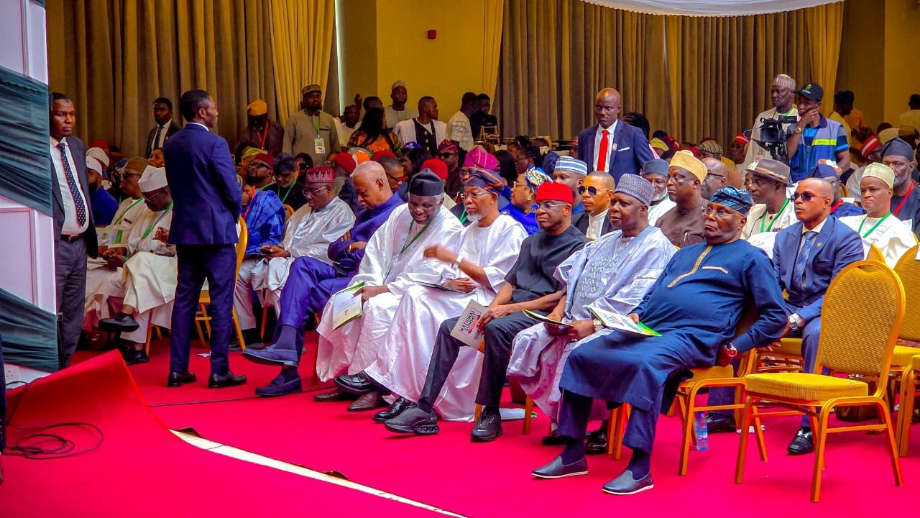
30 days after opposition summit in Ibadan, plan to choose single presidential candidate collapses
Opposition political parties converged in Ibadan on April 25, and unveiled what was widely described as their most ambitious political strategy ahead of the 2027 general election: a commitment to rally behind a single presidential candidate to challenge President Bola Ahmed Tinubu of the ruling All Progressives Congress (APC).
The meeting, which drew major political actors across party lines, was intended to reshape Nigeria’s electoral dynamics and prevent the fragmentation of opposition votes that has historically weakened their chances at the polls.
At the time, the coalition argued that failing to present a united front would only reinforce the dominance of the ruling party, and they pledged to avoid internal divisions that had previously cost them electoral victories.
However, barely five weeks after the Ibadan accord, the unity project has effectively collapsed.
Instead of consolidating around one candidate, the opposition has fractured into multiple camps, each backing its own presidential flagbearer ahead of the 2027 contest.
The African Democratic Congress (ADC) reportedly settled for former Vice President Atiku Abubakar, while the Allied Peoples Movement (AMP) nominated Oyo State Governor Seyi Makinde.
The Labour Party is said to have selected governance and policy expert Chibuzo Okereke, while the Nigeria Democratic Congress (NDC) reportedly backed former Anambra State Governor Peter Obi. Meanwhile, the Peoples Democratic Party (PDP), led by Kabiru Turaki, is said to have chosen former President Goodluck Jonathan.
What was initially presented as a broad opposition coalition aimed at resisting what leaders described as “machinations by the All Progressives Congress (APC) to foist a one-party state on Nigeria” has now devolved into competing political interests marked by mistrust and rivalry.
Political analysts say the breakdown of the single-candidate arrangement reflects deeper structural weaknesses within the opposition, particularly the inability of key stakeholders to prioritise collective strategy over personal ambition.
The Ibadan agreement was largely informed by the lessons of the 2023 presidential election, where a divided opposition vote between Atiku, Obi and Rabiu Kwankwaso enabled Tinubu to secure victory with a plurality of votes.
Opposition strategists had argued that a unified front would be the most viable path to challenging the APC in 2027, forming the basis of the now-fractured agreement.
However, entrenched political interests soon resurfaced, undermining efforts at consensus-building.
Atiku is believed to remain confident in his national political reach and experience, while Obi continues to enjoy strong support among young voters who see him as a key opposition figure.
These competing ambitions ultimately made consensus difficult to achieve.
For months, opposition leaders had warned of an alleged APC strategy aimed at turning Nigeria into a one-party state. Ironically, analysts now argue that the most significant threat to opposition unity has emerged from within the coalition itself.
With multiple candidates now in the field, the ruling APC is expected to face a divided opposition rather than a single coordinated challenger in the 2027 presidential election.
News
Only Atiku, his family members and a few loyalists remain in ADC
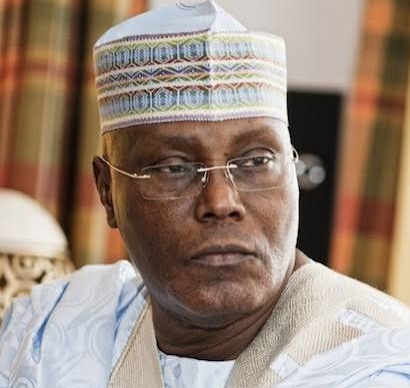
Only Atiku, his family members and a few loyalists remain in ADC
Political commentator Imran Wakili has accused former Vice President Atiku Abubakar of contributing to the growing turmoil within the African Democratic Congress (ADC), claiming that key political figures who initially supported the party’s coalition movement in Adamawa State have now abandoned the platform.
In a post shared on X on Tuesday, Wakili argued that none of the major political actors who helped establish the coalition structure in Adamawa remained aligned with Atiku within the ADC, insisting that the former presidential candidate could not be separated from the unfolding crisis.
According to him, several influential politicians who were part of the coalition have either joined other parties or are considering alternative political options.
Wakili claimed that former governorship candidate Aishatu Binani had moved to the NDC, while former Adamawa State Governor Jibrilla Bindow was weighing his next political step.
He further alleged that former senator Ishaku Abbo had joined the Labour Party, while Abdulaziz Nyako had returned to the All Progressives Congress (APC).
Expressing concern over the developments, Wakili wrote: “Amongst the political heavyweights that started the coalition in Adamawa, not even one is with Atiku and ADC today, No matter how you look at it, you can’t excuse Atiku from this mess.
“Binani left for NDC. Bindow is consulting and deciding on his next political step.
“Abbo left for the Labour Party.
Abdulaziz Nyako left for the APC.
“Atiku is left with his son Adamu, Baba 10, and the likes. Baba really fumbled Adamawa, We warned them, but they said we don’t like Atiku.
“Nah, I don’t dislike him, I am just a realist.”
The remarks come amid growing tensions within the ADC following the resignation of former Secretary to the Government of the Federation, Babachir Lawal, from the party.
Lawal announced his exit from the ADC on Monday, alleging that the party’s recently concluded primaries were manipulated in favour of Atiku and his supporters, further deepening concerns over divisions within the opposition platform.
-
6 years ago
Our situation in Kano terrible – Gov Ganduje cries out
-

 News1 year ago
FG pledges commitment to enhance Police officers Welfare, implement Tinubu’s 8-point agenda for NPF
-

 News1 year ago
BREAKING; NSCDC gets approval to commence 2025 recruitment exercise
-

 News1 year ago
Alleged cocaine deal: Court issues orders in suspended DCP Abba Kyari’s case
-

 News1 year ago
DPO under investigation for allegedly taking teenage girl to his home while in police custody
-

 News1 year ago
JUST IN; Commissioner of Police bows out of Service
-

 News1 year ago
JUST IN; Police Inspector dies watching Arsenal match
-

 News1 year ago
BREAKING; NLC declare nationwide protest